






Why Places That Never Truly Close Are Making More People Uneasy
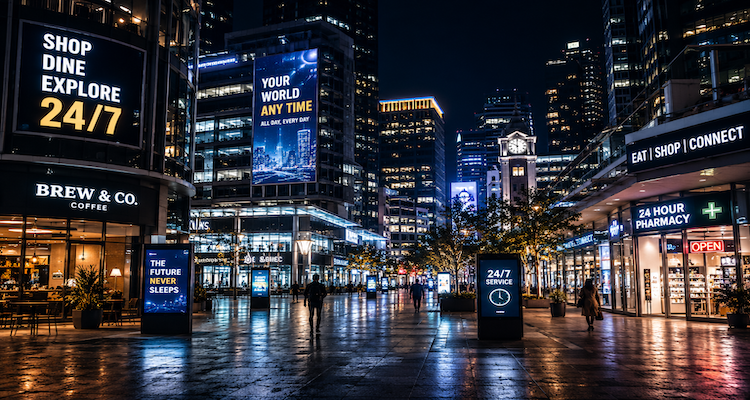
There was a time when most places had a clear rhythm. Shops closed for the night. Offices emptied. Public spaces became quieter after dark. Even cities seemed to acknowledge a daily pause. Today, that rhythm is fading.
Across much of the world, an increasing number of environments operate around the clock. Airports never sleep. Online marketplaces remain open every second of the day. Food delivery services, streaming platforms, customer support centers, warehouses, data centers, and even some workplaces function continuously. The expectation of constant availability has become so normal that many people barely notice it, until they begin to feel its effects.
A growing sense of discomfort is emerging around places that never truly close. It is not necessarily fear in the traditional sense. Rather, it is a subtle unease tied to the feeling that some environments have become detached from the natural patterns that once structured daily life. As society becomes more connected and continuously active, many people are beginning to question whether perpetual operation comes with hidden psychological and cultural costs.
The Rise of the Always-On Environment
The expansion of 24-hour services has been driven by powerful forces. Global business operates across time zones. Digital platforms serve users in every corner of the world. Consumers increasingly expect instant access to products, information, and entertainment.
For businesses, remaining available around the clock can provide a competitive advantage. Customers can shop whenever they choose, employees can collaborate internationally, and services can reach broader audiences. The convenience is undeniable.
Yet this transformation has created a new type of environment, one that lacks obvious stopping points. Unlike traditional spaces governed by opening and closing hours, these places seem to exist outside ordinary time.
A streaming platform does not shut its doors. An online store never turns off its lights. Social media feeds continue updating regardless of the hour. Even physical spaces such as airports, hospitals, logistics hubs, and transportation networks often operate with little visible interruption.
The result is a world where activity never fully disappears.
Why Constant Activity Can Feel Unsettling
Human beings evolved within cycles. Day and night, work and rest, activity and recovery have historically shaped both individual behavior and social life.
When environments operate continuously, those familiar boundaries become less visible. The distinction between “on” and “off” starts to blur.
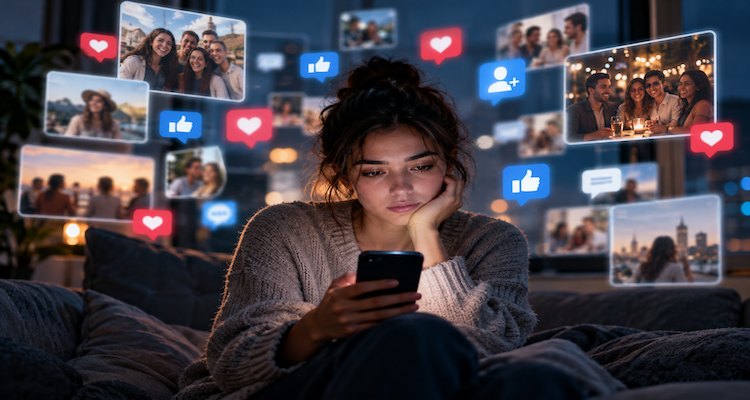
Many people experience this as a low-level psychological pressure. The issue is not that they must remain active all the time. Rather, the existence of constant activity can create the perception that they could be active all the time.
An unanswered email, a notification arriving at midnight, or a workplace that functions across multiple time zones can subtly extend expectations beyond traditional schedules. Even when no one explicitly demands immediate responses, the possibility of constant engagement remains present.
This can contribute to a feeling that rest is becoming something individuals must actively defend rather than something society naturally provides.
The Disappearance of Shared Downtime
One of the less discussed consequences of always-open environments is the erosion of collective pauses.
Historically, communities often shared moments when activity slowed simultaneously. Even in busy cities, evenings, weekends, and holidays created periods of reduced pace. These pauses helped synchronize social life.
Today, people often occupy different schedules. Some work remotely across continents. Others consume entertainment late into the night. Online communities remain active regardless of local time.
As a result, shared downtime becomes less common.
This shift may seem minor, but it influences how people connect with one another. When fewer people experience the same pauses, opportunities for collective reflection, family routines, and community engagement can become more fragmented.
The issue is not merely about time management. It is about the social role that downtime once played.
Why Certain Places Feel Eerier Than Ever
The fear associated with places that never close is often connected to atmosphere rather than direct danger.
An airport at 3 a.m., a brightly lit convenience store in an otherwise empty neighborhood, or a nearly deserted warehouse operating through automated systems can create a strange emotional response. These places appear active, yet disconnected from the rhythms that most people associate with everyday life.
Part of this reaction comes from contrast. Humans naturally expect certain environments to change character over the course of a day. When a location remains essentially the same regardless of time, it can feel oddly detached from normal experience.
Technology has amplified this effect. Automated checkouts, digital displays, surveillance systems, and algorithm-driven operations allow many facilities to function with minimal human presence. Activity continues, but visible human participation may be limited.
The result can feel efficient, yet strangely impersonal.
What This Reveals About Modern Culture
The popularity of always-open services reflects a broader cultural shift toward convenience and immediacy.
Consumers have become accustomed to obtaining information instantly. Businesses increasingly compete on speed and accessibility. Delays that once seemed normal now feel inconvenient.
However, the growing unease around continuously operating environments suggests that convenience may not be the only value people care about.
Many consumers are simultaneously embracing slower experiences. Interest in digital wellness, offline hobbies, quiet travel, and boundaries around work communication has gained attention in recent years. These trends indicate that while people appreciate convenience, they also seek opportunities to disconnect.
The tension between constant availability and intentional limitation may become one of the defining cultural debates of the coming decade.
The Hidden Insight Behind the Trend
The most important insight may be that the fear of places that never close is not really about the places themselves.
It is about what those places symbolize.
An airport operating through the night or a website available every second of the day represents a society increasingly designed for uninterrupted activity. For many people, the discomfort comes from recognizing how deeply this expectation has spread into everyday life.
The concern is less about physical locations and more about the possibility that human attention, rest, and reflection are becoming secondary to perpetual engagement.
In this sense, places that never close serve as visible reminders of a larger transformation happening across work, technology, commerce, and culture.
What Happens Next?
It is unlikely that society will move away from round-the-clock services. The economic and technological advantages are too significant.
However, future discussions may focus less on whether systems should remain open and more on how people interact with them.
Organizations may place greater emphasis on healthy communication boundaries. Urban planners may consider how cities can balance activity with spaces designed for restoration. Employers may continue exploring policies that protect personal time despite global connectivity.
Consumers, meanwhile, may become more selective about when they engage and when they disconnect.
The places that never truly close are likely here to stay. The larger question is whether society can preserve meaningful pauses within a world that increasingly operates without them.
The answer may shape not only how people work and consume information, but also how they experience rest, community, and everyday life in the years ahead.
This content is published for informational or entertainment purposes. Facts, opinions, or references may evolve over time, and readers are encouraged to verify details from reliable sources.