









Why Hearing Human Voices Without Seeing People Feels Increasingly Unsettling
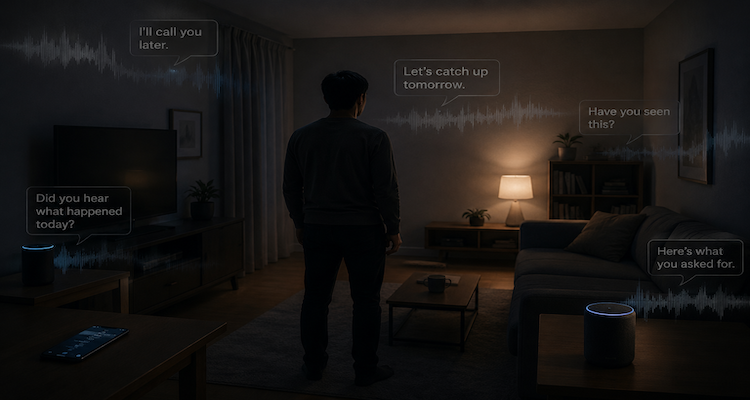
A voice drifts through a room. Someone is speaking, laughing, or asking a question. Yet when you look around, nobody is there.
For most of human history, hearing a human voice almost always meant another person was physically present. Voices belonged to bodies. They came from across a table, behind a door, or somewhere within sight. That simple connection helped people understand who was speaking, where they were, and why they were communicating.
That relationship is quietly changing. Smart speakers answer questions from kitchen counters. Podcasts accompany solitary walks. Customer service systems speak with increasingly natural tones. Voice notes arrive from thousands of miles away. Artificial intelligence can now generate remarkably human-sounding speech. As a result, many people are experiencing a subtle but growing discomfort: hearing human voices detached from visible human presence.
The feeling may seem minor, but it reveals a deeper shift in how people relate to technology, communication, and one another.
The Human Brain Expects Voices to Have Bodies
Humans evolved in environments where voices carried important information. A voice could signal safety, danger, cooperation, or social connection. Because of that, the brain developed strong expectations about how voices behave.
When someone speaks, people instinctively try to identify the speaker, locate their position, and interpret facial expressions, gestures, and emotional cues. Communication is not simply about words. It is also about context.
When a voice appears without a visible source, the brain must work harder to make sense of the experience. This is one reason why hearing unexplained sounds in an empty house can feel unsettling, even when there is a perfectly logical explanation.
Modern technology repeatedly creates situations where voices exist without the social information people traditionally rely on. The result is a subtle tension between ancient expectations and contemporary realities.
A World Filled With Disembodied Voices
Not long ago, hearing a voice without seeing a person was relatively uncommon. Telephone calls were one of the few exceptions.
Today, voices are everywhere.
People wake up to audio alarms. They listen to podcast hosts while driving. Smart assistants provide weather updates. Navigation systems offer directions. Virtual meetings frequently involve participants with cameras turned off. Streaming platforms continuously deliver spoken content.
The average person now spends significant portions of the day listening to people they cannot see.
This shift has become so normal that it often goes unnoticed. Yet it represents a profound cultural change. Human voices have become a form of ambient presence, something that fills spaces without requiring physical proximity.
The consequence is that voices increasingly function as digital objects rather than direct social encounters.
AI Has Introduced a New Layer of Uncertainty
The rise of artificial intelligence has added another dimension to this phenomenon.
For centuries, a voice strongly implied the existence of a living human speaker. Today, that assumption is no longer reliable.
AI-generated voices can read articles, narrate videos, answer customer questions, and engage in conversation. Many systems are becoming increasingly expressive, incorporating pauses, emotional inflections, and conversational rhythms that resemble natural speech.
Most people can still identify obvious synthetic voices. However, the distinction is becoming less clear as technology improves.
This creates a subtle psychological shift. When hearing an unfamiliar voice online, people may wonder whether a real person is speaking, whether the voice was generated, or whether a recording has been altered.
The uncertainty itself contributes to a new form of eeriness. It is not merely that the voice lacks a visible speaker. It is that the speaker’s identity may be fundamentally ambiguous.
The Return of Presence Without Proximity
Paradoxically, technology is making voices feel both more intimate and more distant.
A podcast host may become part of someone’s daily routine. A creator’s voice may accompany workouts, commutes, and household chores for years. Listeners can feel a strong sense of familiarity despite never meeting the speaker.
Researchers and media observers have long noted that audio creates a uniquely personal form of connection. Hearing someone’s voice often feels more direct than reading their words.
Yet the relationship remains one-sided. The speaker does not know the listener. The interaction lacks mutual awareness.
This creates an unusual social dynamic. People can experience emotional closeness without physical presence, visual contact, or personal familiarity.
The growing prevalence of these relationships suggests that society is redefining what “presence” means in a digital age.
Why Empty Spaces Feel Different Now
An interesting side effect of constant audio exposure is that silence itself may feel increasingly unusual.
Many people routinely fill quiet moments with voices from phones, earbuds, smart devices, or streaming platforms. Homes, offices, and public spaces often contain a continuous layer of spoken content.
As a result, hearing voices in unexpected contexts can feel more disorienting than it once did.
A voice emerging from another room may initially sound like a person. A device playing audio unexpectedly can create a brief moment of confusion. Recorded voices heard through walls or speakers sometimes produce an uncanny sensation because the brain momentarily treats them as social signals.
The issue is not fear. It is the mismatch between expectation and reality.
People are becoming accustomed to living among voices that are present but not physically anchored to visible individuals.
What This Reveals About Modern Communication
The growing eeriness of disembodied voices points to a broader transformation in human communication.
For most of history, communication was tied to location. If someone spoke, they were nearby.
Digital networks have separated communication from place. Voice technologies are now separating communication from physical presence. AI may eventually separate communication from human origin altogether.
This progression raises important questions about trust, authenticity, and social connection.
How do people evaluate sincerity when they cannot see a speaker?
How do they establish trust when a voice could belong to a person, a recording, or an algorithm?
How will future generations perceive voices after growing up surrounded by intelligent systems that speak naturally?
These questions extend beyond technology. They touch on the foundations of human interaction.
The Future Soundscape May Feel Stranger Than We Expect
The next phase of this trend is unlikely to involve fewer voices. If anything, spoken interaction may become more common.
Voice interfaces are expanding across homes, vehicles, workplaces, entertainment platforms, and digital services. AI companions and conversational systems are becoming more sophisticated. Audio content continues to grow in popularity across industries.
As these technologies evolve, society may need new ways of signaling authenticity and identity in voice-based communication.
The deeper insight is that the discomfort many people occasionally feel is not simply about technology. It reflects a moment of adaptation. Human psychology is adjusting to a world where voices are no longer reliable indicators of physical presence.
For thousands of years, hearing a voice meant someone was there.
Today, a voice might come from another city, another continent, a recording made years ago, or a machine that never existed as a person at all.
That shift may be one of the most subtle yet significant changes in the way humans experience communication—and it is reshaping the soundscape of everyday life.
This content is published for informational or entertainment purposes. Facts, opinions, or references may evolve over time, and readers are encouraged to verify details from reliable sources.