







Why Some Species Thrive After Natural Disasters
When a wildfire sweeps through a forest, a hurricane reshapes a coastline, or a volcanic eruption transforms an entire landscape, the immediate focus is often on destruction. Images of burned trees, flooded communities, and devastated habitats reinforce the idea that natural disasters leave only loss in their wake.
Yet nature tells a more complicated story. While many species struggle or disappear after major disturbances, others suddenly find opportunities to expand, reproduce, and even dominate environments that once limited their growth. What appears to be ecological chaos can sometimes create the conditions for remarkable biological success.
Understanding why some species thrive after natural disasters offers a deeper glimpse into how ecosystems function—and why resilience, not stability, is often the defining characteristic of the natural world.
Destruction Creates Opportunity
Natural disasters can dramatically alter landscapes within hours or days. Trees fall, vegetation disappears, rivers change course, and food chains are disrupted. At first glance, these changes seem entirely negative.
However, disasters also remove barriers that previously shaped competition among species. Dense forests may become open grasslands. Thick vegetation may give way to sunlight-rich clearings. Predators may decline temporarily, while new food sources emerge.
In ecological terms, disturbances reset parts of an ecosystem. This reset creates opportunities for species that are adapted to change rather than stability.
Many plants, insects, birds, and mammals have evolved alongside recurring disturbances such as fires, floods, storms, and droughts. For these organisms, disasters are not unexpected events but recurring features of their evolutionary history.
The Advantage of Being First
One of the biggest reasons certain species flourish after disasters is their ability to colonize newly available space quickly.
Ecologists often refer to these organisms as pioneer species. They are typically fast-growing, highly adaptable, and capable of reproducing rapidly.
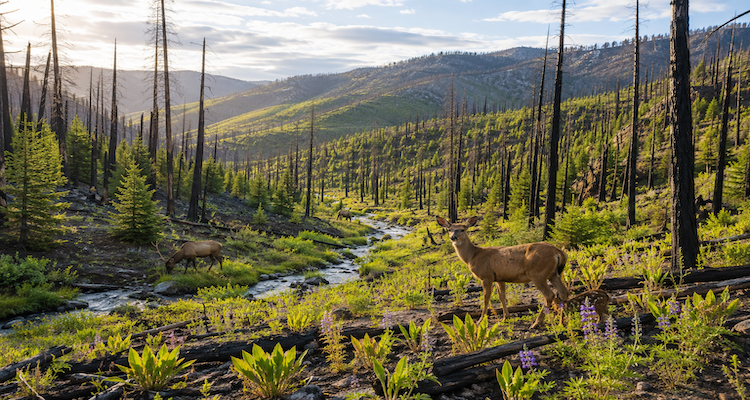
After a wildfire, for example, plants that can germinate quickly often take advantage of nutrient-rich soil exposed by the fire. With larger plants temporarily removed, sunlight reaches the ground more easily, creating ideal conditions for rapid growth.
Similarly, insects that exploit newly dead wood, exposed vegetation, or open habitats can experience population booms before competitors return.
The lesson is simple: in ecosystems, being first often matters as much as being strongest.
Fire Can Be a Friend
Wildfires are frequently viewed as environmental disasters, but many ecosystems have evolved to depend on periodic burning.
Certain pine species, for example, possess cones that release seeds only when exposed to intense heat. Some grassland plants regenerate faster after fires than they do under normal conditions. Fire can also reduce invasive vegetation and recycle nutrients back into the soil.
In regions where fire has historically occurred naturally, many species are not merely tolerant of fire they are adapted to benefit from it.
Problems often arise when fire patterns change dramatically due to human activity, climate shifts, or land management practices. In those cases, ecosystems may face disturbances outside the conditions to which they evolved.
Even so, the broader ecological principle remains: what looks catastrophic from one perspective may create essential opportunities for another species.
Open Space Favors Adaptability
Natural disasters frequently create open habitats. Forest canopies disappear, floodwaters clear vegetation, and landslides expose bare ground.
These newly available spaces often favor generalist species organisms capable of surviving under a wide range of conditions.
Animals such as coyotes, raccoons, certain bird species, and many insects are known for their flexibility. They can adjust diets, alter behavior, and exploit changing environments more effectively than highly specialized species.
Specialists often depend on very specific food sources, nesting sites, or habitat conditions. When those requirements disappear, survival becomes difficult.
Generalists, on the other hand, can often pivot quickly. Their adaptability becomes a competitive advantage precisely when conditions are most unpredictable.
Nature Rewards Resilience, Not Permanence
One of the most important ecological insights revealed by natural disasters is that ecosystems are not designed to remain unchanged.
Many people imagine healthy ecosystems as stable and unchanging environments. In reality, constant adaptation is often what keeps ecosystems functioning over long periods.
Disturbances create cycles of destruction and renewal. Some species decline while others expand. Over time, these shifts can increase biodiversity by creating a variety of habitats that support different forms of life.
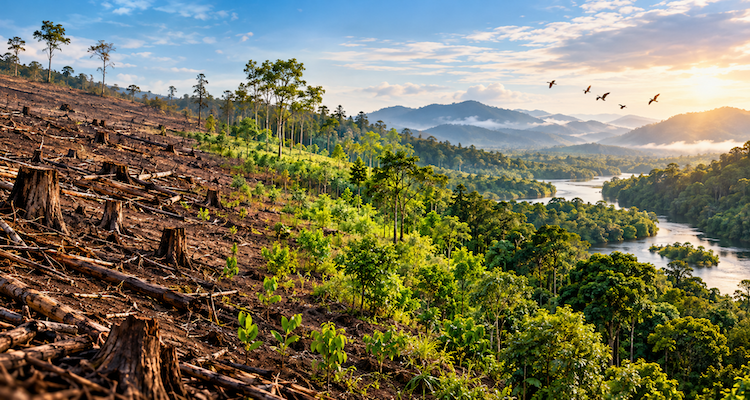
A forest recovering from a wildfire may contain young vegetation, mature trees, open clearings, and regenerating soil all of which support different communities of organisms.
Rather than representing failure, change often represents the mechanism through which ecosystems maintain long-term resilience.
The Hidden Role of Climate Change
Interest in this topic has grown as climate change influences the frequency and intensity of certain natural disasters.
More frequent wildfires, stronger storms, prolonged droughts, and changing rainfall patterns are altering habitats across the globe. These changes are creating new ecological winners and losers.
Some adaptable species may expand into regions where they previously struggled. Others may benefit from changing conditions that reduce competition or create new food sources.
At the same time, many specialized species face growing pressure as environmental changes occur faster than they can adapt.
This highlights an important distinction. Natural disasters have always shaped ecosystems, but the pace and scale of modern environmental change may challenge the adaptive capacity of many species.
Understanding which species thrive and why helps scientists better predict future ecological shifts.
What Wildlife Success Can Teach Us
Perhaps the most fascinating lesson from post-disaster ecosystems extends beyond wildlife itself.
Species that succeed after major disturbances often share common traits: flexibility, rapid adaptation, resourcefulness, and the ability to exploit new opportunities.
These characteristics mirror patterns observed in human societies, businesses, and communities responding to disruption. Whether facing economic shocks, technological change, or environmental challenges, resilience often proves more valuable than rigid stability.
The ecological world demonstrates that survival is not always about resisting change. More often, it is about adapting to it.
This perspective challenges a common assumption that recovery means returning to previous conditions. In nature, recovery frequently involves transformation rather than restoration.
What Happens Next?
As scientists continue studying ecosystems affected by fires, storms, floods, and droughts, a more nuanced understanding is emerging.
Natural disasters undoubtedly cause immense ecological damage and can threaten vulnerable species. Yet they also initiate processes that support regeneration, diversification, and renewal.
The species that thrive afterward are not necessarily the strongest or largest. They are often the most adaptable.
In a rapidly changing world, this insight may become increasingly important. The future of many ecosystems could depend less on preserving static conditions and more on understanding how life responds to disruption.
Natural disasters reveal a fundamental truth about nature: even in moments of destruction, opportunities for renewal are already beginning to take shape.
This content is published for informational or entertainment purposes. Facts, opinions, or references may evolve over time, and readers are encouraged to verify details from reliable sources.