








Why Wildlife May Be the Missing Piece in Water Security
Water security is often discussed in terms of reservoirs, pipelines, dams, treatment plants, and infrastructure investments. Yet some of the most important contributors to reliable water supplies do not appear on engineering blueprints at all. They live in forests, wetlands, rivers, grasslands, and coastal ecosystems.
A growing body of conservation and water management thinking is drawing attention to an overlooked reality: wildlife and healthy ecosystems play a significant role in protecting the water resources that communities, industries, and agriculture depend on. As climate pressures intensify and water shortages become more common in many regions, the connection between biodiversity and water security is becoming harder to ignore.
The shift represents more than an environmental concern. It reflects a broader recognition that safeguarding water may require protecting the natural systems that regulate it.
The Natural Infrastructure Hidden Behind Clean Water
When people think about water security, they often focus on access to sufficient quantities of safe water. Achieving that goal, however, depends heavily on the health of surrounding ecosystems.
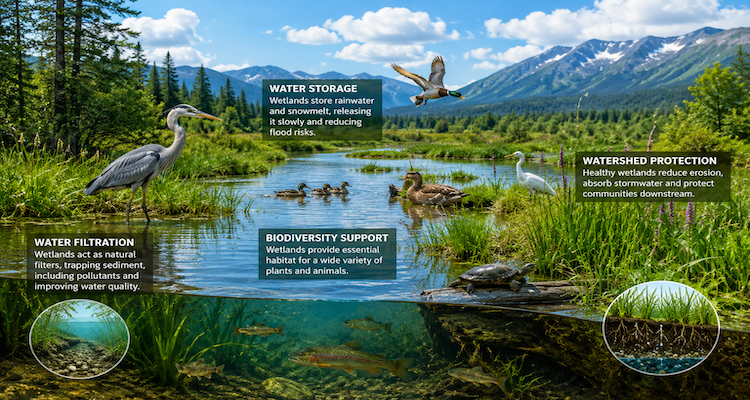
Forests help regulate rainfall patterns and reduce soil erosion. Wetlands filter pollutants, store excess water during storms, and gradually release it during dry periods. Grasslands improve water infiltration into the ground, supporting aquifer recharge. Rivers and floodplains maintain natural cycles that sustain both wildlife and human communities.
Wildlife is an essential part of these systems. Animals influence vegetation growth, soil conditions, seed dispersal, and nutrient movement across landscapes. Together, these processes contribute to healthier ecosystems that are better able to support stable water supplies.
The idea is increasingly being described as “natural infrastructure”, environmental systems that provide services traditionally associated with built infrastructure but often at lower long-term ecological and economic costs.
Why Interest Is Growing Now
Several global trends are bringing greater attention to the relationship between wildlife and water.
Climate change is altering rainfall patterns, increasing drought risks, and intensifying floods in many regions. At the same time, population growth and economic development continue to increase demand for freshwater resources.
These pressures are exposing weaknesses in water systems that rely solely on engineered solutions. Communities are discovering that dams and pipelines alone cannot solve every water challenge if the surrounding ecosystems are degraded.
Conservation organizations, policymakers, water utilities, and businesses are increasingly exploring nature-based approaches alongside traditional infrastructure investments. Restoring wetlands, protecting watersheds, and conserving biodiversity are now being viewed not only as environmental goals but also as practical strategies for managing water risks.
This growing interest reflects a larger shift in how societies think about resilience. Rather than treating nature and infrastructure as separate priorities, many experts are beginning to see them as interconnected parts of the same system.
The Wildlife-Water Connection Most People Overlook
One of the most underappreciated aspects of water security is the role animals play in maintaining ecosystem functions.
Beavers provide a well-known example. By building dams, they create wetlands that slow water flow, increase groundwater recharge, and improve drought resilience in some landscapes. Their activities can influence water storage and habitat quality across entire watersheds.
Fish species contribute to nutrient cycling within aquatic systems. Large herbivores shape vegetation patterns that affect soil stability and water retention. Birds and mammals disperse seeds that support forest regeneration, helping maintain watersheds that protect downstream water supplies.
The important insight is that wildlife does not simply benefit from healthy ecosystems it actively helps create and sustain them.
When biodiversity declines, ecosystems often become less resilient. That reduced resilience can affect water quality, water availability, and the ability of landscapes to recover from environmental stress.
Water Security Is Becoming a Biodiversity Issue
For decades, biodiversity conservation and water management were often treated as separate fields. That distinction is beginning to fade.
Water shortages can threaten ecosystems and wildlife populations. At the same time, ecosystem degradation can weaken water security for people. The relationship works in both directions.
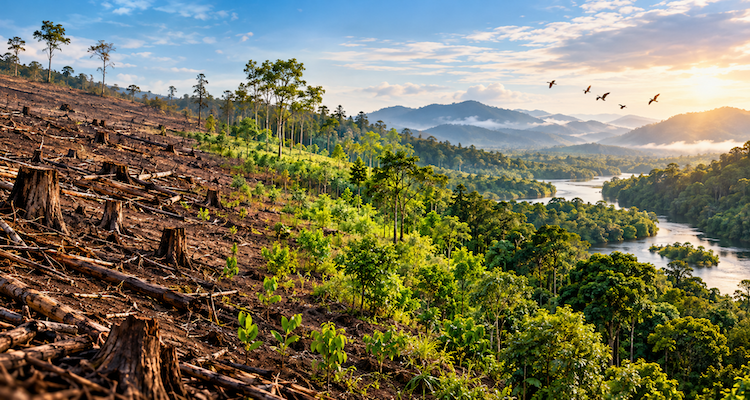
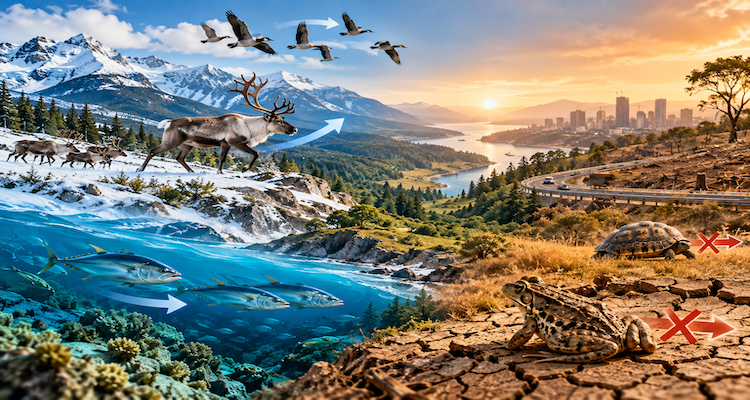
Deforestation, habitat fragmentation, wetland drainage, and river modification can disrupt ecological processes that support healthy watersheds. Over time, these changes may contribute to increased sedimentation, poorer water quality, reduced groundwater recharge, and greater vulnerability to floods and droughts.
As a result, biodiversity loss is increasingly being viewed not only as an ecological challenge but also as a resource management concern with direct implications for human well-being.
This broader perspective is encouraging more integrated planning between conservation efforts and water resource management.
What This Means for Cities, Agriculture, and Business
The growing recognition of wildlife’s role in water security has practical implications far beyond conservation areas.
Cities depend on watersheds that may be located far outside urban boundaries. Protecting forests, wetlands, and river systems upstream can reduce treatment costs and improve water reliability for millions of residents.
Agriculture relies on predictable water supplies and healthy soils. Ecosystems that regulate water flows and reduce erosion can help farming regions become more resilient to climate variability.
Businesses are also paying closer attention. Industries ranging from food production to manufacturing depend on stable water resources. Water-related disruptions can create operational risks, supply chain challenges, and rising costs.
As environmental risks become more visible, some companies are expanding investments in watershed protection and ecosystem restoration as part of broader sustainability and risk management strategies.
A New Way of Thinking About Conservation
Perhaps the most important shift is conceptual rather than technical.
Conservation has often been framed as an effort to protect wildlife for ethical, ecological, or aesthetic reasons. While those motivations remain important, the discussion is expanding to include practical benefits that directly affect human societies.
Water security offers one of the clearest examples.
Protecting biodiversity is increasingly understood not merely as preserving species but as maintaining the ecological processes that support essential resources. Healthy wildlife populations contribute to healthy ecosystems, and healthy ecosystems contribute to more reliable water systems.
This perspective can help bridge traditional divides between environmental advocates, policymakers, businesses, and local communities. Water is a shared concern, and the ecosystems that support it provide common ground for collaboration.
Looking Ahead
The challenges facing global water systems are unlikely to disappear anytime soon. Climate uncertainty, growing demand, and environmental degradation will continue to test the resilience of communities around the world.
In response, attention is shifting toward solutions that combine engineering, policy, and ecological stewardship.
Wildlife alone cannot solve water security challenges. But ignoring its role may mean overlooking one of the most effective allies available. As understanding of ecosystem services continues to grow, protecting biodiversity may increasingly be recognized as an investment in water resilience rather than simply a conservation objective.
The future of water security may depend not only on what people build, but also on what they choose to protect.
This content is published for informational or entertainment purposes. Facts, opinions, or references may evolve over time, and readers are encouraged to verify details from reliable sources.