










The Streaming Arrival of The Super Mario Galaxy Movie Signals a Bigger Shift for Nintendo
Key Takeaways
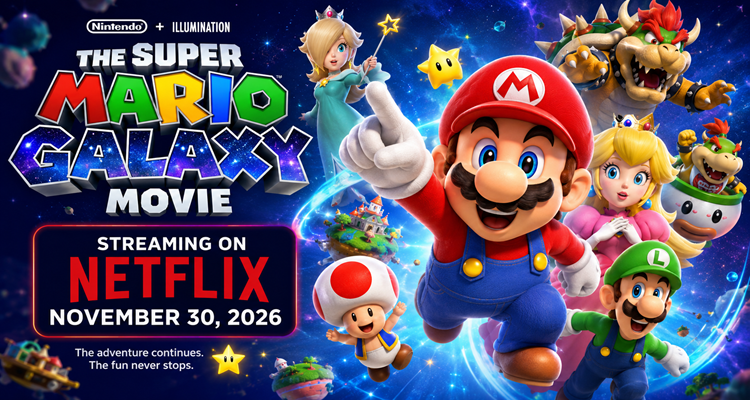
- The Super Mario Galaxy Movie is scheduled to arrive on Netflix US on November 30, 2026.
- The film has surpassed $1 billion globally, becoming the first movie of 2026 to reach that milestone.
- Nintendo’s expanding cinematic universe is turning video game characters into long-term entertainment franchises.
- Streaming releases are increasingly becoming a crucial phase of a movie’s commercial lifecycle.
- The success of Mario films may influence how studios approach future video game adaptations.
Introduction
A successful theatrical run no longer marks the end of a movie’s journey. In today’s entertainment landscape, streaming platforms have become a second stage where major blockbusters find new audiences, extend cultural relevance, and generate fresh waves of engagement.
That reality is especially evident with The Super Mario Galaxy Movie, the latest animated adventure from Illumination and Nintendo. After dominating theaters and crossing the coveted $1 billion mark worldwide, the film is now preparing for its next chapter through streaming distribution.
For many viewers, the upcoming Netflix release is less about convenience and more about accessibility. Families who missed the theatrical run, longtime Nintendo fans, and younger audiences discovering Mario for the first time will soon have another opportunity to experience the film.
Beyond the release date itself, the movie highlights a broader transformation taking place across Hollywood. Video game adaptations are no longer experimental projects. They have become some of the industry’s most dependable franchises, and Nintendo appears determined to build on that momentum.
Understanding the Development
A Blockbuster Built on a Familiar Formula
Illumination’s partnership with Nintendo continues to produce impressive results. Following the enormous success of the first Mario film, the sequel expanded the franchise’s cinematic scope while bringing back many fan-favorite characters.
Returning voice actors include Chris Pratt as Mario, Anya Taylor-Joy as Princess Peach, Charlie Day as Luigi, Jack Black as Bowser, Keegan-Michael Key as Toad, and Seth Rogen as Donkey Kong. The sequel also introduces new characters and storylines that further broaden Nintendo’s movie universe.
Commercially, the film has exceeded expectations. Crossing the $1 billion global revenue threshold places it among the most successful releases of the year and reinforces the enduring appeal of Nintendo’s intellectual property.
Confirmed Streaming Timeline
The film debuted in theaters on April 1, 2026.
Under Universal’s distribution arrangement, the movie will first move to Peacock before eventually arriving on Netflix in the United States. Following a four-month exclusive period on Peacock, Netflix becomes the next major destination for audiences.
As a result, US subscribers can expect The Super Mario Galaxy Movie to begin streaming on Netflix on November 30, 2026.
This schedule mirrors the strategy used for the first Mario film, suggesting that Universal has found a release model that effectively balances theatrical revenue, platform exclusivity, and long-term audience engagement.
Why This Matters
Streaming Has Become Part of the Event
There was a time when home releases represented the final stage of a film’s lifecycle. Today, streaming launches often create a second wave of attention that rivals the theatrical debut.
Popular films regularly trend across social media once they become available on major platforms. Viewers share reactions, families watch together during holiday periods, and younger audiences discover franchises that they may have missed in theaters.
For a family-focused brand like Mario, this extended visibility is particularly valuable.
Expanding Nintendo’s Audience
Nintendo’s gaming audience already spans multiple generations, but movies provide a different kind of reach.
Not every viewer owns a Nintendo console. Not every household follows gaming news. A successful film can introduce characters to entirely new audiences who may later engage with games, merchandise, theme parks, and future movies.
This interconnected ecosystem creates opportunities far beyond box-office revenue.
A New Benchmark for Video Game Adaptations
For years, Hollywood struggled to translate video game properties into successful films. Many adaptations failed to satisfy critics, audiences, or both.
Recent successes have changed that perception.
Studios now understand that audiences want adaptations that respect source material while remaining accessible to newcomers. The Mario franchise has become one of the clearest examples of this strategy working at scale.
What Is Changing
The Rise of Franchise Ecosystems
Entertainment companies increasingly view intellectual property as interconnected ecosystems rather than standalone products.
Nintendo’s approach reflects this shift.
Characters move across games, films, theme parks, collectibles, streaming platforms, and live experiences. Each platform strengthens awareness of the others.
The result is a business model where a successful movie drives engagement across multiple revenue streams.
Streaming Windows Are Becoming Strategic Assets
The timing of streaming releases is no longer arbitrary.
Studios carefully schedule transitions from theaters to premium video-on-demand services and eventually subscription platforms. Each stage is designed to maximize value while maintaining audience interest.
The Mario sequel demonstrates how predictable release windows can create anticipation months in advance.
Fans know the movie is coming, which helps maintain excitement long after the theatrical run has ended.
Family Entertainment Continues to Dominate
Another notable trend is the enduring strength of family-focused content.
While audience tastes continue to fragment across genres and platforms, family-friendly franchises often achieve broad appeal. Parents, children, and nostalgic adults can all engage with the same property.
That wide demographic reach remains one of the industry’s most powerful commercial advantages.
The Bigger Picture
Nintendo’s Entertainment Ambitions Are Growing
Nintendo’s success in film appears to be part of a larger long-term strategy.
For decades, the company primarily focused on hardware and software. Today, it is increasingly positioning itself as a broader entertainment brand.
Theme park attractions, feature films, merchandise expansions, and cross-media storytelling all point toward a future where Nintendo operates more like a global entertainment powerhouse than a traditional game company.
Hollywood’s Relationship With Gaming Has Changed
The gaming industry now generates more revenue than many traditional entertainment sectors.
As a result, film studios increasingly view games as valuable sources of intellectual property.
Unlike original concepts, established game franchises already possess dedicated fan communities, recognizable characters, and global brand awareness.
This reduces risk while increasing the likelihood of audience engagement.
Global Appeal Is Driving Growth
One reason Mario continues to succeed internationally is its simplicity.
The characters are recognizable across cultures, age groups, and languages. Visual storytelling and familiar themes allow the franchise to travel effectively across international markets.
That global accessibility remains a significant advantage as streaming platforms compete for worldwide audiences.
Opportunities and Challenges
Opportunities
The success of The Super Mario Galaxy Movie opens several possibilities:
- More Nintendo film adaptations.
- Expanded cinematic storylines.
- Greater integration between games and films.
- Stronger global streaming performance.
- New merchandising and licensing opportunities.
The post-credit setup for future installments suggests that Nintendo and Illumination are already planning beyond a single sequel.
Challenges
Despite its commercial success, the film also highlights several challenges.
Critical reception was more mixed than audience reactions. Sustaining long-term franchise momentum may require balancing fan expectations with stronger storytelling ambitions.
There is also the risk of franchise fatigue. Audiences embrace familiar characters, but repeated success can create pressure to innovate while preserving what made the property popular in the first place.
Studios must carefully manage that balance.
What Comes Next
A Larger Nintendo Cinematic Universe
The most likely outcome is continued expansion.
The film’s ending points toward future adventures, while its financial performance strengthens the case for additional projects.
Nintendo now has evidence that audiences are willing to follow its characters beyond gaming platforms.
Streaming Could Amplify Future Demand
The Netflix release may generate another wave of enthusiasm, especially among younger viewers and families preparing for holiday viewing.
If audience engagement mirrors the performance of the original film, streaming success could influence the timing and scale of future Nintendo projects.
A Template Other Studios Will Study
Perhaps the most important consequence is what other companies may learn from Mario’s success.
The combination of recognizable intellectual property, family-friendly storytelling, strategic streaming distribution, and cross-platform branding has proven remarkably effective.
Expect more studios to adopt similar approaches as competition for audience attention continues to intensify.
Conclusion
The upcoming Netflix release of The Super Mario Galaxy Movie represents more than a new streaming option for viewers. It highlights how modern entertainment franchises are built, sustained, and expanded across multiple platforms.
The film’s billion-dollar performance confirms that Nintendo’s characters remain powerful cultural assets, while its carefully planned streaming rollout demonstrates how studios now maximize audience engagement long after theatrical releases end.
For fans, the arrival on Netflix offers a convenient way to revisit the adventure or experience it for the first time. For the entertainment industry, it serves as another reminder that video game adaptations have evolved from uncertain experiments into some of Hollywood’s most reliable success stories.
This content is published for informational or entertainment purposes. Facts, opinions, or references may evolve over time, and readers are encouraged to verify details from reliable sources.
Related News
- Netflix’s 2026 Book Options Reveal What Stories It May Be Betting On Next
- Why Video Game Adaptations Are Finally Winning Over Audiences
- From Fan Fiction to Blockbusters: How Online Communities Are Changing Storytelling
- The Death of Channel Surfing: How Streaming Changed the Way We Discover Entertainment