






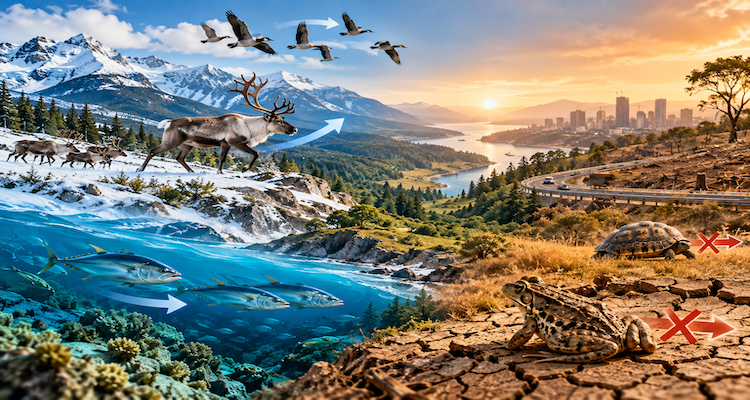


The Science of Ecological Recovery: Why Nature Does Not Always Return to What It Was
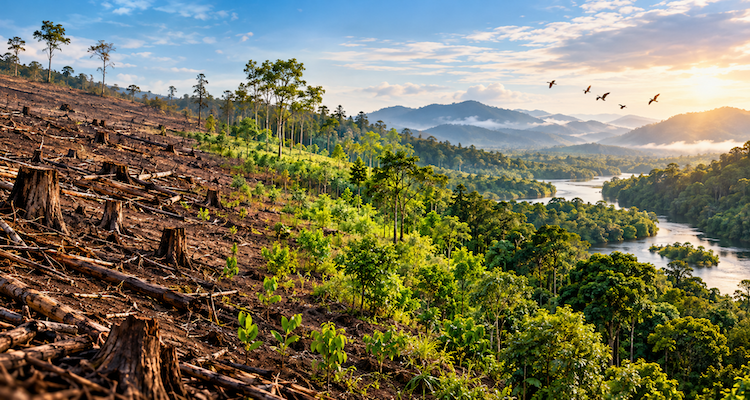
Nature is remarkably capable of recovery. Forests can regenerate after clearing, rivers can improve after pollution is reduced, wildlife populations can rebound after protection, and damaged habitats can regain ecological functions.
But recovery does not necessarily mean returning to an earlier version of nature.
That distinction is becoming increasingly important as governments, conservation groups and communities invest in restoring degraded ecosystems. Ecological restoration is often described as bringing nature back. In scientific terms, however, the more complicated question is: back to what?
An ecosystem is not a photograph that can simply be reproduced. It is a dynamic network of organisms, soils, water, climate, disturbances, predators, prey, microorganisms and ecological interactions. Once those relationships are disrupted, the pathway back can be slow, incomplete or fundamentally different from the original trajectory.
Research increasingly shows that successful restoration should therefore be judged not only by whether species return, but by whether ecological processes, interactions and self-sustaining functions are being rebuilt.
Key Takeaways
- Ecosystems can recover substantially without returning completely to their previous composition or structure.
- Recovery rates differ because plants, animals, soils and ecological interactions respond on different timescales.
- Removing the original disturbance can sometimes allow nature to regenerate without intensive intervention.
- Some degraded ecosystems become locked into conditions that make recovery increasingly difficult.
- Restoration works best when ecological processes and long-term resilience matter as much as appearance.
- A changing climate can make historical ecosystem conditions increasingly difficult to reproduce.
Recovery Is Not the Same as Rewinding
For decades, restoration ecology has wrestled with a deceptively simple idea: should restoration attempt to recreate a historical ecosystem, or should it focus on establishing a healthy and functioning ecosystem under present conditions?
The distinction matters because ecosystems constantly change.
A forest recovering from logging, for example, may regain tree cover relatively quickly while taking much longer to rebuild mature habitat, soil characteristics, deadwood, food webs and relationships among species. The landscape may look green again long before the ecological system has recovered its previous complexity.
The National Academies has similarly emphasized that restoration involves more than recreating the visible form of an ecosystem. Structure without ecological functions does not necessarily represent genuine restoration.
The United Nations Environment Programme now frames ecosystem restoration broadly as a process of halting and reversing degradation while recovering biodiversity and ecosystem services. It also recognizes that returning an ecosystem to its original state is not always possible or desirable, particularly where land use and environmental conditions have changed.
That is a crucial shift in thinking.
The goal may not always be to recreate yesterday’s ecosystem. It may instead be to restore ecological integrity, resilience and functioning under today’s and tomorrow’s conditions.
Why Recovery Happens at Different Speeds
One of the most important findings from restoration science is that recovery does not occur uniformly.
Plants may recolonize an area while animals remain absent. Soil organisms can respond differently from vegetation. Carbon accumulation can take decades or longer. Predator-prey relationships may take still longer to rebuild.
A 2022 global meta-analysis of terrestrial restoration studies found that restoration increased biodiversity compared with degraded sites, but restored ecosystems remained, on average, below reference ecosystems in biodiversity and showed greater variability.
That gap is important because it exposes a common misconception: visible improvement is not necessarily ecological completion.
Recent research has provided an even more detailed picture. A 2026 study published in Nature examined recovery across 16 taxonomic groups in a tropical rainforest. It found that abundance and diversity could regain more than 90% of their previous levels within 30 years, while community composition reached roughly 75% similarity to old-growth forest. Full recovery, however, required several decades, and different groups recovered at different rates.
Mobile animals such as seed dispersers and pollinators could recover faster than trees and tree seedlings.
The lesson is broader than tropical forests.
An ecosystem is a collection of interconnected recovery processes. Measuring only one component can therefore produce an overly optimistic picture.
Sometimes the Best Restoration Is Removing the Pressure
Not every damaged ecosystem requires intensive reconstruction.
In some cases, the most effective intervention is simply to stop the disturbance that caused the degradation.
This is known as passive or natural restoration. If a source of stress is removed and the ecosystem still possesses sufficient regenerative capacity, natural processes can begin rebuilding vegetation and ecological functions.
The National Academies has documented this principle in watershed and riparian restoration. Removing pressures such as intensive grazing or vegetation clearing can allow natural regeneration, provided the biological and environmental conditions needed for recovery remain.
This approach has an important advantage: it allows ecosystems to use their own internal processes rather than forcing a predetermined design onto them.
But passive restoration is not universally effective.
If seed sources have disappeared, soil conditions have changed substantially, invasive species dominate, hydrology has been altered or ecological interactions have broken down, simply removing the original pressure may not be enough.
That is where active restoration can become necessary.
Planting native vegetation, restoring water flows, reintroducing species or modifying habitat conditions can sometimes help overcome barriers that prevent natural recovery.
The most appropriate strategy therefore depends on the ecosystem’s remaining capacity to regenerate.
When Ecosystems Become Difficult to Bring Back
Perhaps the most fascinating part of ecological recovery is that degradation can sometimes change the rules governing recovery itself.
An ecosystem may cross a threshold after repeated disturbances and settle into a different configuration. Once there, reversing the original pressure does not necessarily cause the system to retrace its previous path.
This phenomenon is often discussed through concepts such as alternative stable states and hysteresis.
Consider a simplified example.
A healthy ecosystem may contain abundant vegetation, herbivores and predators that collectively maintain its structure. Repeated disturbance could remove vegetation and reduce populations of organisms responsible for regeneration. Once those components disappear, new feedbacks can reinforce the degraded condition.
Restoring the original environmental pressure may therefore not be sufficient.
Recent restoration research has highlighted this problem. In some degraded tropical forests, repeated fire can reduce tree cover and deplete seed sources. Lower seed availability then limits tree recruitment, which makes it harder for forest cover to return. The degraded condition effectively reinforces itself.
Similar feedbacks can occur in coral reef ecosystems. Overfishing, nutrient pollution and warming can contribute to conditions in which algae become dominant while herbivorous fish decline. Once established, that ecological configuration can make coral recruitment more difficult.
This is why restoration sometimes requires more than simply stopping the original damage.
The system may need help crossing the barriers that emerged during degradation.
The Missing Ingredient: Ecological Interactions
A landscape can appear restored while still lacking some of the relationships that make an ecosystem function.
This is one reason scientists increasingly look beyond species counts.
Predators influence prey. Pollinators influence plant reproduction. Seed dispersers influence forest regeneration. Microorganisms influence nutrient cycling. Vegetation affects soil, water and temperature, which in turn influence the organisms living within the ecosystem.
Restoring individual species without rebuilding these interactions can therefore produce a system that looks healthy without being fully self-sustaining.
Research on ecosystem recovery has demonstrated why the sequence and coordination of species recovery can matter. A 2017 study in Nature Ecology & Evolution found that synchronized recovery of predators and prey could be more efficient than recovering components one at a time in the modeled systems examined, highlighting the importance of ecological relationships rather than treating species as isolated units.
This changes how restoration success should be measured.
Instead of asking only, “How many species have returned?” scientists increasingly need to ask:
- Are populations reproducing successfully?
- Are food webs functioning?
- Are nutrient cycles recovering?
- Are species interactions returning?
- Can the ecosystem withstand another disturbance?
- Can it maintain itself without continual human intervention?
Those questions move restoration from appearance toward ecological function.
Climate Change Makes the Historical Target More Complicated
There is another reason ecosystems may not return to exactly what they were: the physical environment itself is changing.
Temperature regimes, rainfall patterns, wildfire conditions, ocean temperatures and other environmental variables can shift over time. A landscape that once supported a particular ecological community may no longer provide the same conditions.
UNEP explicitly notes that restoration does not always mean returning ecosystems to their original state, particularly in a changing climate.
This does not make restoration pointless. Quite the opposite.
It means restoration objectives may need to account for future ecological conditions rather than relying exclusively on historical reference points.
A forest restoration project, for example, may need to consider whether the species historically dominant at the site will remain capable of surviving future climate conditions. A coastal restoration project may have to consider warming waters and repeated extreme events rather than assuming that past environmental conditions will return.
The challenge is therefore becoming less about recreating a fixed historical picture and more about rebuilding ecological capacity.
What Successful Recovery Should Look Like
A genuinely recovering ecosystem should not be judged by one photograph or one measurement.
Recovery is better understood as a trajectory.
A useful restoration assessment can examine several dimensions simultaneously:
Composition: Are native species returning?
Structure: Is habitat developing the complexity expected of a functioning ecosystem?
Function: Are nutrient cycling, productivity, decomposition, reproduction and other ecological processes operating?
Interactions: Are food webs, pollination, seed dispersal and other relationships being rebuilt?
Resilience: Can the ecosystem withstand disturbance and continue functioning?
Self-sufficiency: Can recovery continue without permanent intensive human intervention?
This approach also explains why restoration can appear disappointing if judged against an unrealistic expectation of instant transformation.
A restored ecosystem may be significantly healthier than a degraded one while still falling short of a historical reference ecosystem.
That is not necessarily failure.
It may represent substantial ecological recovery occurring along a long trajectory.
The Bigger Lesson: Protecting Nature Is Easier Than Rebuilding It
The science of ecological recovery contains an uncomfortable but important lesson.
Nature can be remarkably resilient, but resilience has limits.
A global meta-analysis of approximately 400 studies examining recovery from large-scale disturbances found that ecosystems generally progressed toward recovery but rarely recovered completely. Recovery rates also slowed with time after disturbance, suggesting that the final stages can be particularly difficult.
That finding strengthens the case for conservation alongside restoration.
Restoration is essential because enormous areas of land, freshwater and marine ecosystems have already been degraded. But restoration should not become an excuse for treating intact ecosystems as replaceable.
The ecological processes that disappear during degradation may take decades, centuries or longer to rebuild and some may never return in exactly the same form.
The United Nations Decade on Ecosystem Restoration, running from 2021 to 2030, reflects the scale of the challenge. Its objective is not simply to plant trees or recreate landscapes, but to prevent, halt and reverse ecosystem degradation while improving biodiversity and ecosystem services.
The deeper scientific message is therefore straightforward:
Nature can recover, but recovery has a history.
An ecosystem remembers disturbance through its soils, species, interactions, seed banks, food webs and altered environmental conditions. Those legacies influence what happens next.
The most successful restoration efforts will not ask nature to reproduce a photograph from the past. They will identify what is preventing recovery, restore the processes that can sustain life, remove pressures that continue to cause damage, and give ecological systems enough time to rebuild complexity.
Sometimes the result may closely resemble what came before.
Sometimes it will not.
What matters is whether the recovering ecosystem is once again capable of supporting biodiversity, functioning through change and sustaining itself over time.
That is a more demanding definition of ecological recovery but also a more scientifically realistic one.
This content is published for informational or entertainment purposes. Facts, opinions, or references may evolve over time, and readers are encouraged to verify details from reliable sources.