






The Communities Where a Person’s Name Changes Every Time Their Life Changes
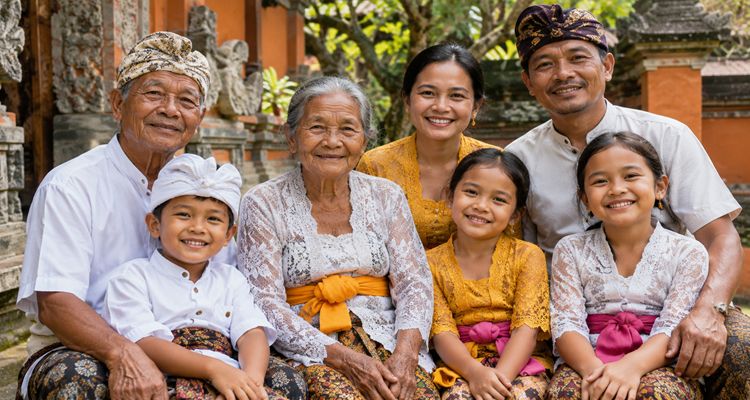
In some societies, a name is more than a lifelong label. It can reflect parenthood, adulthood, social responsibility, spiritual connections, and the relationships that define who a person has become.
Most people grow up believing that a name is something permanent. It appears on a birth certificate, follows a person through school, and remains attached to their identity for decades. Even when circumstances change dramatically, the name usually stays the same.
But this understanding of identity is far from universal.
Across different cultures and historical periods, people have acquired new names as they entered adulthood, became parents, assumed leadership roles, or experienced significant personal transformations. Sometimes an earlier name was replaced. In other cases, new names accumulated alongside existing ones.
Among certain Inuit communities, names have connected individuals to relatives and ancestors across generations. In Bali, family relationships have traditionally influenced what adults are called. In historical Japan, changes in household position and social responsibility could also bring changes in personal names.
These practices reveal a fascinating distinction: a name does not always describe a fixed individual. Sometimes it describes a person’s changing place in the world.
Importantly, no single community necessarily changes everyone’s name after every major event. Naming customs vary considerably, even within the same culture. What connects these traditions is the idea that identity can develop through relationships, responsibilities, and stages of life.
When Becoming a Parent Changes What People Call You
In parts of Bali, Indonesia, one of the most revealing naming traditions concerns the transition from childhood to parenthood.
Balinese naming systems have historically included several ways to identify a person. These can include personal names, birth-order names, kinship terms, social titles, and names derived from family relationships.
A particularly interesting practice is known as teknonymy.
Teknonymy means referring to someone through their relationship to another person, often their child.
For example, someone previously addressed by a personal name might become known socially as the father or mother of a particular child. When that person becomes a grandparent, another relationship-based designation may take precedence.
ILLUSTRATIVE EXAMPLE
-
Childhood: A person is commonly identified by a personal or birth-order name.
-
Parenthood: The person may be addressed as “Mother of Made” or “Father of Made.”
-
Grandparenthood: A new designation, such as “Grandmother of Wayan,” may become socially important.
These are simplified examples of relationship-based naming, not a universal sequence followed by every Balinese person.
The anthropologist Clifford Geertz examined Balinese systems of personal identification, describing how different forms of address express different aspects of a person’s social position.
A crucial detail is that the underlying personal name does not necessarily disappear or legally change. What changes is the designation that becomes socially meaningful.
In this system, becoming a parent or grandparent is not merely a private family milestone. It can alter how the wider community identifies and addresses someone.
This distinction is supported by anthropological accounts of Balinese naming and teknonymy.
Inuit Naming Traditions: Identity That Connects Generations
Among Inuit peoples of the Arctic, naming has traditionally carried meanings that extend beyond distinguishing one individual from another.
In various Inuit communities, names have connected children with deceased relatives, respected individuals, and networks of kinship.
One important tradition is associated with sauniq, a form of namesake relationship through which a child may receive the name of someone who has died.
Depending on the community and its beliefs, the connection can involve more than remembrance. Names may carry spiritual significance, linking the living with earlier generations.
A child might receive multiple names, and additional names could be acquired during life. Different relatives or social circles might also use different names for the same individual.
Research into Inuit naming describes personal identity as something formed partly through these relationships, rather than through a single permanent label.
A name can preserve someone’s presence
Consider the difference between two approaches to naming.
In one system, a child is named primarily because the parents like a particular word or wish to give the child a distinctive identity.
In a namesake tradition, the choice may also express a relationship with someone who lived before the child was born.
The name can become a connection between generations.
This does not mean every Inuit community follows identical customs or that every name has the same spiritual interpretation. Inuit peoples encompass diverse communities, languages, and histories across the Arctic.
Nevertheless, the traditions demonstrate how naming can serve as a form of social memory.
A person’s identity is not understood solely through their individual biography. It can also be shaped by the people whose names they carry.
Historical Japan: New Responsibilities, New Names
In early modern Japan, changing names could accompany changes in adulthood, household position, occupation, or social status.
Historical research into Japanese naming patterns has documented individuals who changed their names more than once during their lives.
A young person might acquire a different name upon entering adult society. Later, adoption, marriage, succession to household leadership, or retirement could create circumstances for another change.
These transitions were especially significant in a society where household continuity and inherited responsibilities played important roles.
A study of name-changing patterns in early modern Japan found connections between name changes and events such as becoming a household head, marriage, and movement between households. The relationships differed by age and circumstance.
Why household identity mattered
In a household-centered social system, a person’s responsibilities could change substantially over time.
Someone might begin life as a dependent child, become an apprentice or worker, enter another household through adoption or marriage, and eventually assume leadership of a family enterprise.
A new name could help recognize the altered position.
However, these were historically specific practices, not evidence that Japanese people today routinely change their names at every life milestone.
The distinction matters because naming traditions cannot be separated from the social institutions that give them meaning.
The Maasai: When a New Life Stage Brings a New Social Identity
Among Maasai communities in Kenya and Tanzania, life stages have traditionally been organized through age-based social systems.
These systems distinguish between age-sets, groups of people initiated during a particular period, and age-grades, the stages of responsibility through which people progress.
For men participating in these traditions, the transition from boyhood to warriorhood and eventually elderhood has historically involved important ceremonies.
UNESCO identifies three significant Maasai rites of passage: Enkipaata, Eunoto, and Olng’esherr. These ceremonies help mark transitions toward initiation, adulthood, and eldership.
A person moving from warriorhood to elderhood does not necessarily receive a completely new personal name. Instead, their recognized social designation and responsibilities change.
An age-set also has a collective name, connecting its members to a shared generational identity.
This is an important variation on the article’s central theme. A changing social identity is not always the same as an individual name change.
The Maasai example illustrates how communities can recognize the passage of life through publicly acknowledged transitions, collective identities, and ceremonial responsibilities.
Three Different Ways a Name Can Change
Although these traditions share certain themes, they represent different naming processes.
| Naming process | What changes | Cultural example |
|---|---|---|
| Personal renaming | A person adopts or receives another individual name | Historical Japan |
| Accumulation of names | Additional names become part of someone’s identity | Inuit naming traditions |
| Relationship-based naming | A person is addressed through their relationship to a child or descendant | Balinese teknonymy |
| Changes in social designation | A new title or age-grade reflects altered responsibilities | Maasai age systems |
Understanding these differences prevents a common misunderstanding: not every change in what someone is called amounts to changing their official personal name.
Some traditions involve replacement. Others involve addition, social recognition, or the use of different names in different settings.
Why Names Change When Lives Change
These naming practices point toward several ways societies understand personhood.
Identity can be relational
In many modern administrative systems, a name identifies a person as a distinct legal individual.
Relationship-based naming emphasizes something different: who that person is in relation to others.
Becoming someone’s mother, father, or grandparent may transform how the community understands their position.
The name makes that relationship visible.
Identity can carry history
Names can also preserve connections with people who came before.
In namesake traditions, an individual’s identity may include relationships to ancestors or deceased community members.
Naming therefore becomes a way of sustaining memory, not simply assigning labels.
Identity can reflect responsibility
A change in social position can also justify a new form of address.
An apprentice becoming a household head, or a warrior becoming an elder, may gain responsibilities that fundamentally alter their standing.
In such contexts, a name or title can acknowledge what the person is now expected to do.
Identity can be cumulative
Not all naming systems require a person to abandon an earlier identity.
Someone may retain a childhood name, receive additional names, and use different forms of identification depending on the relationship or occasion.
Rather than treating these names as contradictory, a community may understand them as different expressions of the same person’s life.
What Happens When Traditional Naming Meets Modern Documentation?
Modern administrative systems generally depend on standardized identification.
Passports, school records, banking systems, and government databases commonly require a consistent legal name.
This creates an interesting contrast with traditions in which names are flexible, relational, or multiple.
The history of Inuit identification in Canada provides a particularly significant example.
During the twentieth century, Canadian authorities used numerical identification systems for many Inuit people. These administrative identifiers were fundamentally different from traditional naming practices and became associated with broader questions of colonial administration and cultural identity.
Research on Inuit naming and government identification documents the tension between externally imposed identification and the cultural meanings of personal names.
The broader lesson is that a name can perform different functions depending on its setting.
A legal name helps institutions maintain records. A customary name may express ancestry, affection, family relationships, or social standing.
Those functions can coexist, but they should not be mistaken for one another.
Are These Traditions Disappearing?
There is no single answer.
Naming practices change as communities experience migration, education, urbanization, religious change, and interaction with national institutions.
Some customs continue within families or ceremonial settings even when legal documentation uses a fixed name. Others have changed considerably from the forms recorded in earlier anthropological research.
Historical descriptions should therefore not be treated as complete accounts of contemporary life.
For example, Geertz’s influential work on Balinese naming helps explain a documented cultural system, but it does not establish that every Balinese family today follows the same practices.
Similarly, historical accounts of Japanese name changes describe particular periods and social structures rather than a universal contemporary custom.
The question is not simply whether traditional naming survives unchanged. It is also how communities adapt older meanings to present-day circumstances.
A Name Can Tell the Story of a Life
The idea of keeping one name from birth to death can feel so ordinary that it seems inevitable.
Yet naming traditions around the world demonstrate that identity can be expressed in very different ways.
A person may be known through an ancestor’s memory, a child’s existence, a household responsibility, or a new stage of social life.
These practices do not necessarily imply that individuals become entirely different people whenever their names change. Rather, they show how societies choose to recognize continuity and transformation.
A permanent name emphasizes what remains consistent across a lifetime.
A changing name can emphasize what has happened along the way.
Both approaches answer an important human question: how do we recognize someone as the same person, even as their relationships, responsibilities, and place in the world change?
Perhaps the most revealing insight is that a name can be more than something a person possesses. It can also be a record of the people, experiences, and relationships that have shaped their life.
This content is published for informational or entertainment purposes. Facts, opinions, or references may evolve over time, and readers are encouraged to verify details from reliable sources.
Related News
- The Ancient Festivals That Celebrate a New Year When the Rest of the World Thinks It’s an Ordinary Day
- The Wedding Traditions That Began as Protection Against Dangers Nobody Fears Anymore
- The Gestures That Become Rude When You Cross a Border Without Changing Anything
- The Last Person Who Knows Why a Village Celebrates a Forgotten Day