









The Foods That Change Their Flavour Depending on What You Ate Five Minutes Earlier
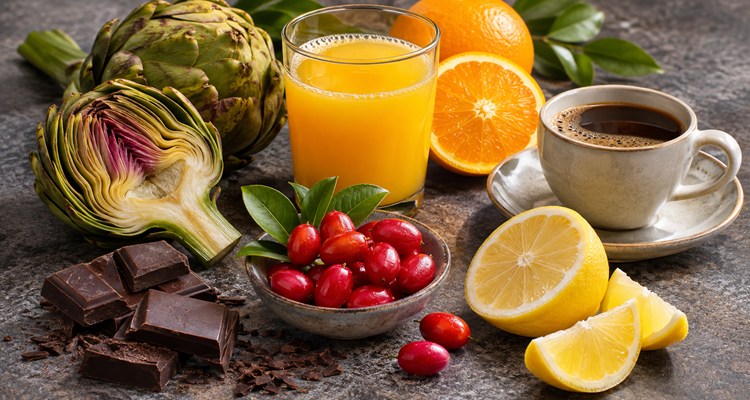
Why chocolate, orange juice, water and even ordinary vegetables can taste surprisingly different depending on what came before them.
Imagine brushing your teeth, taking a sip of orange juice and discovering that your normally sweet breakfast drink tastes unpleasantly bitter. Or eating an artichoke, drinking plain water and noticing an unexpected sweetness.
The food hasn’t necessarily changed. Your sense of taste has.
What we experience as flavour is not simply a property of whatever enters our mouth. It is the result of a constantly changing interaction between taste receptors, saliva, smell, temperature and the chemical traces of things we recently consumed.
Some foods leave behind compounds that temporarily alter how we perceive the next bite. Others change the chemical environment inside the mouth. A few contain remarkable substances capable of making sour foods taste sweet.
This phenomenon helps explain why the order in which we eat and drink can matter almost as much as the ingredients themselves.
And although five minutes is a useful illustration, the effects are not governed by a precise countdown. Some disappear within seconds; others can last considerably longer.
Why Your Previous Bite Can Change Your Next One
Our tongues contain taste receptor cells that help detect five widely recognised basic taste qualities: sweet, sour, salty, bitter and umami.
But flavour is more complicated than taste alone.
When we eat, the brain combines signals from taste receptors with aromas travelling from the mouth to the nose, sensations such as cooling or burning, and the texture and temperature of food.
Crucially, this sensory system does not always return immediately to its previous state after swallowing.
Three processes help explain why.
Taste adaptation occurs when continued or repeated exposure to a taste changes our sensitivity to it. After eating something intensely sweet, for example, a moderately sweet food may seem less impressive.
Chemical interactions occur when substances from one food temporarily affect the way receptors respond to another. Certain plant proteins and compounds can produce unusually dramatic changes.
Sensory contrast happens when the brain evaluates a new flavour against the experience that immediately preceded it. A mildly sour food can seem especially sharp after something very sweet.
These mechanisms overlap, but they are not identical. Some involve measurable changes in receptor activity; others involve how the nervous system interprets incoming signals.
The result is a fascinating everyday reality: the same food can create different experiences depending on what you have just eaten.
1. Miracle Berries: When Lemons Suddenly Taste Sweet
The berry contains a protein called miraculin, which interacts with human sweet taste receptors.
Under relatively neutral conditions, miraculin is not strongly sweet. But when acidic foods enter the mouth, the protein can activate sweet taste receptors, producing an unexpected sweetness.
A lemon may suddenly seem remarkably sweet. Lime juice can become much more palatable, while other acidic foods may take on unfamiliar, dessert-like qualities.
This isn’t because the fruit has added sugar to the lemon. The lemon remains acidic. What changes is the signal reaching the brain.
A 2011 study published in Proceedings of the National Academy of Sciences investigated how miraculin interacts with the human sweet taste receptor complex, known as TAS1R2–TAS1R3. Researchers found that its effects depended on acidity, helping explain why sour foods produce sweetness after exposure to miraculin.
The effect can last an hour or longer, depending on conditions.
There is an important distinction, however: making an acidic food taste sweet does not make it chemically less acidic. Lemon juice can still affect tooth enamel and irritate sensitive tissues even when its sourness seems reduced.
2. Artichokes: The Vegetable That Can Make Water Taste Sweet
After eating artichoke, some people notice that water tastes mildly sweet, despite containing no added sugar.
This effect has been documented in scientific research for decades.
In a 1972 study published in Science, researchers Linda Bartoshuk, C. H. Lee and R. Scarpellino examined the sweet taste of water following exposure to artichoke. They identified compounds associated with the effect, including cynarin and chlorogenic acid salts.
The precise sensory mechanisms are more complex than the familiar explanation that artichokes simply make the tongue sweeter.
What matters is that exposure to certain artichoke compounds can temporarily change the perception of something as ordinary as water.
That makes the experience especially revealing. Unlike lemonade or chocolate, water provides very little flavour of its own to compete with the altered sensation.
The sweetness appears to come from the interaction between the mouth’s recent chemical exposure and the subsequent drink.
Not everyone experiences the effect equally, and its strength may depend on the artichoke preparation and individual sensitivity.
3. Orange Juice: Why It Tastes So Different After Toothpaste
Under normal circumstances, its sugars help balance its acidic and bitter components.
After brushing your teeth, that balance can change dramatically.
One commonly cited contributor is sodium lauryl sulfate (SLS), a foaming agent used in many toothpastes. It can interfere with normal taste perception, including sweetness, while changes in the mouth’s chemical environment may make bitter notes more noticeable.
The result is familiar: orange juice that usually tastes refreshing may suddenly seem harsh, sour or bitter.
However, not every toothpaste contains SLS, and the unpleasant flavour cannot be attributed to a single ingredient in every case. Other toothpaste ingredients and lingering mint sensations can contribute.
The orange juice itself has not necessarily undergone any meaningful chemical transformation.
Instead, the mouth is temporarily interpreting its components differently.
This is also why rinsing thoroughly or allowing more time between brushing and breakfast may change the experience.
4. Chocolate: When Sweetness Disappears After Certain Plants
Chocolate provides another interesting example, particularly when combined with a plant called Gymnema sylvestre.
Traditionally known as gurmar, or the “sugar destroyer,” this plant contains gymnemic acids that can temporarily suppress sweet taste perception.
After exposure to an effective preparation, sugary foods may taste dramatically less sweet.
Milk chocolate, for instance, may lose much of the sweetness that normally balances its cocoa flavours. The remaining bitterness and other sensations can become more prominent.
The change is not caused by removing sugar from the chocolate. Its composition remains the same.
Instead, gymnemic acids interfere with the perception of sweetness.
Research supports this effect. A systematic review of human studies examined plant-derived substances capable of suppressing sweet taste responses, including compounds from Gymnema sylvestre.
A separate 2025 randomised crossover study investigated the effects of gymnema-containing mints on sweetness perception and sugar-related behaviour in adults who described themselves as frequent consumers of sweet foods.
These findings are scientifically interesting, but they do not establish that using gymnema is an effective or appropriate weight-loss treatment.
The practical lesson is simpler: chocolate’s familiar flavour depends on several sensory components working together. Temporarily weaken one of them, and the entire experience can change.
5. Apples and Grapes: Why Fruit Can Taste Less Sweet After Dessert
The apple might seem surprisingly mild, even slightly tart.
Now imagine tasting the same apple after eating something savoury and relatively unsweetened. Its natural sweetness may seem much more noticeable.
This is an example of how sensory adaptation and contrast can influence flavour.
A highly sweet food can temporarily change the perceived intensity of subsequent sweetness. The brain also evaluates the next food in relation to the recent sensory experience.
The effect is not a universal rule. Its strength depends on the foods involved, the length of exposure, individual sensitivity and the interval between samples.
Importantly, this is different from the miracle berry effect.
Miraculin has a specific, experimentally demonstrated interaction with sweet taste receptors. The change in how an apple tastes after dessert can involve broader adaptation and perceptual comparison.
Both demonstrate that flavour depends on context, but they do so through different processes.
6. Coffee: Why the Same Cup Can Taste Bitter or Surprisingly Smooth
What stands out in a particular sip depends partly on the drink itself and partly on the sensory state of the person drinking it.
After eating something intensely sweet, unsweetened coffee may seem especially bitter by comparison.
After a savoury meal, the same coffee may create a different impression.
A lingering flavour from a previous food can also affect the experience. Strong spices, mint, garlic and other aromatic ingredients may remain noticeable through smell and aftertaste.
There is no single predictable formula that determines how every food will change coffee’s flavour.
Coffee is particularly interesting because much of what we call its flavour comes from aroma rather than the tongue’s basic taste signals alone.
A person with a temporarily blocked nose may still detect coffee’s bitterness and acidity but miss much of its characteristic aromatic complexity.
This helps explain why the taste of coffee can seem different even when the beans, brewing method and serving temperature remain unchanged.
What Determines How Long a Flavour Change Lasts?
Not every taste-changing effect has the same duration.
Some arise from short-lived sensory adaptation, while others depend on how long particular compounds remain active in the mouth.
| Previous food or substance | What may taste different afterward | Typical pattern |
|---|---|---|
| Miracle berry | Lemons, limes and other sour foods | Can persist for an hour or longer |
| Artichoke | Plain water | Temporary sweetness; duration varies |
| SLS-containing toothpaste | Orange juice | Temporary flavour distortion |
| Gymnema sylvestre | Chocolate and other sweet foods | Sweetness suppression may last tens of minutes |
| Very sweet dessert | Apples, grapes and other fruit | Short-term adaptation or contrast |
| Strongly flavoured foods | Coffee and subsequent drinks | Variable lingering aftertaste and aroma effects |
The durations are not guaranteed. Concentration, exposure, saliva, individual sensitivity and the properties of the next food all matter.
For gymnema, research has described reversible suppression of sweet taste that can persist for approximately 20–60 minutes under studied conditions.
Can You Experience This Yourself?
You don’t need specialised equipment to observe every form of flavour contrast.
A simple comparison using familiar foods can reveal how recent eating experiences affect perception.
Taste a slice of apple and notice its sweetness and acidity. Later, eat a small amount of something noticeably sweeter, then taste another slice from the same apple. Compare your impressions.
Notice the taste of plain water before eating a cooked artichoke. Afterward, drink the same water again. Some people detect an unexpected sweetness.
Compare the taste of unsweetened coffee before and after a sweet snack. Pay attention to bitterness, acidity and lingering aromas.
For a fairer comparison, use the same food or drink at the same temperature, and allow time for your mouth to return toward its usual sensory state between trials.
These informal experiments are demonstrations of perception, not controlled scientific tests. Expectations and sample order can influence the results.
Avoid deliberately exposing your teeth to repeated acidic drinks, and do not experiment with concentrated plant extracts or supplements simply to alter taste.
Why This Matters Beyond Curiosity
The relationship between food sequence and flavour has implications for cooking, product development and sensory science.
Professional food tasting, for example, requires careful attention to sample order. If one sample changes the perception of the next, comparisons may become misleading.
Researchers studying food preferences must also consider adaptation, lingering flavours and individual differences.
In cooking, the relationship between consecutive bites can help explain why contrasting flavours are so effective.
A sharp, acidic ingredient may seem especially refreshing after a rich dish. A sweet component can stand out differently depending on what preceded it.
However, these culinary effects should not be confused with specific biochemical taste modifiers such as miraculin. A pleasant contrast between courses is not evidence that the taste receptors have been chemically altered.
There is also an important nutritional distinction.
A food that tastes less sweet does not necessarily contain less sugar. And a food that tastes sweeter has not necessarily gained any.
Our sensory experience and a food’s nutritional composition are related, but they are not interchangeable.
The Bigger Discovery: Flavour Is Not a Fixed Experience
We often talk about flavour as though it belongs entirely to the food.
A lemon is sour. Chocolate is sweet. Coffee is bitter.
Those descriptions are useful, but incomplete.
The experience of eating depends on the food, the sensory system receiving it and the events that occurred moments earlier.
Sometimes the change is subtle, like an apple seeming less sweet after cake. Sometimes it is remarkable, like plain water tasting sweet after artichoke or lemon juice producing a sugary sensation after miracle berry.
What makes these examples fascinating is that they challenge an assumption we rarely question: that the next bite will taste the same regardless of the previous one.
In reality, our mouths carry a short sensory history.
And sometimes, that history changes everything about the next flavour we experience.
This content is published for informational or entertainment purposes. Facts, opinions, or references may evolve over time, and readers are encouraged to verify details from reliable sources.