









The Flavours Your Tongue Never Notices Until One Ingredient Goes Missing
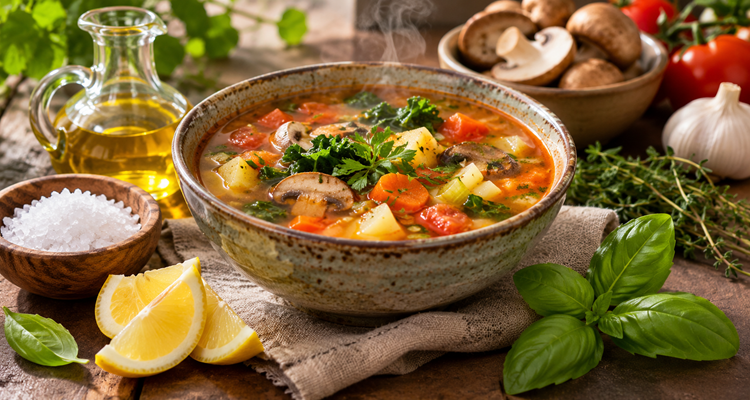
Why a pinch of salt, a splash of acidity, or a subtle savoury ingredient can make the difference between a meal that tastes ordinary and one that feels complete.
A soup can contain fresh vegetables, fragrant herbs, carefully prepared stock, and hours of effort, yet still taste strangely unfinished. A tomato sauce can look perfect but seem dull. A chocolate dessert can be rich and sweet without delivering the depth you expected.
Sometimes, the problem is not what you added. It is what you left out.
Certain ingredients contribute so quietly to food that we barely recognise their presence. Salt can sharpen existing flavours. Acidity can balance richness. Umami-rich ingredients can give savoury dishes a fuller character. Even a small amount of bitterness can prevent sweetness from becoming overwhelming.
These ingredients do not necessarily announce themselves in every bite. Instead, they change how the other ingredients are experienced.
And when one disappears, the entire dish can seem different.
Understanding why this happens reveals something fascinating about human taste: deliciousness is not simply the sum of individual flavours. It emerges from the way our senses interpret them together.
Your Tongue Is Only Part of the Story
We often use the word taste to describe everything we experience while eating. Scientifically, however, taste and flavour are not quite the same thing.
Taste refers primarily to sensations detected by specialised receptor cells in taste buds. The five widely recognised basic taste qualities are sweet, sour, salty, bitter, and umami.
Flavour is a broader experience. It combines taste with aromas, texture, temperature, and other sensations, such as the cooling effect of mint or the burning sensation of chilli.
This distinction matters because an ingredient can influence a meal without contributing an obvious taste of its own.
For example, a small amount of salt may make a vegetable soup taste more rounded without making it noticeably salty. Lemon juice may make a sauce seem fresher without giving it an identifiable lemon flavour.
Likewise, an aromatic ingredient can contribute to the character of a dish even when the eater cannot identify it.
The brain integrates these signals into a single eating experience. We usually notice the finished impression rather than the individual contributions that created it.
That is why a missing ingredient can be easier to recognise than the same ingredient’s presence.
Salt: The Ingredient That Makes Other Flavours Speak
Salt is one of the clearest examples of an ingredient whose importance becomes obvious through its absence.
Its primary taste contribution is saltiness, but its effects can extend beyond that.
In certain foods and concentrations, salt can suppress bitterness and change the perceived balance of other tastes. This helps explain why a lightly salted dish can seem more flavourful without tasting distinctly salty.
Consider three familiar examples.
Vegetable soup: Without enough salt, the sweetness of carrots, savoury qualities of stock, and aroma of herbs may seem less satisfying.
Fresh tomatoes: A little salt can make their natural flavour seem more pronounced while also drawing moisture from the cut surfaces.
Chocolate desserts: A modest amount of salt can provide contrast and alter the balance between sweetness and bitterness.
The important detail is concentration. More salt does not always mean better flavour. Once the amount becomes excessive, saltiness can dominate the dish and obscure the qualities it was meant to support.
Salt is therefore not merely a seasoning added at the end. It is part of the way a dish’s overall taste is constructed.
Acidity: The Missing Spark in Rich and Heavy Foods
A creamy sauce can be beautifully smooth yet feel tiring after a few bites. A slow-cooked stew can have plenty of savoury depth but lack a sense of freshness.
In both cases, acidity may be the missing element.
Acidic ingredients such as lemon juice, vinegar, tamarind, tomatoes, and fermented foods contribute sourness. When used thoughtfully, they can create contrast with rich, fatty, sweet, or savoury components.
Think about the difference between a rich lentil dish before and after a squeeze of lemon.
The lemon does not necessarily make the lentils more intensely flavoured in every respect. Instead, it introduces a contrasting sour note that changes the overall balance.
This is why a few drops of vinegar can transform a bean stew, why pickles work alongside fatty foods, and why a squeeze of lime can bring a new dimension to a spicy curry.
But acidity is not a universal solution. A delicate soup may need very little, while a tomato-based sauce may already contain plenty.
The useful question is not whether every dish needs lemon or vinegar. It is whether the existing flavours need contrast.
Umami: The Savoury Depth You Notice When It Disappears
Some ingredients make food taste more substantial without adding a strong, easily identifiable flavour.
Mushrooms, aged cheeses, tomatoes, seaweed, fermented soy products, and certain meat-based stocks are familiar examples.
Many of these foods contain glutamate, an amino acid associated with umami, one of the five basic tastes.
Umami is often described as savoury, brothy, or meaty, although none of those descriptions captures it perfectly.
Glutamate can also interact with certain nucleotides, including inosinate and guanylate, to strengthen umami perception. This helps explain why combinations of ingredients can produce a more pronounced savoury effect than expected from their individual contributions.
Consider a mushroom broth prepared without the mushrooms. It may still contain salt, herbs, and vegetables, but it will lose some of its distinctive savoury character.
Similarly, removing Parmesan from a pasta sauce or fermented soy seasoning from a stir-fry may leave the dish feeling less complete.
That does not mean umami ingredients are interchangeable. Parmesan also contributes salt, fat, aroma, and texture. Mushrooms provide their own distinctive aromatic compounds. Fermented sauces can add acidity, sweetness, and saltiness alongside savouriness.
The lesson is that umami is one part of a larger sensory picture.
Bitterness: The Taste We Often Need in Small Amounts
Bitterness has an unusual reputation.
People frequently associate it with unpleasant food, yet many beloved ingredients depend on it for their character.
Coffee, dark chocolate, citrus peel, leafy greens, and some herbs all contain compounds that can contribute bitterness.
In excessive amounts, bitterness may make food difficult to enjoy. In the right context, however, it can provide contrast and complexity.
Imagine a chocolate dessert made with only sweetness and richness. It might taste pleasant initially but become monotonous. The bitterness of cocoa can give it a more layered character.
A salad of sweet roasted vegetables may also benefit from a slightly bitter leafy green, not because bitterness makes the vegetables sweeter in a simple chemical sense, but because the contrasting sensations create a more varied eating experience.
Bitterness is especially interesting because people differ substantially in their sensitivity to certain bitter compounds.
Genetics, familiarity, culture, and repeated exposure can all influence how people respond to bitter foods.
One person’s pleasantly complex flavour may be another person’s overwhelming bitterness.
That is a reminder that flavour balance is not entirely objective.
Aroma: The Ingredient You May Think You Are Tasting
Imagine removing garlic from a familiar sauce.
The sauce may still contain the same salt, acidity, sweetness, and savoury ingredients. Yet something unmistakable has changed.
Much of garlic’s contribution comes from volatile aroma compounds, not from one of the five basic tastes.
The same is true of many herbs and spices.
Basil, cardamom, cinnamon, cumin, and vanilla contribute distinctive aromatic compounds that reach smell receptors through the nose. During eating, aromas can also travel from the mouth to the nasal cavity through a process called retronasal olfaction.
This is one reason food can seem strangely muted when your nose is congested.
Vanilla offers a particularly revealing example.
In a sweet dessert, vanilla contributes an aroma that people strongly associate with sweetness. Its presence can influence the overall impression of the dessert even though vanilla aroma itself is not a sweet taste detected by the tongue.
Remove it from a familiar recipe, and the dessert may seem less rounded or less recognisable.
The sugar has not necessarily changed. The aroma context has.
This illustrates why the tongue alone cannot explain the experience of flavour.
Fat: The Carrier That Changes the Experience
Fat is another important part of the puzzle, although its sensory role differs from that of salt or acidity.
Butter, olive oil, cream, coconut milk, and other fats affect food through texture, mouthfeel, and interactions with flavour compounds.
Some aromatic compounds dissolve readily in fat. Fat can influence how these compounds are released during cooking and eating, changing the timing and intensity of aroma perception.
Fat also contributes sensations such as richness, smoothness, and lubrication.
Remove butter from mashed potatoes, for example, and the difference is not simply a missing buttery flavour. The texture, mouthfeel, and overall richness may change.
A sauce prepared without its usual oil can similarly feel thinner or less satisfying, even when its seasonings remain unchanged.
Researchers have also investigated how humans detect fatty acids through oral sensory mechanisms. However, the status and definition of fat as an additional basic taste remain subjects of scientific discussion.
For everyday cooking, the practical point is simpler: fat changes how food feels and how other flavour compounds are experienced.
Why One Missing Ingredient Can Change Everything
The effects of salt, acidity, umami, bitterness, aroma, and fat are not isolated.
They interact.
A dish may contain all the right ingredients but still feel unbalanced because one sensation dominates another.
A heavily salted soup can overwhelm delicate aromas. An excessively acidic dressing can obscure the natural sweetness of vegetables. Too much bitterness can make an otherwise pleasant dessert seem harsh.
Conversely, a carefully balanced combination can make relatively simple ingredients taste remarkably satisfying.
There is also a psychological dimension.
Our brains learn what familiar foods are supposed to taste and smell like. When a dish repeatedly contains garlic, cumin, or a particular herb, that ingredient becomes part of our expectation.
If it disappears, we may recognise that something is wrong without being able to name the missing component.
The result is not necessarily a universal rule of food chemistry. Sometimes it is a mismatch between the food we encounter and the food we remember.
That is why two people can eat the same dish and disagree about what it needs.
A Simple Kitchen Experiment: Discover What Your Food Is Missing
You can explore these effects without specialised equipment.
Prepare a small batch of a simple food, such as unsalted vegetable broth, plain cooked lentils, or a mild tomato sauce. Divide it into several equal portions.
Notice whether the existing flavours seem clearer, stronger, or simply saltier.
Look for changes in sourness, freshness, and the balance of the dish.
Compare the savoury character and overall depth.
Ask yourself which sample tastes more balanced, which has the strongest identifiable added taste, and which you would prefer to eat as a full meal.
The experiment cannot isolate every sensory mechanism, because each ingredient may contribute several properties. Nevertheless, it can demonstrate how a modest change in composition affects the experience of a familiar food.
It may also reveal that the ingredient you enjoy most is not the one you notice most clearly.
How to Recognise What a Dish Needs
When food seems incomplete, adding more of every seasoning is rarely the best first response.
Instead, identify the kind of imbalance you are experiencing.
| What you notice | What might help |
|---|---|
| Food tastes generally bland | A little salt, if appropriate |
| A rich dish feels heavy | A small amount of acidity |
| A savoury dish lacks depth | An umami-rich ingredient |
| Sweetness feels one-dimensional | A restrained bitter or acidic contrast |
| A familiar dish seems unrecognisable | Check for a missing herb, spice, or aromatic |
| Texture feels thin or unsatisfying | Consider whether fat or body is missing |
These are possibilities rather than fixed rules. The same complaint can have different causes depending on the recipe, ingredient quality, cooking method, and personal preference.
It is usually better to adjust a small portion first than to alter an entire pot.
The Quiet Architecture of Delicious Food
The most important ingredients in a meal are not always the most noticeable.
A small amount of salt can change the balance of several tastes. Acidity can introduce contrast into a rich dish. Umami can reinforce savoury character. Aromatic ingredients can make a familiar recipe recognisable, while fat and texture influence the experience of every mouthful.
None of these effects operates identically in every food or for every person.
But together, they reveal why cooking is more than assembling ingredients with pleasant individual tastes.
A satisfying dish depends on relationships: sweetness against bitterness, richness against acidity, savouriness alongside aroma, and familiar sensations working together.
Sometimes, the ingredient that matters most is the one you would never think to mention.
Until it is gone.
This content is published for informational or entertainment purposes. Facts, opinions, or references may evolve over time, and readers are encouraged to verify details from reliable sources.