






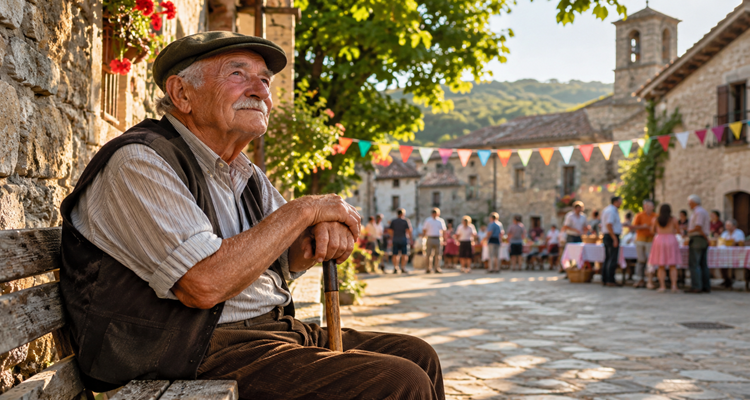


The Skills You Never Realise You Learned Until the Person Who Taught You Is Gone
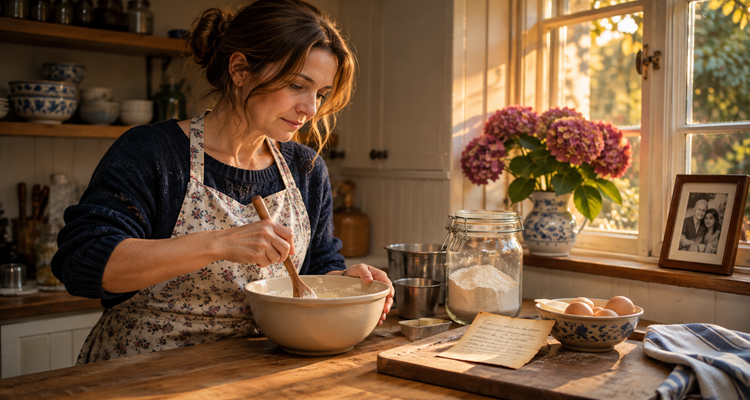
Some of the most important lessons we inherit are never formally taught. They live in everyday gestures, familiar routines, quiet advice, and the small things we only recognise as gifts after someone is no longer there.
There is a strange moment that sometimes arrives long after losing someone important. You are doing something ordinary—preparing a meal, fixing something around the house, comforting a friend, or making a difficult decision when you suddenly realise that you know exactly what to do because of them.
Perhaps you fold a shirt the way your mother did. You check the locks twice because your father always reminded you. You instinctively offer someone a cup of tea before asking what is wrong, just as your grandmother once did.
For a brief moment, the past becomes part of the present.
You may have forgotten the exact words they used or the last conversation you shared. Yet something they taught you remains, quietly guiding your hands, your choices, and the way you treat other people.
Some lessons are not recognised as lessons until the person who taught them is gone.
And perhaps that is one of the most complicated parts of love and loss: discovering how much of another person has become part of who you are.
The Lessons That Never Looked Like Lessons
When we think about learning, we often imagine someone deliberately teaching us. A parent explaining how to ride a bicycle. A teacher correcting a mistake. A mentor offering advice about work or life.
But many of the skills that shape us are learned without a formal lesson.
We learn patience by watching someone remain calm when things go wrong. We learn generosity from a person who shares what little they have. We learn responsibility from someone who keeps showing up, even when they are tired.
These experiences rarely announce their importance.
A child watching a parent repair a broken chair may not realise they are learning more than how to use a screwdriver. They may also be absorbing a particular attitude toward problems: that not everything broken needs to be thrown away, and that some things deserve the effort of being repaired.
Years later, when faced with a difficult situation, that attitude may return.
Not as a remembered lecture, but as an instinct.
This is what makes everyday learning so powerful. Sometimes the most enduring lessons are hidden inside repeated experiences rather than memorable speeches.
The Everyday Skills That Become Unexpected Memories
Loss can change the emotional meaning of familiar activities.
Something that once felt like a chore may become a reminder of someone who is no longer there.
1. Knowing How to Make Something Feel Like Home
Perhaps someone in your life had a particular way of making a room welcoming.
They opened the curtains every morning, kept a spare blanket ready for guests, or remembered how everyone liked their tea.
At the time, these gestures may have seemed unremarkable.
Then one day, you find yourself doing the same things.
You arrange the cushions before visitors arrive. You prepare an extra portion of food because someone might be hungry. You notice when a room feels uncomfortable and instinctively try to make it warmer.
You realise that hospitality was never just about having a tidy house.
It was about making people feel they belonged.
And someone taught you that without ever calling it a skill.
2. Solving Problems Without Giving Up Immediately
Some people have a remarkable ability to remain practical when things go wrong.
A leaking tap, a broken appliance, a missed train, or an unexpected expense becomes something to address rather than a reason to panic.
You may have grown up watching someone respond this way.
They did not necessarily have all the answers. Sometimes they struggled, became frustrated, or made mistakes. But they tried to find a way forward.
Later in life, when something breaks or a plan falls apart, you may hear their familiar advice in your mind.
Check the simple things first. Try another approach. Ask for help when you need it.
What you inherited was not simply a collection of practical solutions.
It was a way of approaching uncertainty.
3. Knowing When Someone Needs Kindness Instead of Advice
There are people who understand that not every problem requires an immediate solution.
They know when to sit beside someone quietly, when to listen, and when to offer comfort without asking too many questions.
Perhaps you learned this from someone who never dismissed your worries, even when they seemed small.
Now, when a friend is upset, you resist the urge to explain everything away.
You listen.
You allow silence.
You understand that being present can sometimes matter more than finding the perfect words.
That emotional skill may have taken years to develop, yet its earliest lessons could have come from someone who simply made you feel heard.
4. Making Something Out of Very Little
A family member who could turn leftovers into dinner, repair worn clothing, or find another use for an old object may have been teaching resourcefulness.
Not through instructions, but through example.
Perhaps they grew up with limited resources. Perhaps they disliked waste. Perhaps they simply enjoyed making things last.
Whatever the reason, their habits may have shaped your own relationship with money, possessions, and effort.
You may discover this inheritance when you save a useful container, mend something instead of replacing it, or find a creative solution with whatever is available.
What once looked like an ordinary household habit becomes a lesson in making the most of what you have.
5. Knowing How to Carry On Through Difficult Days
Some of the most meaningful lessons concern endurance.
You may remember someone who continued caring for their family during a difficult period, who fulfilled responsibilities despite exhaustion, or who found small moments of humour when life felt heavy.
Their example may have taught you that courage is not always dramatic.
Sometimes it looks like getting out of bed, preparing breakfast, answering an important phone call, or doing the next necessary thing.
But there is an important distinction here: carrying on does not mean pretending that everything is fine.
A healthier inheritance may include knowing when to rest, when to admit that something hurts, and when to accept support.
The most valuable lesson is not that you must always be strong.
It is that difficult days can be faced without having to face them entirely alone.
Why We Often Recognise These Lessons Only After Loss
Much of what we learn from other people happens through observation and repetition.
Psychologist Albert Bandura’s work on social learning helped establish the importance of observing others in the development of behaviour. People can learn by watching what others do and what happens as a result, rather than relying exclusively on direct instruction.
This helps explain why a person’s influence can extend beyond the advice they consciously offered.
We absorb routines, approaches, expressions, and ways of responding to everyday situations. Over time, some of these become so familiar that we stop noticing where they came from.
Loss can make those influences more visible.
When someone is still part of our daily life, their habits may blend into the background. We expect their presence. We assume there will be another conversation, another shared meal, another opportunity to ask how they do something.
After they are gone, ordinary routines can take on new meaning.
You may notice the absence of their voice while simultaneously recognising their influence in your own actions.
That contrast can be emotionally powerful.
It is not necessarily that you learned the skill only after losing them. More often, you learned it long before and recognised its significance afterward.
The First Time You Do Something Without Them
There is a particular kind of sadness in doing something alone that you once did together.
The first time you prepare a family recipe without the person who taught you, you may discover that you remember the ingredients but not the exact measurements.
You know how the dish should smell. You remember when to lower the heat. You can almost picture their hands moving around the kitchen.
But there is nobody beside you to confirm whether you have done it correctly.
You might feel proud that you remembered.
You might feel frustrated because the result is not quite the same.
You might cry over something as ordinary as a saucepan.
These responses can coexist.
Grief does not always appear during anniversaries, funerals, or major milestones. Sometimes it arrives through the smallest details of everyday life.
A missing voice can become especially noticeable when you instinctively want to ask a question.
How long should this cook?
Where did you keep that tool?
What would you do in this situation?
And then comes the realisation that you may already know part of the answer because they spent years showing you.
That knowledge can be comforting, painful, or both.
The Difference Between Remembering Someone and Carrying Their Influence
Remembering a person often involves consciously recalling them.
You look at photographs, revisit places, tell stories, or think about conversations you shared.
Carrying someone’s influence can happen without any deliberate act of remembrance.
It appears in your behaviour.
You may speak gently to a nervous child because someone once spoke gently to you. You may insist on doing a job properly because a mentor showed you the value of care. You may make room at the table for an unexpected guest because that was how your family welcomed people.
In grief research, the concept of continuing bonds describes how relationships with deceased loved ones can remain meaningful rather than simply ending psychologically at death.
Researchers Dennis Klass, Phyllis Silverman, and Steven Nickman helped develop this perspective, challenging the assumption that healthy grieving always requires emotionally detaching from the person who died.
Continuing bonds can take many forms, including memories, values, rituals, stories, and a sense of ongoing connection.
For some people, using a skill learned from a loved one becomes one expression of that connection.
It does not mean the loss has disappeared.
It means the relationship can continue to influence life in a different way.
And not everyone experiences this as comforting. A familiar habit may bring warmth on one day and intense sadness on another. Both experiences can be part of an individual response to loss.
Sometimes You Inherit Habits You Want to Change
Not everything we learn from the people we love is something we wish to preserve.
Someone may have taught us to work hard but also to feel guilty about resting.
They may have modelled loyalty while struggling to establish healthy boundaries.
They may have shown remarkable resilience while finding it difficult to express sadness.
Recognising these patterns does not diminish the good they brought into our lives.
It allows us to distinguish between what helped them survive and what will help us live well.
You can appreciate a parent’s dedication without repeating their exhaustion. You can honour a grandparent’s sacrifices without believing that your own needs must always come last.
Sometimes the most thoughtful way to carry someone’s influence forward is to preserve the wisdom while changing the habit.
An inheritance does not have to be repeated exactly to remain meaningful.
This is especially important when a relationship was complicated.
Grief does not automatically erase disagreements, painful experiences, or unresolved questions. A person can have taught you something valuable without having been perfect.
You are allowed to remember the whole person.
The Things We Wish We Had Asked
After someone dies, even small unanswered questions can feel unexpectedly significant.
You might wish you had asked for the recipe they never wrote down, the story behind an old photograph, or the reason they followed a particular family tradition.
Sometimes the questions are larger.
How did you manage when life became difficult?
What were you afraid of when you were younger?
What would you have done differently?
Why did that particular memory matter so much to you?
The regret is not always about missing information. It can also be about losing the opportunity to understand someone more deeply.
Yet we should be careful not to turn this feeling into a judgment against ourselves.
Relationships are lived in ordinary time. We rarely know which conversations will become impossible later.
It is unrealistic to expect ourselves to have anticipated every question.
What we can do is recognise the value of curiosity while the people in our lives are still here.
Ask about their experiences. Learn how they do the things they do. Listen to stories you may have heard before.
Not because every moment must become a memory worth preserving, but because paying attention is itself a form of connection.
How to Preserve the Lessons Someone Left Behind
You cannot preserve every detail of a person, and you do not need to.
But there are meaningful ways to keep certain skills, stories, and traditions accessible.
-
Write down what you remember. Record a recipe, a practical tip, a favourite expression, or the steps of a task they taught you. Imperfect details are still worth keeping.
-
Practise the skill. Make the dish, tend the garden, repair the object, or continue the tradition. Repetition can help you retain practical knowledge.
-
Share the story behind it. When teaching someone else, explain who originally showed you and why the lesson matters.
-
Allow the tradition to evolve. You can adapt a recipe, change a routine, or update an old approach without erasing its history.
-
Keep room for your own feelings. If a familiar activity becomes overwhelming, you can return to it another day. Remembering someone does not need to become an obligation.
These actions are possibilities, not requirements for grieving correctly.
Some people feel close to a loved one through familiar routines. Others prefer photographs, conversation, private reflection, or entirely different ways of remembering.
There is no single method that suits everyone.
When You Become the Person Who Teaches Without Realising It
One of the quieter consequences of growing older is discovering that other people are learning from us in ways we may never notice.
A younger sibling observes how you respond to disappointment.
A child notices whether you apologise after making a mistake.
A friend remembers that you checked on them during a difficult period.
A colleague adopts a practical technique you demonstrated without thinking much about it.
We often underestimate the influence of these ordinary interactions because they do not feel important while they are happening.
But the same was true of many lessons we inherited.
The person who taught you to be patient may not have known you were watching.
The person who showed you how to fix something may have thought they were simply completing a task.
The person who made you feel safe may never have realised that you would carry that feeling into the way you care for others.
This does not mean every action must be performed as though someone is studying it.
It simply reminds us that teaching is not always intentional.
Sometimes we pass on what matters most through the way we live.
What Remains When a Person Is No Longer Here
There are losses that cannot be repaired by finding meaning in them.
Knowing how to cook someone’s favourite meal does not replace eating with them.
Remembering their advice does not replace hearing their voice.
Carrying their values does not remove the pain of their absence.
It is important not to turn grief into a demand to find something positive in every difficult experience.
But alongside the absence, there may also be evidence of what the relationship gave you.
A way of thinking. A familiar gesture. A practical ability. A habit of kindness. The courage to try again after failing.
These things do not belong entirely to the past.
They continue to appear in ordinary life, sometimes when you least expect them.
One day, you may find yourself explaining something to another person and suddenly recognise the words as something you were once told.
Or you may perform a familiar task and realise that your hands remember what your mind has not thought about in years.
For a moment, you understand that learning from someone does not always end when their life ends.
Their influence may remain in the choices you make and the care you offer.
And perhaps the most moving discovery is not simply that they taught you so much.
It is that, while you were busy living alongside them, some of their lessons quietly became part of you.
The information presented in this article is based on publicly available sources, reports, and factual material available at the time of publication. While efforts are made to ensure accuracy, details may change as new information emerges. The content is provided for general informational purposes only, and readers are advised to verify facts independently where necessary.
Related News
- The Knowledge That Vanishes When Nobody Needs to Teach It Anymore
- The Questions Children Stop Asking When School Teaches Them to Be Correct
- The Knowledge You Gain Outside the Classroom Can Change What You Learn Inside It
- Why Practical Intelligence Is Becoming Harder to Teach in Traditional Education