






The Last Person Who Knows Why a Village Celebrates a Forgotten Day
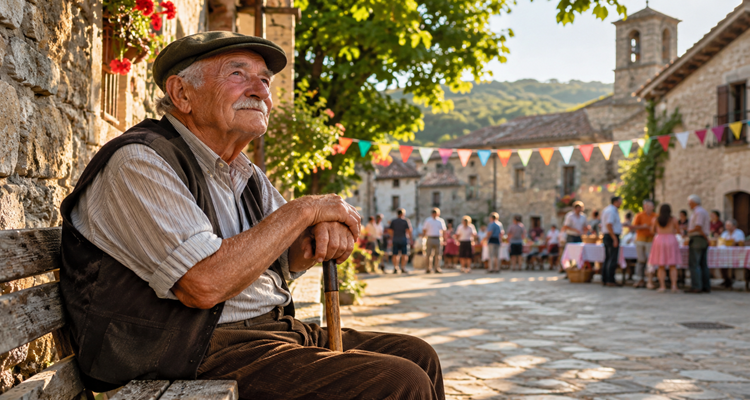
Every year, a village gathers to observe a tradition whose original meaning has faded. What happens when the only person who remembers its story is no longer there to tell it?
A village can forget the reason for a celebration long before it forgets how to celebrate.
The decorations still appear. Families prepare familiar dishes. People gather in the same places, repeat the same gestures, and observe customs inherited from generations they never knew. Children learn what to do, but not necessarily why they are doing it.
Somewhere among the villagers, perhaps, an elderly resident still remembers.
Not simply the date or the order of events, but the story behind them: a difficult winter, a promise made by ancestors, a moment of survival, or an act of gratitude that once brought the community together.
When that person dies, the celebration may continue. Yet something irreplaceable could disappear with them.
This is the central tension behind many endangered local traditions: a community can preserve the outward form of its heritage while gradually losing the knowledge that gives it meaning.
The village in this opening is an illustrative scenario, not a documented place or an account of an interviewed resident. But the question it raises is real. How do communities remember their past, why do traditions outlive their explanations, and what can be done when only a few people still carry the stories?
When a Celebration Outlives Its Meaning
Traditions do not always disappear dramatically. Sometimes they survive so successfully as routines that nobody notices their original meaning slipping away.
A celebration that began as an expression of gratitude may eventually become a seasonal gathering. A procession once associated with a religious vow might be understood by younger generations primarily as a village festival. A particular food may remain essential to an annual occasion even after the story explaining its significance has faded.
This does not necessarily mean the tradition has become meaningless.
Communities continually reinterpret their customs. A ritual that once expressed a specific historical experience may acquire new significance through family relationships, local identity, or the simple pleasure of gathering together.
Still, there is an important difference between a tradition gaining new meanings and its older meanings becoming inaccessible.
When people know how a custom began, they can decide what to preserve, what to change, and what its history means to them. When that knowledge disappears, the choices become harder.
A village may continue observing a special day for decades without knowing whether it originally commemorated a harvest, a disaster, a religious event, or something else entirely.
The ceremony survives, but part of its historical context is missing.
The Person Who Carries the Story
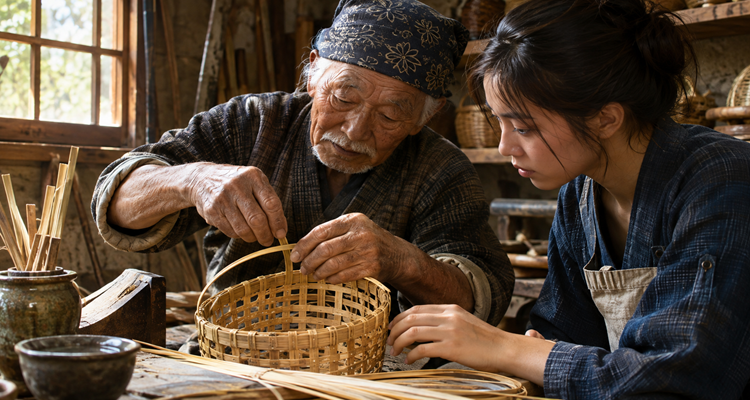
In communities where knowledge is passed down primarily through conversation, older residents can become especially important guardians of local history.
They may remember songs that were never written down, expressions no longer used, or stories their grandparents told them when they were children.
Their knowledge is not always found in formal archives.
It may exist in the details of an annual gathering: why participants walk along a particular route, why a certain household begins the ceremony, or why one object is displayed while another remains hidden.
Such explanations can be surprisingly fragile.
If only one person remembers a particular story, that person’s memory becomes the final known link in a chain of transmission.
But memory is not a perfect historical record. An elder’s account may combine firsthand experience, inherited stories, interpretation, and details altered through repeated retelling.
That does not make the testimony worthless. It means preserving it responsibly requires attention to what the person actually knows and how that knowledge reached them.
A resident might say that a festival commemorates an event described by their grandmother. That is valuable evidence of a family or community tradition, even if the original event has not been independently established.
The distinction matters because preserving heritage should not require turning every remembered story into unquestioned historical fact.
Why Some Traditions Lose Their Stories
The disappearance of cultural knowledge rarely has a single cause.
One important factor is the interruption of ordinary transmission between generations.
For much of human history, children learned community customs through participation. They watched adults, listened to stories, helped prepare ceremonies, and gradually absorbed the meanings attached to familiar actions.
When daily life changes, those opportunities can become less frequent.
Younger residents may move away for education or employment. Families may no longer live in multigenerational households. Local languages and dialects may become less common. Celebrations may be shortened or adapted to accommodate modern schedules.
None of these changes automatically destroys a tradition. But together, they can reduce the occasions when detailed knowledge passes from one generation to another.
Another factor is the difference between doing something and explaining it.
A child can learn the sequence of a ceremony without hearing its history. An adult can repeat that sequence for years without feeling the need to ask questions.
Eventually, a practice may be sustained by familiarity rather than historical understanding.
There is also the possibility that a tradition’s original explanation was never universally shared. Different families may have understood the same celebration differently, and some interpretations may have become more prominent than others.
What later appears to be a single forgotten origin may actually have been a collection of overlapping stories.
The Invisible Archive of a Village
When people think of historical archives, they often imagine manuscripts, photographs, official records, or objects stored in museums.
But a community’s heritage also exists in forms that cannot be placed easily on a shelf.
The UNESCO describes intangible cultural heritage as including practices, expressions, knowledge, and skills that communities recognize as part of their cultural heritage.
Its framework includes oral traditions, performing arts, social practices, rituals, festive events, and traditional craftsmanship.
This understanding is important because it recognizes that cultural heritage is not limited to monuments or ancient objects.
A village celebration can be heritage even when its most important elements are actions, relationships, memories, and shared knowledge.
Consider a traditional song.
A written transcription can preserve its words. An audio recording can preserve a particular performance. Yet neither necessarily captures everything about when the song should be sung, who traditionally sings it, or how participants understand its significance.
Similarly, a video of a village festival can document what happened on one particular day without fully explaining why the celebration matters to the people taking part.
Recording a tradition and understanding a tradition are related, but they are not identical tasks.
That is why the people who carry cultural knowledge are often as important as the objects and records associated with it.
What Happens When the Last Storyteller Is Gone?
The loss of a knowledgeable elder does not automatically end a tradition.
The celebration might remain popular. Families might continue preparing the same foods, musicians might perform familiar songs, and children might eagerly anticipate the annual event.
But future generations may inherit a narrower understanding of what they are celebrating.
A ritual once connected to a specific historical memory could become a general symbol of village identity. An old song might survive without anyone understanding its references. A ceremonial route might remain unchanged even after the significance of its stopping places is forgotten.
In some cases, communities may construct new explanations to fill the gaps.
These explanations are not necessarily deliberate inventions. People naturally try to make sense of inherited customs, particularly when documentation is limited.
Over time, a later interpretation can become accepted as the traditional explanation.
This is one reason researchers distinguish between the history of a practice and the history of the stories told about it.
Both are worth studying, but they do not always provide the same information.
UNESCO’s guidance on oral traditions recognizes that storytelling involves adaptation and variation. It emphasizes that living traditions depend on opportunities for knowledge to pass between generations, rather than on preserving one supposedly unchanging version.
The challenge, then, is not simply to prevent traditions from changing. Change is often part of how they remain meaningful.
The deeper challenge is ensuring that communities do not lose access to their own cultural memories without realizing what has happened.
Can a Forgotten Tradition Be Recovered?
Sometimes, yes. Even when a community’s oldest residents can no longer explain a celebration, clues may remain.
Local archives might contain references to earlier observances. Religious registers, newspapers, photographs, diaries, or municipal documents may reveal how a custom was practiced in previous generations.
Family collections can be equally valuable.
An old photograph may show a procession following a different route. A handwritten recipe might mention the occasion for which a dish was prepared. A letter could describe a celebration that later generations remember differently.
Researchers can compare these materials with oral accounts to develop a clearer picture.
But recovering a tradition’s history is not always straightforward.
Written documents may reflect the perspective of officials rather than ordinary participants. Photographs show selected moments without necessarily explaining their significance. Oral accounts may preserve details absent from written records while introducing their own uncertainties.
The strongest interpretation often comes from examining several forms of evidence together.
Even then, some questions may remain unanswered.
A community might discover when its celebration was first recorded without learning precisely why it began.
That uncertainty deserves to be acknowledged rather than filled with an attractive but unsupported story.
How a Village Can Preserve Its Cultural Memory
Protecting a tradition does not require an elaborate museum or an expensive research project.
A meaningful beginning can be as simple as asking knowledgeable residents to explain what they remember.
The Smithsonian Institution provides guidance for documenting family and community traditions through oral-history interviews. Its recommendations emphasize preparation, recording memories accurately, obtaining permission, and organizing material for future use.
For a village hoping to preserve the history of an annual celebration, several steps could make a lasting difference:
1. Record the stories while people can still tell them. Interview residents who remember earlier celebrations, including how the event changed during their lifetimes.
2. Ask about the origins of particular customs. Rather than asking only why the festival exists, explore its songs, foods, locations, costumes, and ceremonial gestures.
3. Document different versions. If residents remember conflicting explanations, preserve those differences instead of forcing them into one account.
4. Collect supporting evidence. Search family albums, local newspapers, community archives, and other records for historical references.
5. Involve younger generations. Encourage children and young adults to participate in interviews, recordings, exhibitions, and the celebrations themselves.
6. Respect community ownership. Obtain informed consent before recording or publishing personal accounts, and recognize that some cultural knowledge may not be intended for public distribution.
7. Keep the archive accessible. Where appropriate, store recordings, transcripts, and photographs with a local library, historical society, or trusted community organization.
The aim should be more than producing a collection of files.
A successful preservation effort creates opportunities for people to encounter, discuss, question, and continue their heritage.
A recording stored away and never heard again may protect information from immediate loss. But a recording shared with interested younger residents can also help restore the relationship between generations.
Why the Meaning of a Small Celebration Matters
From outside a village, an obscure annual celebration may appear insignificant.
It might attract few visitors, receive no media coverage, and have little economic importance.
But cultural significance is not measured only by popularity.
For the people who participate, a local custom can connect family histories, community relationships, and memories of a particular place.
It can also preserve evidence of how previous generations responded to their circumstances.
An annual gathering might reflect an old agricultural calendar, a religious practice, a historical disruption, or a shared experience of hardship.
Understanding its origins can reveal aspects of everyday history that are easily overlooked in accounts focused on rulers, wars, and major institutions.
At the same time, communities should not be expected to preserve every inherited practice exactly as it once existed.
People may choose to change a celebration, reinterpret it, or discontinue aspects that no longer reflect their values.
The important distinction is between making those decisions with an understanding of the past and making them after that understanding has disappeared.
UNESCO’s 2003 Convention for the Safeguarding of the Intangible Cultural Heritage places particular emphasis on the participation of communities in safeguarding the traditions they create, maintain, and transmit.
That principle recognizes that heritage belongs to living communities, not simply to outside observers who wish to document it.
The Questions We Often Ask Too Late
There is a familiar pattern in family and community history.
An older relative tells the same story repeatedly. Younger listeners recognize the opening details and assume they will have another opportunity to hear the rest.
Years pass.
Eventually, someone wants to know the exact name of a person in the story, the location of an old house, or the reason a particular custom was followed.
By then, the person who knew may no longer be available.
The unanswered question can seem small at first.
Why was a certain song sung only once a year? Why did everyone gather beneath a particular tree? Why was one family responsible for preparing the first meal?
But such details can lead to much larger histories.
They may reveal relationships between families, memories of migration, changes in religious practice, or events that shaped the community’s identity.
Not every question will produce a remarkable discovery. Some traditions may have ordinary explanations, and others may have origins that cannot be recovered.
Yet even an ordinary explanation can become precious when it is the last surviving connection to a vanished way of life.
The opportunity to ask is often more important than anticipating what the answer might be.
A Celebration Without Its Story Is Not Necessarily Empty
It would be misleading to suggest that a village loses its identity the moment it forgets the original reason for a festival.
Culture is not a fixed collection of historical facts.
People create meaning through participation, relationships, and shared experiences. A celebration can remain deeply important even when its earliest origins are uncertain.
New generations may value it for reasons their ancestors never imagined.
Children may associate it with returning relatives. Older residents may see it as an opportunity to reconnect with neighbors. Families who have moved away may return because the occasion reminds them of home.
Those meanings are real.
The loss lies not in the emergence of new significance, but in the disappearance of older knowledge that could have enriched the community’s understanding of itself.
A living tradition does not have to remain unchanged to remain authentic.
But preserving its history gives future generations a greater range of choices about what it should become.
The Last Person Is Not Always the End of the Story
Imagine the village gathering once more for its annual celebration.
The familiar preparations are underway. The customary foods are ready. People arrive at the place where generations before them assembled.
An elderly resident watches the preparations and remembers an explanation that few others have heard.
Perhaps someone approaches and asks a question.
Why do we celebrate this day?
The answer may be a story passed down through several generations. It may be incomplete, uncertain, or different from the version another family remembers.
But it is a beginning.
If someone listens carefully, records the account with permission, and shares it responsibly, the knowledge no longer depends entirely on one person’s memory.
Others can examine it, question it, compare it with historical evidence, and carry it forward.
That does not guarantee every detail will survive. Nor does it mean the celebration must remain unchanged.
It means the community has given itself an opportunity to remember.
The most important moment in preserving a tradition may not be the day people gather to celebrate it. It may be the ordinary afternoon when someone finally asks an older neighbor why the celebration began.
And this time, someone makes sure the answer is not lost.
This content is published for informational or entertainment purposes. Facts, opinions, or references may evolve over time, and readers are encouraged to verify details from reliable sources.