








The Family Traditions That Survive Even After Everyone Forgets Why They Started
Key Takeaways
-
Family traditions can survive long after their original purpose has disappeared.
-
Repeated rituals create a sense of belonging, continuity, and shared identity.
-
Food, celebrations, family sayings, and annual gatherings often carry unspoken memories.
-
Younger generations may preserve traditions without knowing the stories behind them.
-
Understanding a tradition’s history can deepen its meaning, but families can also adapt rituals to fit changing lives.
Why Families Keep Doing Things Nobody Can Fully Explain
Every family has its own collection of unwritten rules. Someone must prepare a particular dish during a festival. A certain chair remains reserved for a familiar relative. An annual gathering happens on the same date, even when nobody remembers who originally chose it.
When someone asks why, the response is often short: “We’ve always done it this way.”
It sounds like an unimportant answer, but it reveals something interesting about how families work. Not every habit survives because people consciously decide that it is valuable. Some continue because they are repeated so often that they become part of the family’s identity.
A tradition might begin with a practical reason, a personal preference, a religious observance, or an event that mattered deeply to one person. Over time, the circumstances change. The people who understood the original reason grow older or pass away. Yet the action remains.
What began as a solution to a problem can eventually become a symbol of belonging.
How an Ordinary Habit Becomes a Family Tradition
Many traditions do not begin with a formal announcement. They emerge from ordinary moments.
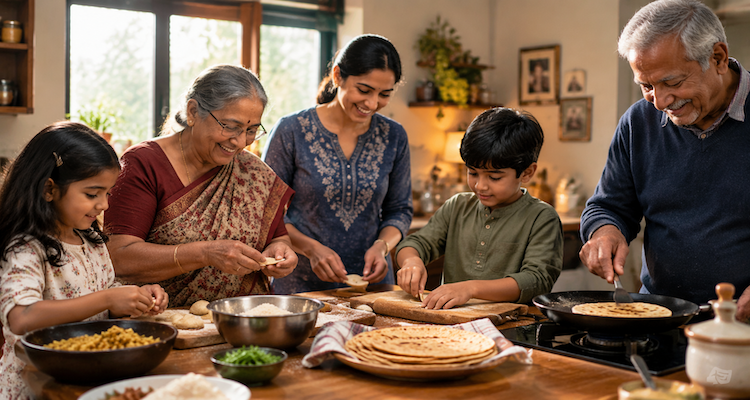
Imagine a grandmother who always prepares a particular sweet before a major family celebration. Perhaps the recipe was inexpensive, used ingredients available in her village, or reminded her of her own childhood. Her children grow up associating that flavour with the celebration.
Years later, her grandchildren insist that the same sweet must be prepared. They may not know why she chose it. They simply know that the celebration feels incomplete without it.
The practical reason has disappeared, but the emotional association remains.
This is one way traditions develop: repetition connects an action with a familiar feeling. When people encounter the same food, music, words, or gathering year after year, the experience can become part of how they recognise a special occasion.
The original explanation is not always necessary for the ritual to retain meaning.
The Forgotten Stories Hidden in Family Meals

Food is one of the clearest examples of how family traditions can outlive their beginnings.
A recipe may be prepared for generations without anyone knowing why a particular ingredient is essential or why the meal must be served at a certain time. What appears to be a simple cooking preference might once have reflected seasonal availability, migration, economic hardship, religious practice, or the influence of another culture.
Consider a family that always serves a particular dish on the first day of a new year. The practice might have begun because an older relative believed the food symbolised prosperity. Alternatively, it might simply have been the easiest meal to prepare when everyone returned home.
After decades of repetition, the distinction can become difficult to recover.
The dish itself becomes the story. Its smell can remind people of a childhood kitchen, relatives who are no longer present, and celebrations that felt larger when the family was younger.
This does not mean every inherited recipe has a dramatic history. Sometimes a favourite dish became traditional because somebody made it once and everyone loved it.
Even an ordinary beginning can acquire extraordinary emotional importance through repetition.
The Rules Nobody Remembers Creating
Families also preserve traditions through small rules that rarely appear in written form.
Perhaps everyone waits until the oldest relative begins eating. Maybe gifts must be opened in a particular order. Some families insist on taking a photograph in the same place every year, while others expect every relative to call on a specific holiday.
These expectations can seem arbitrary to outsiders.
Inside the family, however, they help establish what a familiar gathering is supposed to feel like. They provide a predictable structure for occasions when people may have changed jobs, moved away, married, had children, or experienced loss.
The difficulty is that an unwritten rule can survive long after the circumstances that produced it have vanished.
A family might continue gathering at a particular house even after its original owner has moved away. Another might preserve an old seating arrangement because changing it feels strangely uncomfortable.
Nobody needs to issue instructions. Everyone already knows what is expected.
That is part of the power of tradition: it can operate without anyone having to explain it.
When the Original Meaning Disappears

Traditions often outlast the memories that created them because actions are easier to transmit than explanations.
A parent can teach a child to prepare a dish, repeat a greeting, or attend an annual gathering. Passing on the complete history behind that behaviour requires a separate conversation. If nobody tells the story, the practice may continue while its background gradually disappears.
This process can happen without anyone deliberately withholding information.
An older relative may assume that everybody already knows the reason. Younger family members may be more interested in participating than asking questions. A move to another country, a change in language, or the loss of an elder who held family stories can further weaken the connection between an action and its origins.
Eventually, the tradition becomes familiar but unexplained.
There is an important distinction here: forgetting why a tradition began does not necessarily mean forgetting what it means to the family now.
A gathering that once served a practical purpose might later become an opportunity to reconnect. A recipe inherited from a distant relative might become a way of keeping that person’s memory alive. The meaning changes, even as the ritual stays recognisable.
Why Repeating Familiar Rituals Can Make People Feel Connected
Family traditions are not simply about preserving the past. They can also help people understand their place in the present.
Psychological research on rituals suggests that structured, repeated actions can influence emotions and social connection. Research on family routines has also explored how predictable shared activities can support a sense of stability, particularly during periods of change.
The effects depend on the people involved and the circumstances. A tradition is not automatically comforting, and not every family experiences inherited rituals in the same way.
Still, repetition can provide something valuable: recognition.
When relatives meet and follow a familiar routine, they do not have to build the entire experience from the beginning. A familiar meal, joke, song, or greeting can quickly establish a shared atmosphere.
For someone who has been away for years, participating in that ritual may create a feeling of returning to a place where they are understood.
The tradition becomes a bridge between different versions of family life. The people around the table may be different, but certain actions remain familiar.
That continuity can matter even when nobody can explain exactly how it started.
The Generational Gap Between Keeping a Tradition and Understanding It
Older and younger relatives sometimes have different relationships with the same family ritual.
An older person may see a tradition as an obligation that should not be questioned. A younger relative may want to understand its purpose before agreeing to continue it.
Neither response is unusual.
For one generation, preserving the ritual can feel like respecting parents and grandparents. For another, questioning its origins can be a way of discovering what deserves to be preserved.
This difference can create tension when a family assumes that participation must always be unconditional.
But asking why a tradition exists does not necessarily weaken it. The question can uncover a story nobody has heard for years. It can also reveal that the original reason no longer applies, allowing the family to decide what the ritual should mean today.
Perhaps the annual gathering was created to honour a relative who lived far away. Perhaps a certain phrase came from a grandparent’s humour. Or perhaps the family discovers that the explanation has been lost completely.
Even then, the conversation itself can become meaningful.
Instead of treating tradition as a rule that must never change, families can treat it as something they have inherited and are now responsible for understanding.
What Happens When Nobody Wants to Continue?
Not every tradition survives forever.
Families change. People relocate, work different hours, develop new beliefs, or simply find that a familiar ritual no longer fits their lives. Some traditions disappear when the person who organised them is no longer there.
Others become smaller. A large annual celebration may turn into a phone call. A complicated family meal may be replaced by a simpler version that more people can manage.
These changes do not necessarily represent a loss of respect for the past.
Sometimes the most meaningful part of a tradition is not its exact form but the connection it was intended to maintain.
If a family gathering once brought distant relatives together, a new way of meeting might preserve that purpose more effectively. If a recipe represents a grandparent’s care, preparing it occasionally or teaching it to a younger relative might keep its memory alive without requiring everyone to follow the original schedule.
On the other hand, some families discover that a ritual matters precisely because it has remained unchanged. Its familiarity can provide a rare point of continuity in a world where almost everything else moves on.
The important question is not whether every tradition should survive. It is whether the family understands what it is choosing to carry forward.
How to Rediscover the Meaning Behind an Old Family Tradition

A forgotten tradition can sometimes be investigated through simple conversations.
Start by asking older relatives about the earliest version they remember. Who introduced the custom? Where did it take place? Was it connected to a particular person, celebration, difficulty, or belief?
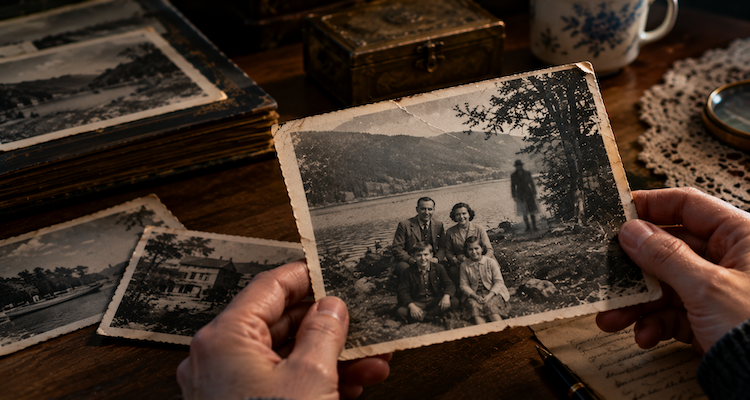
Look for clues in old photographs, letters, recipe books, family objects, and recorded stories. A small detail may explain why a particular date, dish, phrase, or location became important.
It is also worth separating documented history from family interpretation. One relative may remember a custom beginning for practical reasons, while another may associate it with a symbolic meaning that developed later. Both accounts can be valuable, but they do not necessarily establish the same historical fact.
If the origin remains unknown, there is no need to invent one.
A family can acknowledge that a tradition’s beginning has been lost while still recognising the relationships it has helped maintain.
And when children ask why the family does something a certain way, answering honestly can give them a choice that earlier generations may never have considered: they can understand the tradition, adapt it, or create a new one.
The Meaning That Remains When the Explanation Is Gone
Perhaps the most interesting thing about family traditions is that their survival does not always depend on remembering their beginnings.
A familiar recipe can outlast the kitchen where it was first prepared. A holiday gathering can continue after the person who organised it is gone. A phrase can pass from parent to child until nobody remembers who first said it.
Yet these actions can still connect people.
They carry fragments of earlier lives into circumstances their creators could never have imagined. Their meanings may shift from generation to generation, but the repeated act gives family members something recognisable to return to.
Of course, tradition can also preserve expectations that no longer serve everyone. Its age alone does not make it valuable. Understanding the difference between a meaningful connection and an unquestioned obligation is part of keeping family customs alive in a healthy way.
The next time someone in your family insists that a particular meal must be prepared, a photograph must be taken, or everyone must gather on the same day, consider asking a simple question: “Do you remember why we started doing this?”
The answer might reveal a forgotten story. It might uncover a reason that no longer applies. Or it might be nothing more than a shrug and the familiar words, “We’ve always done it this way.”
Even that answer tells us something.
Sometimes a tradition survives because its explanation was lost. Sometimes it survives because the people who inherited it found their own reason to continue.
And occasionally, the reason is simply that doing it together still matters.
This content is published for informational or entertainment purposes. Facts, opinions, or references may evolve over time, and readers are encouraged to verify details from reliable sources.