










The Return of Tradition Without Membership: Why Young People Are Redefining Cultural Identity
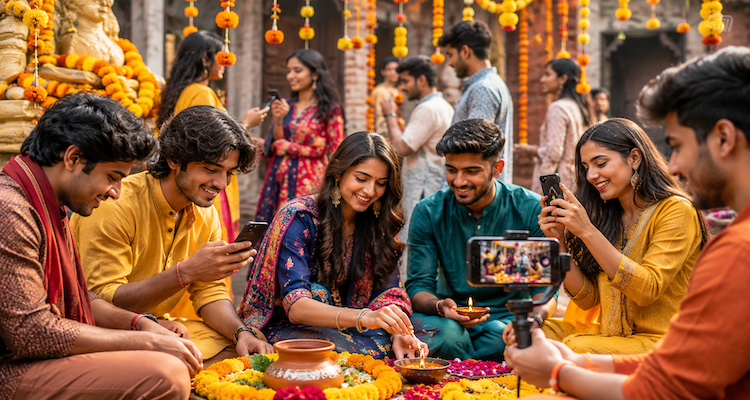
A curious cultural shift is unfolding across societies that often describe themselves as increasingly secular, individualistic, and disconnected from tradition. While membership in religious institutions, formal organizations, and traditional community structures has declined in many places, interest in certain customs, rituals, and inherited practices appears to be moving in the opposite direction.
Young adults who rarely attend religious services may still celebrate seasonal festivals with enthusiasm. People who avoid formal affiliations are learning ancestral recipes, practicing traditional crafts, observing cultural holidays, or incorporating ancient rituals into modern lifestyles. They are embracing pieces of heritage without necessarily embracing the institutions that once carried them.
This phenomenon could be described as the rise of “silent traditions”, customs that survive, evolve, and even thrive without requiring formal membership, official participation, or institutional loyalty. It reflects a broader change in how younger generations understand identity, community, and meaning.
Tradition Is No Longer an All-or-Nothing Choice
For much of modern history, traditions were often transmitted through institutions. Religious organizations, community groups, extended families, schools, and cultural associations served as the primary channels through which customs were preserved and passed on.
Today, younger generations have access to a different model.
Instead of accepting an entire institutional framework, many people selectively adopt traditions that resonate with their values or personal experiences. They may participate in cultural festivals, celebrate heritage days, learn traditional music, or observe symbolic rituals without feeling obligated to join a formal organization.
The result is a more personalized relationship with tradition.
Rather than inheriting identity through membership, individuals increasingly construct identity through participation. What matters is not necessarily belonging to an institution but engaging with practices that feel meaningful.
This shift challenges the assumption that declining institutional participation automatically leads to cultural decline. In some cases, traditions may be finding new pathways for survival.
The Search for Roots in an Age of Constant Change
One reason silent traditions are gaining attention is that modern life often feels unusually fluid.
People change careers more frequently than previous generations. Many relocate multiple times throughout their lives. Digital communities form and dissolve rapidly. Social media encourages constant exposure to new ideas, trends, and identities.
In such an environment, traditions can provide a sense of continuity.
Customs connect people to family histories, local cultures, and collective memories that extend beyond the fast-moving cycles of online life. A traditional meal, annual celebration, or cultural practice can serve as an anchor in a world where many other aspects of identity feel increasingly flexible.
Interestingly, this desire for roots does not necessarily translate into a desire for hierarchy or institutional authority. Younger generations often seek connection to heritage while maintaining personal autonomy.
The tradition remains attractive. The institution becomes optional.
Digital Platforms Are Becoming Unexpected Cultural Archives
One of the most overlooked aspects of this trend is the role of digital technology.
For decades, cultural preservation was largely the responsibility of families, community leaders, educators, and formal organizations. Today, social platforms, video-sharing sites, podcasts, and online communities have become powerful tools for transmitting traditions.
A young person can learn traditional dance techniques, ancestral cooking methods, folk stories, language expressions, or ceremonial practices from creators thousands of miles away.
This creates an unusual dynamic. Technology, often criticized for weakening traditional culture, is also helping revive it.
Digital platforms allow customs to reach audiences that might never have encountered them through conventional channels. They make cultural knowledge searchable, shareable, and accessible.
The consequence is that traditions are no longer confined to geographic communities. They can spread through networks of interest rather than networks of proximity.
The Rise of Meaning Without Formal Commitment
Another important factor is a broader shift in attitudes toward commitment.
Many younger adults approach institutions with caution. This skepticism can stem from concerns about politics, bureaucracy, exclusivity, or a desire for greater personal freedom.
At the same time, the human need for meaning has not disappeared.
People continue to seek rituals that mark important life moments, create a sense of belonging, and provide emotional significance. Traditions often fulfill these needs remarkably well.
A family gathering, a seasonal celebration, or a cultural ceremony can offer connection without requiring a formal pledge of allegiance to an organization.
This represents a significant cultural evolution. Meaning is increasingly being separated from membership.
The implication is profound: institutions may no longer hold a monopoly on preserving cultural values. Traditions can survive through networks, families, friendships, and digital communities instead.
Why Businesses and Brands Are Paying Attention
The revival of silent traditions is not only a cultural story. It also has implications for businesses, media organizations, and consumer markets.
Consumers increasingly gravitate toward products, experiences, and brands that reflect authenticity, heritage, and cultural storytelling. Traditional craftsmanship, regional foods, local festivals, and heritage-inspired design often resonate strongly with younger audiences.
Companies across industries have noticed growing interest in handmade products, traditional techniques, and experiences that emphasize connection to place and history.
However, audiences are also becoming more sensitive to superficial attempts to commercialize culture.
The success of heritage-inspired offerings often depends on whether they feel genuine and respectful rather than opportunistic.
This creates both opportunities and challenges for organizations seeking to engage with cultural identity in meaningful ways.
A New Form of Community Is Emerging
Perhaps the most interesting aspect of silent traditions is what they reveal about the future of community itself.
Traditional institutions were built around membership. You belonged to a church, club, association, or organization.
The emerging model is more flexible.
People increasingly form communities around shared practices rather than formal structures. A group connected by cultural cooking traditions, local heritage projects, language preservation efforts, or annual celebrations may function as a community even without official membership lists or organizational hierarchies.
This shift reflects broader changes occurring throughout society. Community is becoming more participatory and less institutional.
The bond comes from shared experiences rather than administrative structures.
What Happens Next?
The rise of silent traditions suggests that cultural evolution is rarely as simple as decline versus preservation.
When observers see falling participation in institutions, they may assume traditions are disappearing. Yet the reality can be more complicated. Customs often adapt to changing social conditions rather than vanish entirely.
Future generations may continue to revive heritage practices while reshaping how those practices are transmitted and experienced. Technology will likely play an increasingly important role. Families may remain influential, but online communities, creators, and informal networks could become equally important cultural custodians.
The larger lesson is that tradition and modernity are not necessarily opponents.
Young people are showing that it is possible to embrace innovation while seeking connection to the past. They are preserving customs in ways that fit contemporary lifestyles, creating a cultural landscape where identity is less about formal membership and more about meaningful participation.
In that sense, silent traditions may not be a temporary trend. They may represent the next chapter in how societies remember who they are.
This content is published for informational or entertainment purposes. Facts, opinions, or references may evolve over time, and readers are encouraged to verify details from reliable sources.
Related News
- Why Communities Are Rediscovering Their Forgotten Local Legends
- When Language Becomes Invisible: How Translation Technology Is Reshaping Cultural Identity
- When Convenience Replaces Effort: The Hidden Cultural Costs of a Frictionless World
- Why Shared Experiences Are Replacing Shared Beliefs as the New Social Glue