







Why Family Learning Habits Matter More Than School Rankings Than Ever Before
A growing number of parents are discovering something that school rankings alone cannot reveal: the most important learning environment may not be the classroom at all.
For decades, families have treated school reputation as the primary indicator of a child’s future success. Rankings, admission rates, facilities, test scores, and academic prestige often dominated educational decisions. Yet an increasingly visible shift is changing that conversation. Educators, employers, and even many parents are beginning to pay closer attention to what happens after school hours, the everyday learning habits that develop at home.
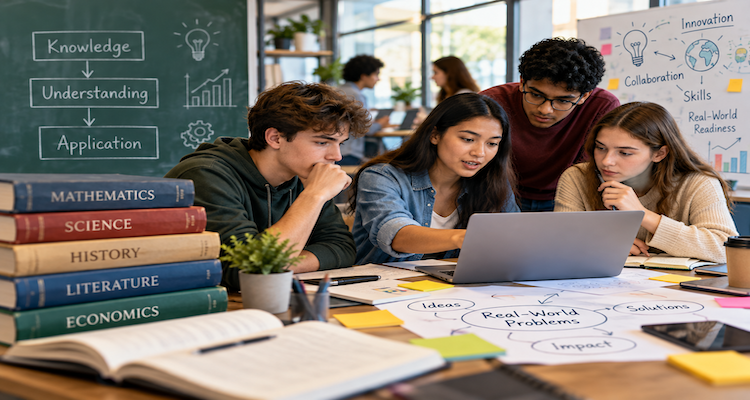
This change reflects a broader reality. Knowledge is now widely available, skills evolve rapidly, and careers often require continuous learning long after formal education ends. In that environment, the habits children develop around curiosity, problem-solving, reading, discussion, and self-directed learning may matter as much as, or sometimes more than, the school they attend.
The Limits of School Rankings
School rankings can provide useful information. They may highlight academic performance, available resources, student outcomes, or institutional reputation. However, rankings often measure a relatively narrow set of factors.
What they rarely capture is how students engage with learning outside structured academic settings. Two children attending the same highly ranked school can have dramatically different educational experiences depending on their home environment.
A student who regularly explores new ideas, asks questions, reads independently, and discusses current events with family members often develops skills that standardized metrics cannot easily measure. Meanwhile, another student attending the same institution may rely entirely on formal instruction and struggle when faced with unfamiliar challenges.
The distinction becomes increasingly important as the world rewards adaptability rather than memorization alone.
The Rise of Learning as a Family Culture
Many families are moving away from the traditional view that education is something delivered exclusively by schools. Instead, learning is becoming a shared household activity.
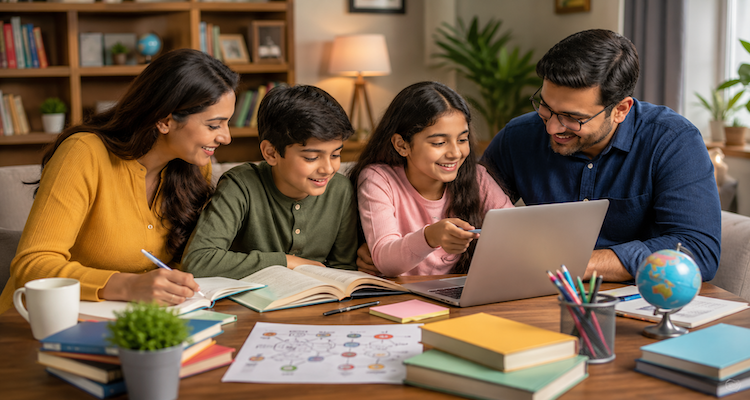
Parents are listening to educational podcasts during family trips, discussing news stories at dinner, exploring online courses together, visiting museums, experimenting with creative projects, and encouraging children to pursue personal interests.
These activities may seem small individually, but collectively they create a culture of learning.
Children raised in such environments often absorb a powerful message: learning is not something you do to pass an exam. It is something you do throughout life.
This mindset can influence academic achievement, but its impact extends much further. It shapes how individuals approach uncertainty, career changes, technological shifts, and personal growth.
Why Curiosity Is Becoming a Competitive Advantage
One of the most significant changes in modern education is the growing value of curiosity.
Traditional educational models often rewarded students who could master established knowledge. Today’s environment increasingly rewards those who can learn new knowledge quickly.
Artificial intelligence, automation, and digital transformation are accelerating changes across industries. Many professionals now find themselves learning new tools, platforms, and skills throughout their careers. In some fields, technical knowledge acquired during university may become outdated within a few years.
Children who develop curiosity-driven learning habits are often better prepared for this reality. They become comfortable exploring unfamiliar topics, finding information independently, and adapting to changing circumstances.
This may explain why many employers increasingly emphasize problem-solving, communication, creativity, and adaptability alongside formal qualifications.
The long-term advantage is not necessarily knowing more facts. It is becoming someone who can continuously acquire new knowledge.
The Hidden Influence of Everyday Conversations
Family learning habits are not limited to books and educational activities.
Simple conversations can have a profound influence on intellectual development.
When parents discuss how decisions are made, analyze news events, encourage questions, or explore different perspectives, children learn how to think rather than merely what to think.
These interactions help develop critical thinking, reasoning, and communication skills that are difficult to teach through standardized instruction alone.
The effect is cumulative. Over time, children begin to see learning as an active process of exploration rather than passive information consumption.
In many cases, the most influential educational moments occur during ordinary family interactions rather than formal lessons.
Digital Access Has Changed the Equation
Another reason family learning habits are gaining importance is the democratization of knowledge.
Previous generations depended heavily on schools, libraries, and formal institutions to access information. Today, educational resources are available through online platforms, digital libraries, videos, tutorials, and specialized communities.
This accessibility has altered the relationship between schools and learning.
Schools remain critically important for structure, guidance, social development, and foundational knowledge. However, they are no longer the sole gateway to education.
Families that actively engage with these resources can significantly expand learning opportunities beyond the curriculum.
A child interested in astronomy, coding, music production, entrepreneurship, design, or environmental science can often explore those interests independently with support from family members and digital tools.
The result is a more personalized learning experience that reflects individual curiosity rather than standardized pathways alone.
What This Trend Reveals About Education’s Future
The growing focus on family learning habits reflects a deeper transformation in how society views education.
For much of the twentieth century, educational success was often associated with gaining admission to the right institution. Today, success increasingly depends on maintaining the ability to learn throughout life.
This shift aligns with broader changes in work and society. Careers are becoming less predictable. Professional identities evolve more frequently. New industries emerge while others transform or disappear.
In such an environment, educational resilience becomes more valuable than educational prestige alone.
Families that encourage experimentation, independent thinking, curiosity, and continuous learning may be preparing children for realities that cannot yet be fully predicted.
The goal is no longer simply helping children succeed in school. It is helping them succeed in a world where learning never truly ends.
A New Measure of Educational Success
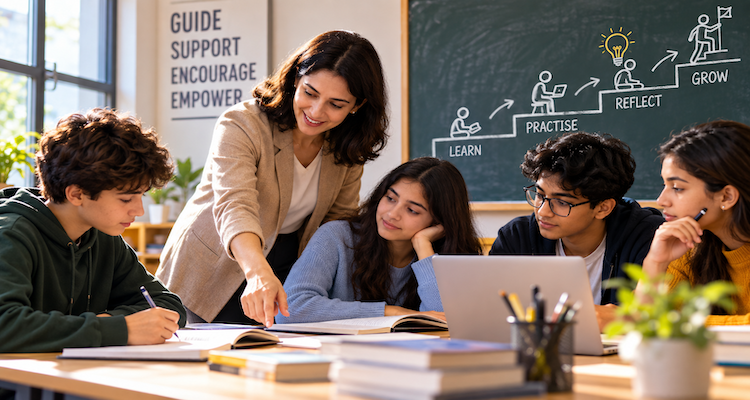
None of this suggests that school quality is unimportant. Effective schools provide essential instruction, mentorship, opportunities, and social experiences that remain fundamental to student development.
However, the growing emphasis on family learning habits highlights a more balanced perspective.
The question many parents are beginning to ask is not just, “How good is the school?” but also, “What kind of learning environment are we creating at home?”
That question may ultimately prove more consequential.
A highly ranked school can offer advantages, but it cannot fully replace a household where curiosity is encouraged, questions are welcomed, and learning is viewed as a lifelong pursuit.
As education continues to evolve, family culture may become one of the most overlooked factors shaping future success. The families that recognize this shift early are likely to discover that the most powerful educational investment is not always found in a school’s ranking, but in the daily habits that make learning part of everyday life.
The information presented in this article is based on publicly available sources, reports, and factual material available at the time of publication. While efforts are made to ensure accuracy, details may change as new information emerges. The content is provided for general informational purposes only, and readers are advised to verify facts independently where necessary.