










Geopolitics, Inflation, and Oil Are Colliding in a Fragile Market
Key Takeaways
- Escalating tensions between the United States and Iran are supporting oil prices despite short-term market fluctuations.
- Delays in the full reopening of the Strait of Hormuz are raising concerns about global energy supply security.
- Inflation pressures in major economies could weaken fuel demand and limit further oil price gains.
- Energy markets are balancing geopolitical risks against signs of slowing economic momentum worldwide.
- The coming months may determine whether supply concerns or demand weakness becomes the dominant market force.
Introduction
Oil markets are once again navigating a difficult intersection of geopolitics and economics. While crude prices slipped slightly in early trading, both Brent and West Texas Intermediate crude remain on track for notable weekly gains, reflecting growing concerns about instability in one of the world’s most important energy-producing regions.
The renewed exchange of strikes between the United States and Iran has drawn attention back to the Gulf, where critical shipping routes and energy infrastructure influence fuel prices far beyond the Middle East. At the same time, inflationary pressures in major economies, including the United States and China, are creating uncertainty about future energy demand.
For investors, businesses, and consumers, the situation presents a familiar challenge: determining whether supply disruptions or weakening economic activity will have the greater influence on oil prices. Understanding that balance is essential because the outcome will affect everything from transportation costs and manufacturing expenses to inflation and economic growth.
Understanding the Development
A Market Caught Between Conflict and Caution
Oil prices have been supported primarily by concerns over regional instability. Recent military exchanges between the United States and Iran have renewed fears that broader disruptions could affect global energy supplies.
Although traders initially reacted cautiously, the conflict has highlighted the vulnerability of energy transportation networks in the Gulf region. Markets tend to price in risk when military tensions rise near major oil-producing areas, even when physical supplies remain largely uninterrupted.
At the same time, energy markets have avoided a more dramatic price surge because key oil production and export infrastructure has not become a primary target. This distinction matters. Historically, oil prices react most aggressively when production facilities, pipelines, refineries, or export terminals face direct threats.
The Importance of the Strait of Hormuz
One of the most closely watched developments remains the Strait of Hormuz. Before the conflict, approximately one-fifth of global oil and gas supplies moved through this narrow waterway.
The delayed return to normal operations in the strait has increased market sensitivity. Even limited disruptions can influence shipping schedules, insurance costs, freight rates, and overall supply chain confidence.
The significance of Hormuz extends beyond energy producers. Import-dependent economies across Asia, Europe, and other regions rely heavily on stable maritime energy routes. Any prolonged uncertainty could ripple across global trade networks.
Why This Matters
Energy Prices Influence Nearly Every Sector
Oil is not simply another commodity. It serves as a foundation for transportation, manufacturing, agriculture, logistics, and numerous industrial activities.
When oil prices rise, businesses often face higher operating costs. Airlines encounter increased fuel expenses, manufacturers pay more for production and shipping, and consumers may ultimately absorb these costs through higher prices for goods and services.
This relationship explains why policymakers and central banks closely monitor energy markets. Sharp increases in oil prices can complicate efforts to control inflation, particularly when many economies are already dealing with elevated price pressures.
Inflation Is Emerging as a Counterweight
Interestingly, the same inflation concerns that can be worsened by higher oil prices are also acting as a brake on the market.
In China, producer prices have risen sharply, squeezing manufacturing profitability. Meanwhile, businesses and consumers continue to face economic uncertainty in many regions.
When inflation remains elevated, spending often slows. Reduced industrial activity and weaker consumer demand can eventually lower fuel consumption, limiting upward pressure on crude prices.
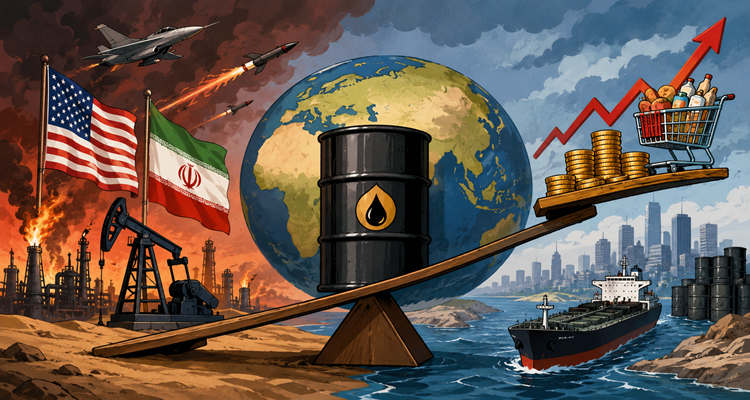
This creates a paradox for oil markets: geopolitical tensions support prices, while economic concerns suppress demand.
What Is Changing
Risk Premiums Are Returning to Energy Markets
Over the past several years, markets have grown accustomed to periodic geopolitical disruptions. However, recent events suggest traders are once again assigning greater value to geopolitical risk.
A “risk premium” refers to the additional price buyers are willing to pay because of uncertainty. In energy markets, that uncertainty often stems from conflict, sanctions, supply disruptions, or transportation bottlenecks.
Current price movements indicate that risk premiums are returning, though not at the levels seen during major historical supply crises.
Market Psychology Is Playing a Larger Role
Investor sentiment has become increasingly important. Statements from political leaders suggesting that the conflict may remain contained have helped prevent panic buying.
Markets are not reacting solely to military developments. They are also responding to expectations about future escalation or de-escalation.
This reflects a broader shift in modern commodity markets, where perception and anticipated outcomes can sometimes influence prices as much as physical supply changes.
The Bigger Picture
Energy Security Is Back in Focus
For much of the past decade, discussions about energy security centered on diversification, renewable energy investment, and reducing dependence on volatile suppliers.
Recent developments demonstrate that traditional energy security concerns remain highly relevant.
Despite advances in renewable energy, the global economy continues to depend heavily on oil and natural gas. As a result, disruptions in major producing regions can still affect markets worldwide.
Governments may respond by accelerating efforts to diversify energy sources, expand strategic reserves, and strengthen domestic energy resilience.
Global Economic Trends Are Reshaping Demand
At the same time, long-term demand patterns are evolving.
Economic growth in emerging markets continues to drive energy consumption, but efficiency improvements, electrification, and clean energy investments are gradually changing the relationship between economic expansion and oil demand.
This means future oil price cycles may increasingly be shaped by competing forces:
- Geopolitical instability supporting prices.
- Energy transition efforts reducing long-term demand growth.
- Inflation influencing consumption patterns.
- Economic growth determines industrial fuel needs.
These dynamics create a more complex market environment than many previous oil cycles.
Opportunities and Challenges
Opportunities for Energy Producers
Higher prices can benefit oil-producing nations and energy companies by increasing revenues and supporting investment.
Producers may use periods of elevated prices to expand exploration, improve infrastructure, and strengthen financial performance.
Countries with stable production capacity may also gain market share if competitors face operational disruptions.
Challenges for Consumers and Policymakers
For consumers, sustained increases in fuel prices can strain household budgets.
Businesses operating on thin margins may face additional pressure from transportation and production costs. Small businesses are particularly vulnerable because they often have less flexibility to absorb rising expenses.
Policymakers face their own challenges. They must balance economic growth, inflation control, and energy security objectives simultaneously.
The Risk of Miscalculation
Perhaps the greatest uncertainty involves escalation risk.
Markets currently appear to believe that the conflict will remain limited. If that assumption proves incorrect, price volatility could increase significantly.
Conversely, meaningful diplomatic progress could remove some of the geopolitical premium currently embedded in oil prices.
What Comes Next
Three Possible Scenarios
The first scenario involves stabilization. Military tensions remain contained, shipping routes gradually normalize, and oil prices settle into a relatively stable range.
The second scenario involves continued low-level conflict. Markets maintain a geopolitical premium, keeping prices elevated without triggering a major supply shock.
The third and most disruptive scenario involves significant escalation that directly affects energy infrastructure or shipping routes. Such an outcome could trigger sharper price increases and broader economic consequences.
Watching Demand Will Be Just as Important
While geopolitical developments will dominate headlines, demand indicators may ultimately determine the market’s direction.
Economic data from the United States, China, and other major consuming nations will provide clues about industrial activity, transportation demand, and overall fuel consumption.
If economic growth weakens substantially, demand concerns could outweigh supply risks, even in a tense geopolitical environment.
Conclusion
The current oil market reflects a delicate balance between two powerful forces: geopolitical uncertainty and economic reality. Tensions in the Gulf have reminded investors how quickly energy security concerns can return, particularly when critical shipping routes remain vulnerable. Yet inflation and slowing economic momentum continue to limit enthusiasm for significantly higher prices.
What makes this moment especially important is that it highlights a broader shift in global energy markets. Supply risks no longer operate in isolation. They now interact with inflation trends, economic performance, investor sentiment, and the ongoing energy transition. The result is a market that remains highly sensitive to both geopolitical developments and economic signals.
For businesses, policymakers, and consumers, the key question is no longer simply whether oil prices will rise or fall. It is whether the global economy can navigate increasing uncertainty without turning temporary market stress into a more persistent economic challenge.
The information presented in this article is based on publicly available sources, reports, and factual material available at the time of publication. While efforts are made to ensure accuracy, details may change as new information emerges. The content is provided for general informational purposes only, and readers are advised to verify facts independently where necessary.