










Copper’s Rising Power: Why the Metal Behind Electrification May Rival Oil
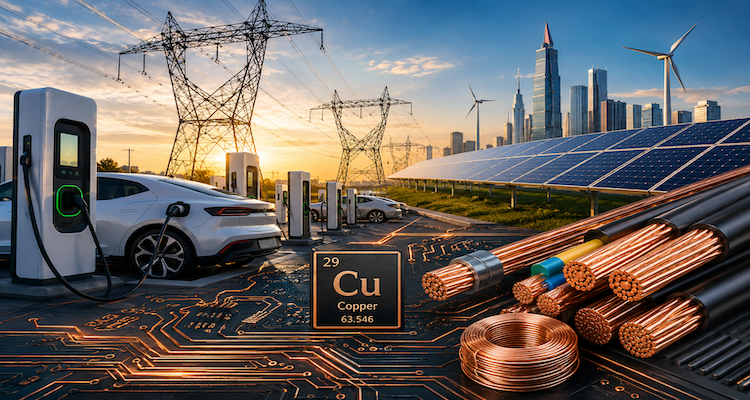
For more than a century, oil has occupied a unique position in the global economy. It fueled industrial expansion, transformed transportation, shaped geopolitics, and became one of the most strategically important commodities on Earth. Yet a quieter shift is unfolding beneath the surface of the energy transition. As countries invest in electric vehicles, renewable energy, data centers, and modern power grids, another resource is moving into the spotlight: copper.
The significance of this change extends beyond mining and commodity markets. It reflects a broader transformation in how societies generate, distribute, and consume energy. While oil powered the age of combustion, copper is becoming indispensable to the age of electrification.
The growing importance of copper is not simply a story about metals. It is a story about infrastructure, technology, economic security, and the future shape of global development.
The Metal Hidden Inside the Energy Transition
Unlike oil, copper rarely captures public attention. Consumers do not purchase it directly, and it seldom dominates headlines outside financial circles. Yet modern life depends on it.
Copper is one of the most effective conductors of electricity. It is found in power lines, transformers, electric motors, batteries, charging stations, telecommunications systems, consumer electronics, and industrial machinery. Nearly every technology associated with electrification requires substantial amounts of copper.
As governments and industries pursue lower-carbon energy systems, demand for electricity infrastructure continues to grow. Solar farms require extensive wiring. Wind turbines depend on copper-rich electrical systems. Electric vehicles contain significantly more copper than conventional gasoline-powered vehicles due to their motors, battery connections, and charging components.
The result is a simple but powerful reality: the more societies electrify, the more copper they need.
Why This Moment Is Different
Copper demand has grown for decades, but the current surge differs from previous industrial cycles.
Historically, copper consumption was tied primarily to construction, manufacturing, and economic growth. Today, multiple global trends are converging at the same time.
The rapid expansion of electric vehicles is increasing demand. Renewable energy projects continue to scale worldwide. Aging power grids require modernization. At the same time, artificial intelligence infrastructure and data centers are consuming enormous amounts of electricity, creating additional pressure to expand transmission networks.
Each trend independently supports copper demand. Together, they create a structural shift that could persist for years rather than a temporary commodity boom.
This is one reason analysts increasingly describe copper as a strategic resource rather than simply an industrial metal.
The Infrastructure Challenge Nobody Talks About
One of the most underappreciated aspects of the clean energy transition is that generating renewable electricity is only part of the challenge.
Electricity must still travel from where it is produced to where it is needed. That requires transmission lines, substations, transformers, distribution networks, and storage systems. Copper sits at the center of nearly every stage of this process.
A solar farm in a remote desert is only valuable if its electricity can reach homes, businesses, and factories. Likewise, electric vehicles become practical at scale only when charging infrastructure is widely available.
This creates a hidden bottleneck. Building energy infrastructure often requires years of planning, permitting, investment, and material sourcing. Even when governments announce ambitious energy goals, the availability of essential materials such as copper can influence how quickly those goals become reality.
Copper and the New Competition for Resources
Oil reshaped international relations because countries competed for access to energy supplies. Copper may not replace oil in the same way, but it is beginning to influence strategic planning.
Many nations are seeking to secure access to critical minerals needed for energy technologies. Mining projects, refining capacity, and supply chains are increasingly viewed through the lens of national security and economic resilience.
This shift reflects a broader realization: energy independence in the electric age depends not only on power generation but also on access to the materials required to build electrical systems.
As demand grows, countries rich in mineral resources may gain new strategic importance, while governments may prioritize domestic production, recycling initiatives, and diversified supply chains.
The Surprising Connection to Artificial Intelligence
Most discussions about copper focus on electric vehicles and renewable energy. Yet another powerful driver is emerging: artificial intelligence.
Large-scale AI systems require vast networks of servers housed in energy-intensive data centers. These facilities depend on extensive electrical infrastructure, cooling systems, power distribution equipment, and grid connections.
Every new wave of computing capacity requires physical infrastructure beneath the software. That infrastructure contains substantial amounts of copper.
This reveals an important insight often overlooked in technology discussions. Digital transformation is not purely digital. Behind every cloud platform, AI model, and data center is a physical network of materials, electricity, and industrial resources.
The future of advanced technology may depend as much on mining and infrastructure as on software innovation.
What This Means for Consumers
At first glance, copper may seem far removed from everyday life. In reality, its growing importance could influence consumers in several ways.
The availability and cost of copper can affect the economics of renewable energy projects, electric vehicles, power grid upgrades, and construction activities. Supply constraints could influence project timelines and costs across multiple industries.
Homeowners installing solar panels, businesses investing in electrification, and communities upgrading infrastructure all operate within a system that increasingly depends on reliable copper supplies.
Consumers may never notice the metal itself, but they may experience its effects through energy prices, technology adoption rates, infrastructure investments, and economic opportunities tied to the clean energy economy.
Can Recycling Help Meet Future Demand?
Unlike fossil fuels, copper offers an important advantage: it can be recycled repeatedly without losing many of its essential properties.
Recycling already plays a significant role in global copper supply and could become increasingly important as demand grows. Recovering copper from old buildings, electronics, industrial equipment, and retired infrastructure may help reduce pressure on new mining projects.
However, recycling alone is unlikely to satisfy future demand if electrification accelerates at the pace many governments and industries envision. New mining capacity will probably remain necessary alongside expanded recycling efforts.
The balance between resource extraction, environmental responsibility, and supply security will become an increasingly important policy discussion in the years ahead.
A Commodity That Reflects a Larger Transformation
The rise of copper is not really about one metal. It is a reflection of a deeper economic transition.
For decades, oil symbolized mobility, industrial power, and economic growth. Copper is emerging as a symbol of connectivity, electrification, and digital infrastructure. It sits at the intersection of clean energy, artificial intelligence, transportation, manufacturing, and urban development.
Whether copper ultimately rivals oil in economic influence remains uncertain. Markets evolve, technologies change, and new materials may emerge. Yet one reality is becoming increasingly clear: the systems shaping the future will require enormous amounts of electricity, and electricity requires materials capable of moving power efficiently.
In that sense, copper is no longer merely an industrial commodity hidden inside wires and machinery. It is becoming one of the foundational materials of the twenty-first century, quietly powering the technologies, networks, and energy systems that will define the decades ahead.
The information presented in this article is based on publicly available sources, reports, and factual material available at the time of publication. While efforts are made to ensure accuracy, details may change as new information emerges. The content is provided for general informational purposes only, and readers are advised to verify facts independently where necessary.
Related News
- The Energy Paradox of Efficiency: Why Using Less Electricity Does Not Always Mean Using Less Energy
- Why Extreme Weather Is Turning Electricity Resilience Into an Everyday Consumer Issue
- Why Energy Independence Is Becoming a Household Decision, Not Just a National Strategy
- The Hidden Energy Cost of Keeping Everything Available Instantly