









The Rise of Silent Communities: Why Millions Are Leaving Public Social Media Without Logging Off
For years, the dominant story of the internet was visibility. Success meant posting more, sharing more, and participating more. Social platforms rewarded public expression, personal branding, and constant engagement. The louder the conversation became, the more valuable attention appeared to be.
Yet a quieter shift is unfolding beneath the surface.
Millions of people are still keeping their accounts on major social media platforms, but many are no longer participating in the public conversation. They scroll, observe, and occasionally react, but they increasingly reserve their meaningful interactions for smaller, more private digital spaces. Instead of deleting social media altogether, they are relocating their social lives elsewhere.
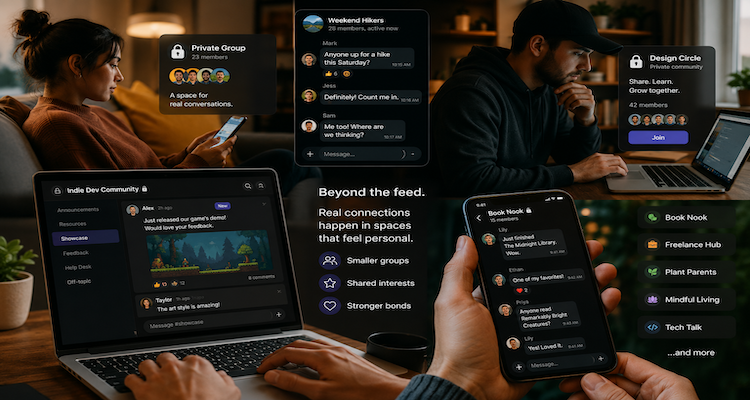
This migration is giving rise to what many observers describe as “silent communities”, private group chats, invitation-only forums, niche online groups, subscriber communities, and digital spaces where interaction feels more personal and less performative. The trend reveals something deeper than changing platform preferences. It signals a fundamental shift in how people want to connect online.
The New Internet Is Becoming Less Public
At first glance, public social media appears as active as ever. Platforms continue to generate endless streams of content, viral trends, and debates. Influencers, brands, media organizations, and creators remain highly visible.
But visibility does not necessarily reflect participation.
Many users have quietly adopted a different role. Rather than contributing to public timelines, they spend more time in private messaging apps, community servers, member groups, and specialized interest networks. Their accounts remain active, but their conversations have moved elsewhere.
This shift helps explain an increasingly common phenomenon: social platforms feel crowded, yet many users report feeling disconnected from the public discussions taking place on them.
The public feed has become less of a gathering place and more of a discovery engine. People find content publicly and discuss it privately.
Why People Are Choosing Smaller Digital Spaces
The appeal of silent communities is not simply privacy. It is relevance.
Public social media often places users in front of massive audiences containing strangers, acquaintances, coworkers, family members, and algorithmically selected viewers. Every post can feel like a performance delivered to multiple audiences simultaneously.
Smaller communities remove much of that pressure.
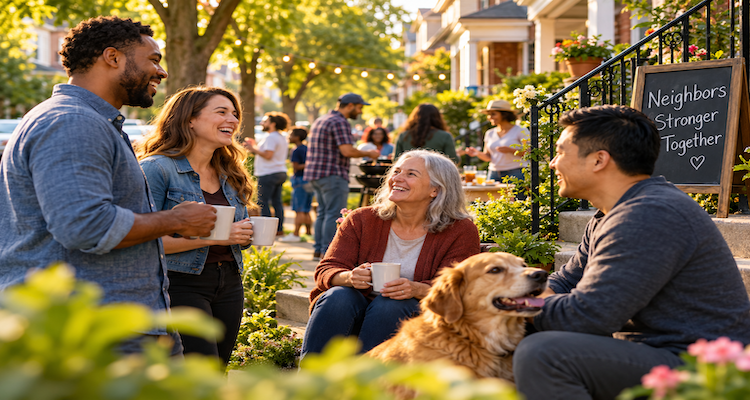
In a niche photography group, a professional discussion channel, a private gaming server, or a local neighborhood chat, people often feel more comfortable sharing honest opinions, asking questions, and engaging in deeper conversations.
The result is a different kind of social experience, one that prioritizes belonging over broadcasting.
Many users are discovering that meaningful interaction does not require a large audience. In fact, smaller audiences frequently produce stronger engagement and more authentic relationships.
The Fatigue Behind the Shift
Another factor driving silent communities is growing social media fatigue.
Public platforms increasingly blend entertainment, advertising, news, politics, personal updates, and algorithmic recommendations into a single feed. While this creates endless content, it can also create mental exhaustion.
Users are exposed to constant debates, controversy cycles, and attention-driven content designed to maximize engagement. Over time, some people begin to reduce their public participation—not because they dislike social media, but because they dislike the environment surrounding public interaction.
Silent communities offer an alternative.
Within smaller spaces, conversations tend to feel more focused. Members often share common interests, goals, or experiences. The signal-to-noise ratio improves, making participation feel more rewarding.
Rather than abandoning digital connection, users are becoming more selective about where and how they engage.
The Hidden Insight: Trust Is Becoming the Internet’s Most Valuable Currency
One of the most important implications of this trend receives surprisingly little attention.
The rise of silent communities is not primarily a technology story. It is a trust story.
For much of the social media era, scale was considered the ultimate measure of success. Bigger networks attracted more users, generated more content, and created more opportunities for growth.
Today, trust may be becoming more valuable than reach.
People increasingly seek environments where they understand the norms, recognize participants, and feel confident that discussions are occurring in good faith. Whether in professional communities, hobby groups, educational forums, or private chats, trust creates value that algorithms alone cannot manufacture.
This shift could reshape how digital platforms evolve in the years ahead. Communities that foster credibility and meaningful interaction may gain influence even if they never achieve the size of mainstream social networks.
Businesses and Creators Are Adapting
The emergence of silent communities is also changing how organizations communicate.
Brands once focused heavily on maximizing public engagement through likes, shares, and follower counts. While those metrics still matter, many companies now place greater emphasis on community-building.
Membership groups, customer communities, private discussion spaces, newsletters, and exclusive channels have become increasingly attractive because they create direct relationships with audiences.
Content creators face a similar reality.
A creator with a highly engaged private community may possess stronger influence than someone with a much larger but less connected public following. Audience quality is beginning to matter as much as audience size.
This evolution reflects a broader shift in digital culture: influence is moving from visibility toward connection.
What Silent Communities Reveal About Human Behavior
The popularity of these spaces highlights an enduring reality about social interaction.
People naturally organize themselves into communities where shared interests and mutual understanding exist. Technology may change, but this behavior remains remarkably consistent.
The earliest online forums, hobby groups, and interest-based message boards thrived because they created focused environments for meaningful discussion. In some ways, silent communities represent a modern version of that older internet culture.
Rather than embracing unlimited openness, many users are rediscovering the value of smaller circles.
The technology is newer, but the human need is familiar.
The Future of Social Media May Be More Fragmented
The growth of silent communities does not mean public social media is disappearing.
Public platforms remain powerful tools for discovery, entertainment, news distribution, and cultural conversation. Viral moments will continue to emerge, and large networks will remain influential.
What is changing is the balance between public and private interaction.
The future internet may become increasingly layered. Public platforms will introduce ideas, trends, and content to large audiences. Silent communities will become the places where people discuss, interpret, and build relationships around those ideas.
In this environment, the most important conversations may not be the ones generating millions of views. They may be occurring in smaller spaces where trust, relevance, and genuine engagement matter more than visibility.
That possibility challenges one of the defining assumptions of the social media age: that bigger audiences always create better connections.
The rise of silent communities suggests the opposite may sometimes be true.
As users rethink their relationship with digital platforms, they are not necessarily choosing less social interaction. They are choosing different kinds of social interaction, ones that feel more intentional, more trusted, and ultimately more human.
This content is published for informational or entertainment purposes. Facts, opinions, or references may evolve over time, and readers are encouraged to verify details from reliable sources.