










The Hidden Wealth Effect of an Energy-Efficient Home
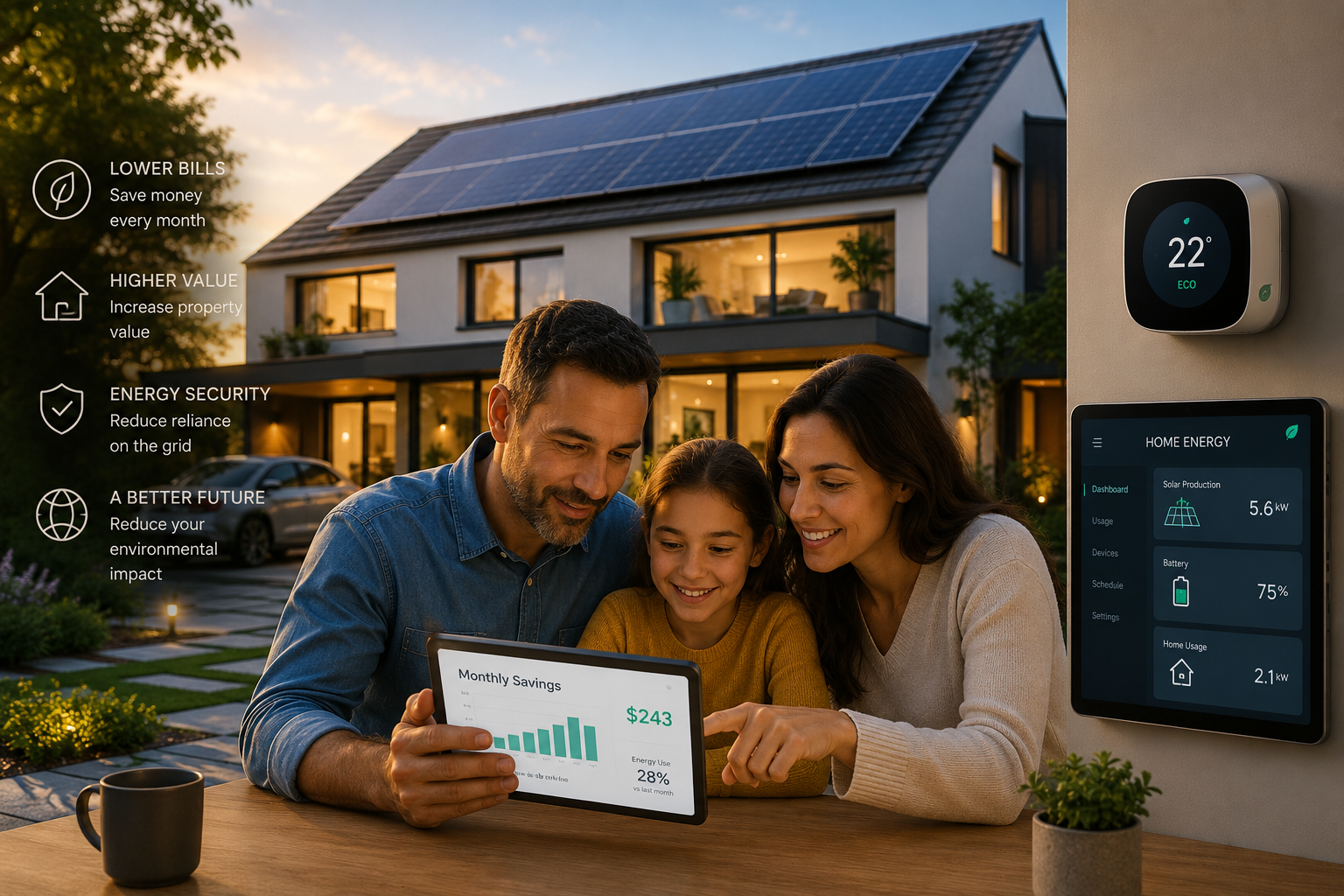
A growing number of homeowners are discovering that energy efficiency is about far more than lowering utility bills. What was once viewed as a cost-saving feature has quietly become a financial strategy, one that can influence household wealth, long-term financial stability, and even future property value.
The shift is subtle but significant. Rising energy costs, changing housing preferences, and increased awareness of household operating expenses are transforming the way people think about their homes. Increasingly, buyers, renters, and homeowners are beginning to recognize that energy consumption is not merely an environmental issue; it is a wealth-building issue.
That realization is changing decisions in ways that extend far beyond thermostats, insulation, or efficient appliances. It is revealing an unexpected connection between how a home uses energy and how a family builds financial resilience over time.
Why Energy Efficiency Is Becoming a Financial Advantage
Most discussions about energy efficiency focus on savings. Install better insulation, replace outdated appliances, or upgrade lighting, and monthly energy bills may decrease.
But the larger story is not the savings themselves. It is what those savings enable.
Every recurring expense competes for a household’s financial resources. When energy costs consume a smaller share of monthly income, families gain greater flexibility. The money that would otherwise disappear into utility payments can be redirected toward emergency savings, education, home improvements, investments, or debt reduction.
Over years rather than months, this difference can become meaningful.
Unlike many consumer purchases, energy-efficiency improvements often continue delivering value long after installation. A refrigerator may become outdated, but insulation, efficient windows, or improved building design can influence household expenses for decades.
This creates an unusual financial dynamic: a one-time investment can generate recurring benefits without requiring continuous spending.
The Wealth Gap Few People Talk About
An underreported aspect of energy efficiency is its relationship to economic inequality.
Higher-income households often have greater access to efficiency upgrades. They can afford solar panels, modern heating systems, efficient appliances, or comprehensive home retrofits. As a result, they may benefit from lower operating costs year after year.
Meanwhile, households living in older or poorly maintained buildings frequently face higher energy expenses. Inefficient heating, cooling, and insulation can create what experts often describe as an “energy burden”, a situation where a larger portion of income is spent on keeping a home comfortable.
This means energy efficiency is increasingly becoming a factor in financial mobility.
The conversation is no longer simply about environmental responsibility. It is also about who gets access to lower living costs and who remains exposed to higher recurring expenses.
As governments, utilities, and private companies expand efficiency programs, this issue is likely to receive greater attention.
A New Consumer Behavior Is Emerging
One of the most interesting developments is how consumers are evaluating homes.
Traditionally, homebuyers focused heavily on location, size, neighborhood quality, and visual appeal. Those factors remain important, but operating costs are becoming a more visible part of the decision-making process.
Prospective buyers increasingly ask practical questions:
- How expensive is this home to heat or cool?
- How old are the major systems?
- Are the windows energy efficient?
- How much energy does the property consume annually?
These questions reflect a broader behavioral shift. People are starting to view homes not only as places to live but also as financial assets with ongoing operational costs.
A beautiful home with high energy expenses may become less attractive when compared with a similar property that costs substantially less to maintain.
This trend mirrors changes seen in the automotive industry, where fuel efficiency evolved from a niche concern into a mainstream purchasing factor.
The Rise of the “Efficient Asset”
Perhaps the most important insight is that energy-efficient homes are gradually being redefined as efficient assets.
Traditionally, wealth generation through housing has focused on appreciation, the increase in property value over time.
However, homeowners are increasingly recognizing a second source of value: cost efficiency.
An asset that appreciates while simultaneously reducing ongoing expenses can create a double financial benefit.
This perspective is particularly relevant during periods of economic uncertainty. When inflation, energy prices, or living costs rise, households with lower energy demands may experience less financial pressure.
In other words, efficiency can function as a form of protection.
That does not guarantee financial success, nor does it eliminate economic risks. Yet it can improve resilience in ways that are often overlooked.
Technology Is Accelerating the Trend
The growing connection between energy efficiency and household wealth is being reinforced by technology.
Smart thermostats, connected appliances, home energy monitoring systems, and residential battery storage are making energy use more visible than ever before.
For decades, energy consumption remained largely invisible. Homeowners received monthly bills but had limited insight into where energy was being wasted.
Today, digital tools allow households to track consumption patterns, identify inefficiencies, and make informed decisions.
The result is a gradual shift from passive energy use to active energy management.
As technology becomes more accessible, efficiency may increasingly become a routine household practice rather than a specialized investment.
Why This Matters Beyond Individual Homes
The implications extend beyond personal finances.
When millions of households reduce energy waste, the cumulative effect can influence energy infrastructure, utility demand, and broader economic stability.
Communities with more efficient housing stock may be better positioned to handle periods of energy stress or price volatility. Businesses may also benefit indirectly as consumers retain more disposable income.
This broader perspective helps explain why governments, utilities, and urban planners often support efficiency initiatives. The benefits can extend well beyond environmental goals.
Efficiency is increasingly viewed as an economic resource.
What the Future Could Look Like
Several trends suggest the relationship between energy efficiency and household wealth may strengthen in the coming years.
Energy performance information is becoming more visible in housing markets. Consumers are gaining access to smarter energy-management technologies. Homebuyers are paying closer attention to operating costs. And rising energy prices continue to encourage efficiency improvements.
At the same time, lenders, insurers, builders, and property developers are exploring ways to incorporate energy performance into their business models.
Whether these changes become widespread will depend on market conditions, technology costs, policy decisions, and consumer demand.
What seems increasingly clear, however, is that energy efficiency is no longer just a technical feature hidden behind walls and appliances.
It is becoming part of a larger conversation about financial health, economic resilience, and long-term wealth creation.
The Bigger Takeaway
The most surprising aspect of energy efficiency is not that it saves money. Most people already know that.
The deeper insight is that efficiency changes the financial trajectory of a household over time.
By reducing recurring costs, improving resilience against rising expenses, and potentially enhancing the attractiveness of a property, energy-efficient homes can influence wealth in ways that are often invisible day to day.
For homeowners, buyers, and policymakers alike, the question is no longer whether energy efficiency matters.
The question is whether we have fully recognized how closely it is connected to financial opportunity.
The information presented in this article is based on publicly available sources, reports, and factual material available at the time of publication. While efforts are made to ensure accuracy, details may change as new information emerges. The content is provided for general informational purposes only, and readers are advised to verify facts independently where necessary.
Related News
- The Energy Paradox of Efficiency: Why Using Less Electricity Does Not Always Mean Using Less Energy
- Why Extreme Weather Is Turning Electricity Resilience Into an Everyday Consumer Issue
- Why Energy Independence Is Becoming a Household Decision, Not Just a National Strategy
- The Hidden Energy Cost of Keeping Everything Available Instantly