










Why Home Batteries Are Becoming the Energy Industry’s Next Big Shift
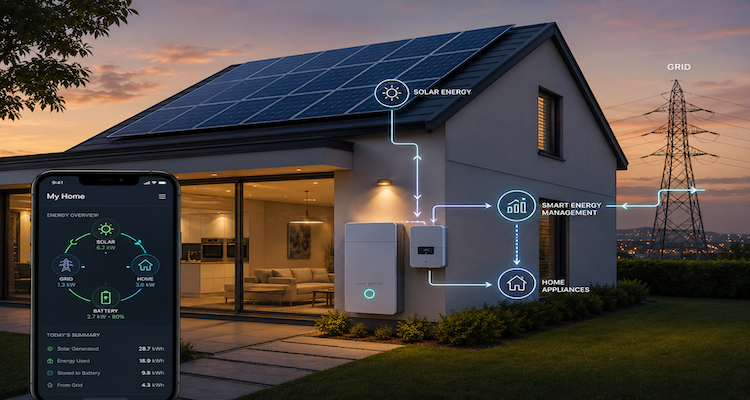
A quiet change is unfolding in garages, utility rooms, and basements around the world. While solar panels have spent years dominating the conversation about home energy, another technology is steadily gaining influence with far less public attention: home battery storage.
For many households, batteries began as a backup solution, a way to keep lights on during outages. Today, they are becoming something much larger. Utilities, energy companies, technology firms, and policymakers are increasingly paying attention because home batteries are starting to change how electricity is produced, stored, and consumed.
The significance of this shift extends well beyond individual homeowners. What appears to be a personal energy upgrade is gradually becoming part of a broader transformation of the electric grid itself.
The Missing Piece of the Clean Energy Puzzle
Solar panels solved one challenge by allowing homeowners to generate electricity. But they never fully solved another problem: timing.
The sun often produces the most energy when household demand is relatively low. By evening, when families return home, cook dinner, and switch on appliances, solar generation declines. This mismatch has long limited the effectiveness of residential solar systems.
Home batteries address that gap. They store excess electricity generated during the day and make it available when needed later. Instead of sending all surplus power back to the grid, households can use more of the energy they produce themselves.
This seemingly simple capability is one reason batteries are attracting growing interest. They make renewable energy more practical, predictable, and useful.
Why Utilities Suddenly Care
Historically, utilities operated under a straightforward model: power flowed from large generation facilities to consumers.
Home batteries introduce a different dynamic.
When thousands of homes possess energy storage, they collectively become a distributed energy resource. In certain situations, utilities can potentially draw on stored electricity from participating households to help stabilize the grid during periods of high demand.
This concept is often described as a “virtual power plant.” Rather than building another large power station, utilities can coordinate thousands of smaller batteries spread across neighborhoods.
Several energy providers and technology companies have already explored programs that allow homeowners to share stored energy during peak demand periods. While approaches vary by region, the underlying idea is gaining momentum because it offers flexibility without requiring massive new infrastructure projects.
For utilities facing rising electricity demand, especially from electric vehicles, data centers, and electrified homes, distributed storage represents an increasingly attractive option.
The Real Story Is About Control
Much of the public discussion around batteries focuses on technology. The deeper story may actually be about control.
For decades, consumers had little influence over how or when electricity was used. Energy consumption was largely passive.
Home batteries introduce a level of energy management that was previously unavailable to most households.
A homeowner with solar panels, battery storage, and smart energy software can decide when to consume electricity, when to store it, and in some cases when to sell it back to the grid.
This shift reflects a broader trend occurring across multiple industries: people increasingly expect greater control over the systems they depend on.
Just as streaming services changed media consumption and remote work transformed workplace flexibility, home batteries are giving consumers more influence over energy decisions that were once centralized.
Rising Grid Pressure Is Changing the Equation
Another reason batteries are attracting attention is the growing strain on electricity networks.
The global push toward electrification means more devices, vehicles, and systems rely on electricity than ever before. Electric vehicles, heat pumps, smart homes, and connected technologies all contribute to increasing demand.
At the same time, weather-related disruptions and extreme climate events have highlighted vulnerabilities in many power systems.
For homeowners, batteries offer resilience. During outages, they can provide backup power for essential appliances and critical systems.
For utilities, widespread battery adoption can reduce pressure during peak demand periods, helping avoid costly upgrades and reducing the risk of localized overloads.
The interests of consumers and utilities, once viewed as separate, are increasingly overlapping.
A Behavioral Shift Hidden Behind the Technology
One of the most overlooked aspects of home battery adoption is its effect on consumer behavior.
When households can see how much energy they generate, store, and consume, energy becomes more visible and tangible.
People often begin paying closer attention to electricity usage patterns. They become more aware of peak pricing periods, appliance efficiency, and overall consumption habits.
This mirrors what happened when fitness trackers made personal health data visible. Once people could monitor activity levels in real time, behavior often changed.
Home batteries may be producing a similar effect in the energy sector. They transform electricity from an invisible utility into a resource that households actively manage.
That behavioral change could prove as important as the technology itself.
Economics Are Becoming More Attractive
The financial case for home batteries varies significantly depending on location, electricity pricing structures, incentives, and local regulations.
For many years, battery systems were often viewed as expensive additions to solar installations. While cost remains an important consideration, improving technology and increasing production volumes have helped make storage more accessible.
In some regions, time-of-use electricity pricing creates opportunities for homeowners to store cheaper electricity and use it during more expensive periods.
In others, backup power capabilities provide value that extends beyond direct financial returns.
The economics remain complex, but the conversation is increasingly shifting from whether batteries are practical to how quickly adoption may expand.
What Makes This Moment Different
Energy technologies frequently generate excitement without achieving widespread adoption. Home batteries appear different because several trends are converging at the same time.
Renewable energy deployment continues to expand. Electric vehicle ownership is growing. Smart home technologies are becoming more sophisticated. Utilities are searching for flexible grid solutions. Consumers are showing greater interest in energy independence and resilience.
Each of these developments reinforces the others.
The result is an ecosystem where battery storage no longer functions as a standalone technology. It serves as a connecting layer between renewable generation, household consumption, transportation, and grid management.
That interconnected role may explain why industry attention is accelerating.
The Future May Be More Distributed Than Expected
The long-term significance of home batteries may not be that every household becomes energy independent. Instead, their greatest impact could emerge from collaboration.
Future electricity networks may rely on millions of interconnected devices, solar panels, batteries, electric vehicles, smart appliances, and intelligent software, working together to balance supply and demand in real time.
In that environment, a home battery is not merely a backup device. It becomes part of a larger energy ecosystem.
The quiet rise of residential storage suggests that the future of electricity may be less centralized, more flexible, and increasingly shaped by ordinary households. Utilities are paying attention because they recognize that the next major energy transition may not begin with giant power plants. It may begin one battery at a time.
The information presented in this article is based on publicly available sources, reports, and factual material available at the time of publication. While efforts are made to ensure accuracy, details may change as new information emerges. The content is provided for general informational purposes only, and readers are advised to verify facts independently where necessary.
Related News
- The Energy Paradox of Efficiency: Why Using Less Electricity Does Not Always Mean Using Less Energy
- Why Extreme Weather Is Turning Electricity Resilience Into an Everyday Consumer Issue
- Why Energy Independence Is Becoming a Household Decision, Not Just a National Strategy
- The Hidden Energy Cost of Keeping Everything Available Instantly