









Typhoon Bavi Signals a New Era of Bigger and Stronger Storms
Key Takeaways
• Typhoon Bavi is expected to become one of the largest storms to affect Taiwan in decades.
• Authorities across Taiwan, China, and Japan are urging residents to prepare for severe disruptions.
• Scientists warn that warmer oceans and shifting climate patterns may be supporting more intense storms.
• The economic and social costs of large tropical cyclones are increasing across East Asia’s densely populated coastlines.
• Bavi highlights the growing need for resilient infrastructure, emergency planning, and climate adaptation strategies.
Introduction
As Typhoon Bavi moves across the western Pacific, attention is focused not only on the storm itself but also on what it represents. Forecasts suggest that Bavi could become one of the largest and most powerful typhoons to affect Taiwan in recent decades before moving toward China’s eastern coast. Emergency agencies across the region are urging residents to prepare for strong winds, flooding, landslides, and prolonged disruptions.
Yet beyond the immediate danger lies a broader story. East Asia has become one of the world’s most economically important and densely populated regions, while also facing increasing exposure to climate-related weather extremes. Typhoon Bavi arrives at a moment when scientists are closely watching warming ocean temperatures and the possible return of El Niño conditions, both of which can influence tropical cyclone behavior.
The storm is therefore more than a weather event. It offers a glimpse into how changing environmental conditions, urban development, and disaster preparedness are shaping the future of coastal resilience across the Asia-Pacific region.
Understanding the Development
A Storm Built Over Warm Pacific Waters
Typhoon Bavi strengthened over a vast stretch of open ocean, drawing energy from unusually warm sea surface temperatures and accumulating enormous amounts of atmospheric moisture. These conditions allowed the storm to expand significantly while maintaining destructive power.
Meteorologists note that the storm’s size is particularly notable. Large tropical cyclones often affect wider geographic areas than smaller but equally intense systems. This means stronger winds, heavier rainfall, larger storm surges, and a broader zone of disruption.
For communities across Taiwan, Okinawa, and eastern China, the storm’s scale increases the challenge of preparation because impacts may extend far beyond the center of the cyclone.
Why Storm Size Matters
Public attention often focuses on maximum wind speeds, but storm size can be equally important. Larger storms push greater volumes of water toward coastlines, increasing flood risks. They also spread damaging weather across wider regions, affecting transportation, agriculture, power networks, and emergency response operations.
A slight shift in Bavi’s track could significantly alter which communities experience the most severe impacts. This uncertainty is one reason authorities are encouraging early preparation rather than waiting for final forecasts.
Why This Matters
Growing Risks for Coastal Populations
East Asia’s coastlines are home to hundreds of millions of people and some of the world’s most important industrial and commercial centers. Ports, manufacturing hubs, technology supply chains, and transportation networks all operate within regions vulnerable to typhoons.
When a major storm approaches, the consequences extend well beyond immediate property damage. Businesses face supply chain interruptions, flights and shipping routes are disrupted, and local economies may require months to recover.
The concentration of economic activity along coastal areas means that each major storm now carries greater financial risks than similar events decades ago.
The Human Dimension
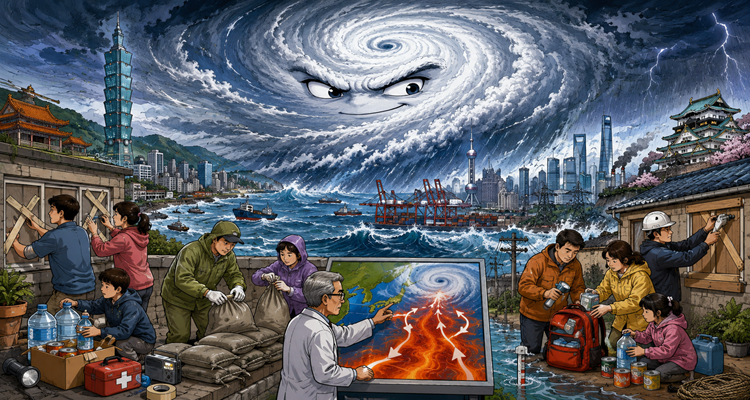
Behind every weather warning are families making practical decisions: securing homes, gathering food and water, preparing emergency supplies, and planning for potential evacuations.
These actions reflect a growing reality for many communities. Severe weather preparedness is no longer viewed as an occasional precaution but increasingly as a routine necessity.
The psychological impact should not be overlooked. Repeated exposure to extreme weather events can create anxiety, strain public resources, and influence where people choose to live and invest in the future.
What Is Changing
Climate Signals Are Becoming Harder to Ignore
Scientists continue to investigate the relationship between climate change and tropical cyclone behavior. While not every storm can be directly attributed to global warming, several trends have become increasingly clear.
Warmer oceans provide more energy for storm development. Higher atmospheric moisture levels can contribute to heavier rainfall. Rising sea levels amplify storm surge impacts, allowing coastal flooding to reach farther inland.
These factors create conditions in which tropical cyclones can become more destructive even if storm frequency does not dramatically increase.
The El Niño Factor
Meteorologists are also monitoring the potential emergence of El Niño conditions. El Niño can alter atmospheric circulation patterns across the Pacific, affecting storm formation and movement.
Although the exact effects vary from year to year, periods associated with El Niño have historically influenced tropical cyclone activity across parts of the Asia-Pacific region.
For emergency planners, this means that individual storms like Bavi must be viewed within a larger climate system that continues to evolve.
Infrastructure Under Pressure
Modern cities depend on interconnected systems including electricity, telecommunications, transportation, water management, and healthcare services.
Extreme weather tests each of these systems simultaneously.
Governments across East Asia have invested heavily in flood defenses, forecasting technology, and emergency response capabilities. However, larger and more intense storms continue to challenge assumptions about what infrastructure can withstand.
The Bigger Picture
A Global Trend in Extreme Weather
Typhoon Bavi fits into a broader global pattern of increasingly costly weather disasters.
Around the world, communities are experiencing stronger heatwaves, heavier rainfall events, prolonged droughts, and more destructive storms. While regional differences exist, scientists consistently identify warming temperatures as a factor increasing weather-related risks.
This trend is forcing policymakers, businesses, and communities to reconsider long-term planning decisions.
Economic Exposure Is Rising
Economic growth has brought prosperity to many coastal regions across Asia. Yet it has also concentrated assets in areas vulnerable to natural hazards.
Ports, industrial parks, semiconductor facilities, logistics centers, and urban developments often sit near coastlines because of strategic advantages. These same locations can become highly exposed during major storms.
As a result, weather resilience is increasingly becoming an economic issue rather than simply an environmental one.
The Insurance Challenge
The growing scale of weather-related losses is also reshaping insurance markets.
More frequent and costly disasters can lead to higher premiums, tighter coverage requirements, and increased pressure on governments to provide disaster assistance.
This creates a feedback loop where climate risk influences investment decisions, housing markets, and regional economic competitiveness.
Opportunities and Challenges
Better Forecasting Saves Lives
One positive development is the remarkable improvement in weather forecasting technology.
Satellite systems, artificial intelligence, advanced climate models, and real-time monitoring allow authorities to issue earlier and more accurate warnings than ever before.
These improvements have significantly reduced mortality rates from many major storms compared with previous generations.
Preparedness Remains Uneven
Despite technological advances, preparedness levels vary widely.
Urban areas may benefit from stronger infrastructure and emergency systems, while rural communities often face greater vulnerabilities. Aging populations, low-income households, and isolated regions can encounter additional challenges during disasters.
Closing these preparedness gaps remains a critical priority.
Balancing Development and Resilience
Governments face a difficult balancing act. Economic development often encourages expansion into coastal zones, yet those same areas are becoming increasingly exposed to climate-related risks.
Future planning may require stricter building standards, smarter land-use policies, and greater investment in adaptation measures.
What Comes Next
Immediate Outlook
In the coming days, attention will remain focused on Bavi’s path and intensity as it approaches populated coastal regions. Emergency services will continue monitoring forecasts and preparing for potential impacts.
Even if the storm weakens somewhat before landfall, its size alone could produce widespread disruption.
Long-Term Implications
The larger question concerns what storms like Bavi tell us about the future.
Climate scientists expect coastal communities to face increasing challenges from rising temperatures, sea-level rise, and weather extremes. This does not mean every year will bring record-breaking storms, but it does suggest that risk management will become more important across multiple sectors.
Businesses, governments, and households will increasingly need to treat climate resilience as a strategic necessity rather than an optional investment.
A New Standard for Preparedness
The lessons from major storms are often learned long before landfall. They emerge through preparation, planning, and the ability to adapt to changing conditions.
Typhoon Bavi serves as a reminder that resilience is not measured solely by how communities respond to disasters, but by how effectively they prepare for them.
Conclusion
Typhoon Bavi is attracting attention because of its exceptional size and strength, but its significance extends beyond a single weather event. The storm reflects broader environmental, economic, and social trends that are reshaping how coastal regions manage risk.
As climate patterns evolve and populations continue to grow along vulnerable coastlines, preparedness will become increasingly important. Bavi underscores a reality facing many parts of the world: extreme weather is no longer an occasional challenge but a central consideration for future planning.
The communities that invest in resilience today may be best positioned to withstand the storms of tomorrow.
This content is published for informational or entertainment purposes. Facts, opinions, or references may evolve over time, and readers are encouraged to verify details from reliable sources.