









Why Consumers Are Losing Trust in Purpose-Driven Branding
A decade ago, attaching a social mission to a brand often felt like a winning strategy. Companies promoted sustainability initiatives, diversity commitments, community programs, and ethical sourcing efforts as a way to connect with consumers on a deeper level. Many buyers welcomed the shift, believing businesses could play a meaningful role in addressing social and environmental challenges.
Today, the reaction is noticeably more complicated. Consumers have not stopped caring about social causes. If anything, awareness of environmental, ethical, and cultural issues has increased. What has changed is the level of scrutiny. More people are asking whether a company’s stated purpose reflects genuine action or simply serves as a marketing tool.
This growing skepticism represents an important shift in consumer behavior. It suggests that audiences are becoming less interested in what brands say and far more interested in what brands actually do.
The Rise and Saturation of Purpose-Driven Marketing
Purpose-driven branding emerged as a response to changing consumer expectations. Younger generations, particularly millennials and Gen Z, often expressed interest in supporting organizations that aligned with their values. Businesses responded by highlighting missions that extended beyond profit.
What began as a differentiator gradually became commonplace. Brands across nearly every industry started promoting commitments related to sustainability, social responsibility, employee well-being, and community impact.
The challenge is that when every company claims to stand for something important, those claims lose their ability to stand out. Consumers are exposed to a constant stream of purpose-focused messaging, making it harder to distinguish authentic commitments from carefully crafted marketing campaigns.
As a result, audiences have become more cautious. Instead of accepting brand narratives at face value, they increasingly evaluate whether corporate actions support the values being advertised.
The Information Age Has Changed the Rules
One reason skepticism is growing is that consumers now have unprecedented access to information.
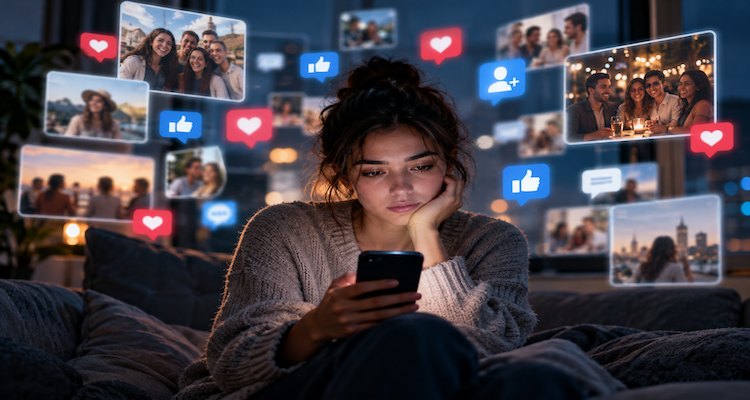
Social media platforms, independent creators, industry watchdogs, and online communities regularly examine corporate behavior. A company can launch a campaign promoting environmental responsibility while simultaneously facing criticism over supply chain practices, labor policies, or product waste.
In the past, brands had greater control over their public image. Today, inconsistencies are often exposed quickly.
This transparency has fundamentally altered the relationship between businesses and consumers. Marketing messages are no longer evaluated in isolation. They are compared against real-world actions, employee experiences, customer feedback, and publicly available information.
The result is a marketplace where credibility has become more valuable—and more difficult to maintain.
Consumers Are Detecting the Gap Between Messaging and Action
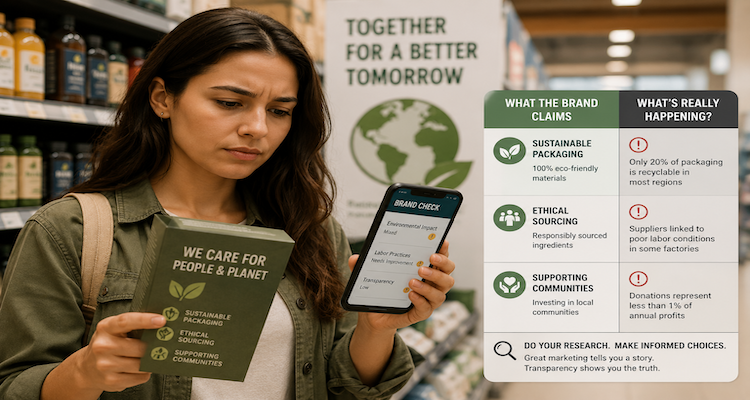
The most significant driver of skepticism may be the growing awareness of what many observers call the “say-do gap.”
Companies frequently make ambitious promises about sustainability, inclusivity, or social impact. Yet consumers often struggle to see measurable evidence of those commitments in everyday business operations.
For example, a brand may promote eco-friendly initiatives while continuing practices that generate significant waste. Another may celebrate diversity in advertising campaigns while facing questions about leadership representation or workplace culture.
Consumers do not necessarily expect perfection. Most understand that large organizations face complex challenges. What creates distrust is the perception that marketing efforts are advancing faster than meaningful change.
When promises appear larger than actions, audiences become skeptical of future claims.
The Shift From Values to Verification
An important behavioral change is emerging across consumer markets: people increasingly want proof rather than promises.
Instead of being persuaded by broad mission statements, consumers often look for tangible evidence. They want transparency regarding sourcing, labor practices, environmental goals, and measurable outcomes.
This shift reflects a broader cultural trend toward verification. Whether evaluating news, influencers, products, or institutions, people are becoming more cautious about accepting claims without supporting evidence.
For brands, this means that purpose alone is no longer enough. Credibility increasingly depends on transparency, accountability, and consistency.
The most trusted organizations are often those willing to discuss both progress and limitations rather than presenting an idealized image of perfection.
Purpose Fatigue Is Becoming a Real Challenge
Another factor driving skepticism is what could be described as purpose fatigue.
Consumers encounter cause-related messaging everywhere from advertisements and product packaging to social media campaigns and corporate announcements.
Over time, constant exposure can create emotional exhaustion. People may begin questioning whether every social issue truly requires a corporate response.
In some cases, audiences perceive brand activism as opportunistic, particularly when companies comment on trending issues without demonstrating a long-term commitment to those causes.
This does not mean consumers want businesses to remain silent. Rather, they increasingly expect relevance and authenticity. When a company’s public position appears disconnected from its expertise, operations, or history, audiences are more likely to view the effort as performative.
The Hidden Insight: Trust Is Becoming Operational, Not Emotional
One of the most overlooked developments in modern branding is that trust is shifting from an emotional concept to an operational one.
For years, marketers focused on storytelling, values, and emotional connection. Those elements remain important, but they are no longer sufficient on their own.
Consumers increasingly evaluate trust through observable business behavior. They look at customer service experiences, product quality, employee treatment, transparency, pricing practices, and corporate consistency.
In other words, trust is becoming something consumers measure through actions rather than messages.
This shift has significant implications. Brands that invest heavily in purpose-driven storytelling but neglect operational integrity may find that consumers remain unconvinced. Meanwhile, organizations that quietly demonstrate consistent values through business decisions may earn stronger loyalty, even with less dramatic marketing.
What This Means for Businesses
The growing skepticism surrounding purpose-driven branding does not signal the end of corporate responsibility. Instead, it signals a higher standard.
Consumers still care about environmental sustainability, ethical business practices, diversity, and social impact. The difference is that they increasingly expect evidence.
Businesses that treat purpose as a marketing campaign may face diminishing returns. Those that embed values into product development, workplace culture, customer experience, and long-term strategy are more likely to maintain credibility.
Transparency is becoming especially important. Companies that openly discuss challenges, setbacks, and ongoing improvements may appear more trustworthy than those presenting flawless narratives.
In many cases, honesty about imperfection can strengthen trust more effectively than polished messaging.
The Future of Purpose-Driven Branding
Purpose-driven branding is unlikely to disappear. However, its role is evolving.
The next phase may be less about making grand declarations and more about demonstrating measurable impact. Consumers appear increasingly interested in substance over symbolism and outcomes over intentions.
Brands that recognize this shift have an opportunity to build stronger relationships with their audiences. Those relationships will depend less on persuasive storytelling and more on consistent behavior over time.
Ultimately, consumer skepticism is not necessarily a negative development. It reflects a more informed and discerning public—one that expects businesses to align their actions with their words. In an era of transparency and constant scrutiny, authenticity is no longer a branding advantage. It is becoming a business requirement.
The information presented in this article is based on publicly available sources, reports, and factual material available at the time of publication. While efforts are made to ensure accuracy, details may change as new information emerges. The content is provided for general informational purposes only, and readers are advised to verify facts independently where necessary.