








Why Silence Feels Different in the Digital Age

Silence has not disappeared. It still exists in libraries, forests, empty rooms, and early mornings before the world fully wakes up. Yet many people report that silence feels different than it once did less familiar, less comfortable, and sometimes even unsettling. The change is not necessarily about the absence of sound. It is about the environment in which silence now exists.
A generation ago, moments of quiet were woven naturally into daily life. Waiting in line, sitting on a bus, walking alone, or spending an evening at home often involved periods with little stimulation. Today, those same moments are frequently filled by notifications, streaming content, podcasts, social media feeds, or messages. Silence has become something we increasingly encounter by choice rather than by circumstance.
This subtle shift reveals a larger story about how digital technology has changed attention, habits, and even our relationship with our own thoughts.
The New Soundtrack of Everyday Life
The digital age has created an environment where information is almost always available. Smartphones ensure that entertainment, communication, and news are never more than a few taps away. For many people, background stimulation has become the default setting.
A commute that once involved looking out a window may now involve music, videos, or scrolling through updates. Exercise sessions are accompanied by playlists. Household chores often happen alongside podcasts. Even brief moments of waiting are frequently filled with digital engagement.
The result is not simply more noise. It is the normalization of constant cognitive input.
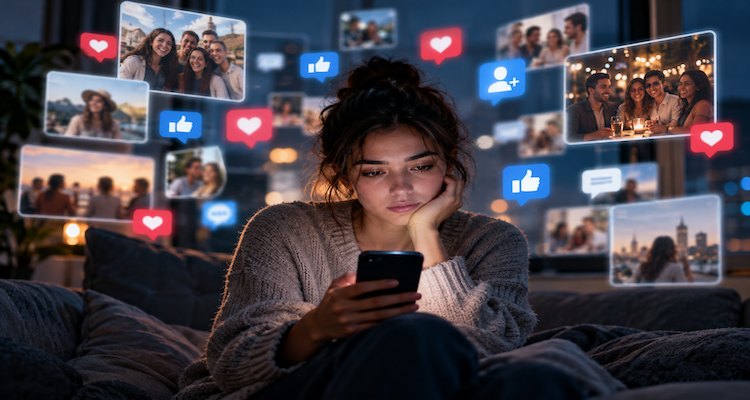
When people step away from these streams of information, the contrast can feel surprisingly strong. Silence becomes noticeable because the mind has grown accustomed to a steady flow of stimulation.
Why Quiet Can Feel Uncomfortable
One reason silence feels different is that it often leaves people alone with their thoughts.
Digital platforms are designed to capture and maintain attention. Social networks, streaming services, and news feeds continuously offer new content. Over time, this can reduce the amount of time people spend in reflective mental states.
When external input suddenly stops, many individuals experience a sense of restlessness. The quiet itself may not be unpleasant, but the transition from constant stimulation to stillness can feel abrupt.
Psychologists and behavioral researchers have long noted that human attention adapts to its environment. When a person becomes accustomed to frequent interruptions, notifications, and rapid information changes, slower experiences can feel unusual.
This does not mean technology is harmful by default. Rather, it highlights how deeply digital habits shape perception. Silence has become more noticeable because it now competes with an unprecedented volume of attention-grabbing alternatives.
The Rise of Engineered Attention
An important difference between past and present is that many digital experiences are intentionally designed to keep users engaged.
Streaming platforms automatically suggest the next video. Social media feeds continuously refresh. Messaging apps create expectations of immediate responsiveness. News alerts appear throughout the day.
These systems are not merely delivering information. They are competing for attention.
As a result, silence increasingly represents the absence of engagement rather than simply the absence of sound. That distinction matters because attention has become one of the most valuable resources in the digital economy.
The modern challenge is not finding information. It is finding space away from information.
A Cultural Shift in How We Experience Solitude
Silence and solitude were once closely connected. Today, a person can be physically alone while remaining digitally connected to hundreds or thousands of people.
This has changed how solitude is experienced.
Social platforms allow constant awareness of what others are doing, thinking, and sharing. While this connectivity offers many benefits, it also reduces opportunities for genuine mental separation from social activity.
As a result, silence often carries a new meaning. Instead of representing isolation from the world, it can represent temporary disconnection from ongoing digital conversations.
That distinction helps explain why many people intentionally seek silent retreats, digital detoxes, or technology-free experiences. These activities are not necessarily about escaping sound. They are often about escaping continuous engagement.
What Businesses and Workplaces Are Discovering
The changing nature of silence is also influencing professional environments.
Many workplaces operate through constant communication channels. Email, messaging platforms, video meetings, collaboration tools, and project notifications create a continuous flow of interaction.
While these tools improve coordination, they can also fragment attention.
Increasingly, organizations are experimenting with practices that protect uninterrupted work. Concepts such as focus hours, notification management, asynchronous communication, and meeting-free blocks reflect a growing recognition that uninterrupted mental space has value.
In this context, silence becomes a productivity tool rather than merely a personal preference.
The ability to think deeply without interruption is emerging as a competitive advantage in knowledge-based industries.
The Hidden Insight: Silence Has Become a Luxury Resource
Perhaps the most important change is that silence is no longer just an environmental condition. It has become a scarce resource.
In previous generations, quiet often happened naturally. Today, achieving meaningful silence frequently requires deliberate effort.
People schedule time away from devices. They purchase noise-canceling headphones. They seek remote destinations. They create technology-free zones in their homes.
This reveals an unexpected shift: silence is increasingly treated as something valuable that must be protected.
The irony is striking. Technology has made communication easier, information more accessible, and entertainment more abundant than at any point in history. Yet these same advances have increased the perceived value of moments when none of those things are present.
Silence is becoming less like an absence and more like an asset.
Why Interest in Silence Is Growing
The growing popularity of mindfulness practices, digital wellness initiatives, and attention-management strategies reflects broader cultural concerns about distraction and cognitive overload.
Many people are not rejecting technology. They are trying to develop healthier relationships with it.
Silence plays a role in that effort because it creates space for reflection, creativity, and recovery from continuous stimulation.
Writers, designers, entrepreneurs, researchers, and artists often describe their best ideas emerging during periods of quiet. Without constant input, the brain has greater opportunity to connect ideas, process experiences, and generate original thinking.
In an economy increasingly shaped by creativity and knowledge work, these benefits are attracting renewed attention.
What Happens Next?
The relationship between silence and technology will likely continue evolving.
Artificial intelligence, wearable devices, augmented reality systems, and increasingly personalized digital services may make information even more accessible in daily life. At the same time, growing awareness of attention management could lead people to place greater value on intentional quiet.
Future technologies may even be designed to help users create healthier boundaries around information consumption rather than simply maximizing engagement.
What seems increasingly clear is that silence will not disappear. Instead, its meaning is changing.
In the digital age, silence is no longer simply what remains when sound stops. It is what remains when the endless flow of information pauses. That difference explains why silence feels different today—and why it may become more important than ever.
This content is published for informational or entertainment purposes. Facts, opinions, or references may evolve over time, and readers are encouraged to verify details from reliable sources.