










Why Some Photographs Feel Haunted Even When Nothing Strange Appears in Them
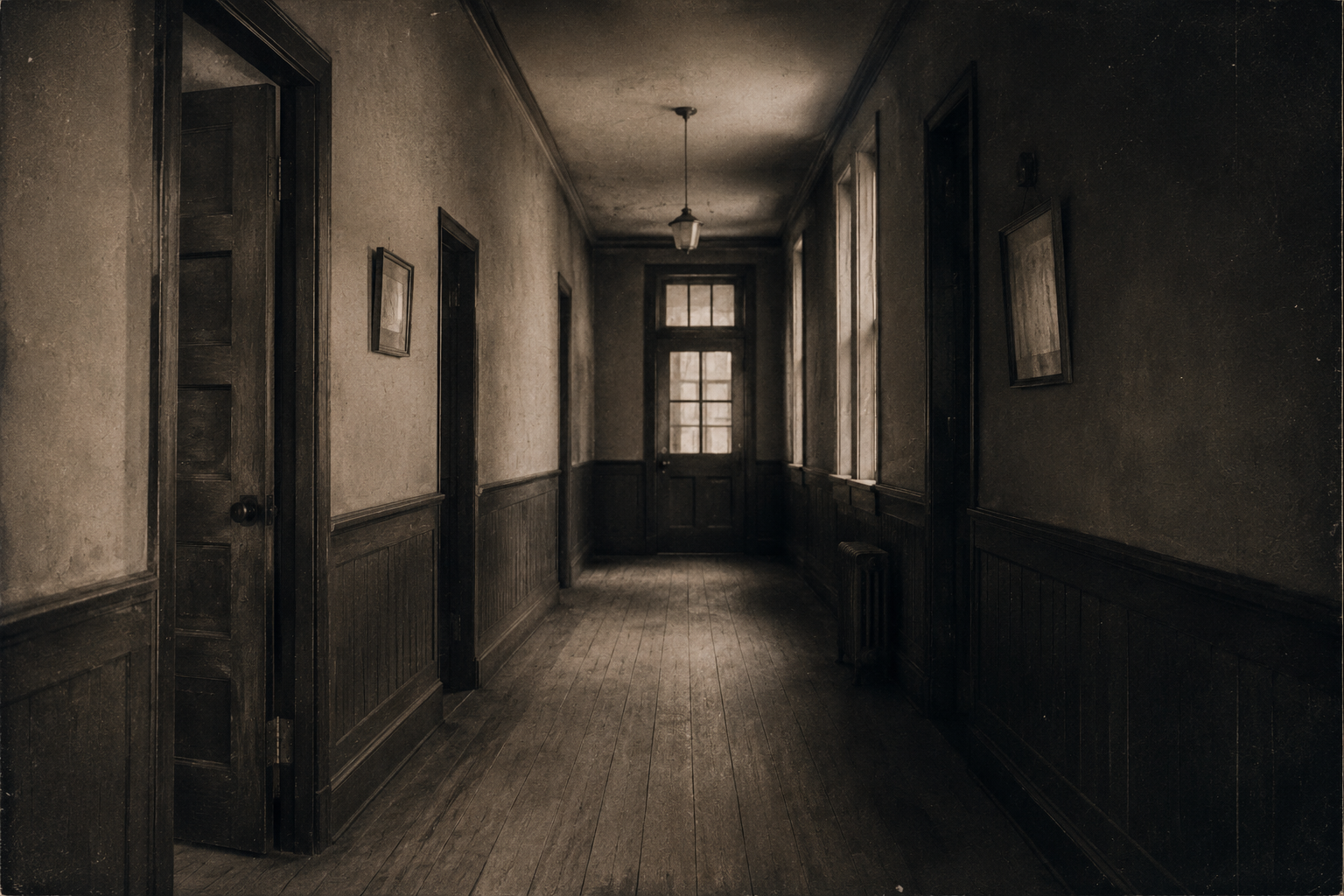
A faded family portrait. An empty hallway captured decades ago. A quiet street photographed at dusk. There are no ghosts, no unexplained shadows, and no obvious anomalies. Yet something about the image feels unsettling, as if it contains a story that cannot quite be explained.
This reaction is more common than many people realize. Across social media, photography forums, museums, and archival collections, certain photographs consistently evoke a feeling of unease despite showing entirely ordinary scenes. The phenomenon has become increasingly fascinating in an era where billions of images are created every year. Ironically, as photography has become more abundant, truly haunting photographs have become easier to recognize, and harder to forget.
What makes an otherwise normal image feel haunted is rarely anything supernatural. Instead, it reveals something profound about memory, perception, and the way humans interpret visual information.
The Power of What Is Missing
Most photographs tell viewers what happened. Haunted-feeling photographs often do the opposite.
They suggest that something happened before the image was taken or immediately afterward. The photograph captures a moment suspended between events, leaving the viewer with unanswered questions.
An empty playground after sunset, for example, may feel eerie not because anything is visibly wrong but because playgrounds are associated with activity and noise. The absence of people creates a subtle tension between expectation and reality.
This psychological effect is sometimes stronger than an image showing something explicitly frightening. The human brain naturally seeks patterns and narratives. When information is incomplete, imagination begins filling the gaps.
The result is a lingering sensation that the photograph contains more than it reveals.
Time Becomes Visible
Photographs possess a unique relationship with time.
Unlike paintings or illustrations, photographs are direct records of moments that actually existed. Even when heavily edited, they retain an association with reality.
When viewers encounter older photographs, they are often looking at people, places, and objects that may no longer exist. Entire neighborhoods may have changed. Buildings may have disappeared. The people captured in the image may have aged dramatically or passed away.
This awareness creates an unusual emotional effect.
The image becomes more than a picture. It becomes evidence of a vanished moment.
Many photographs described as haunting are not frightening at all. They simply remind viewers that time moves in only one direction. The photograph remains frozen while everything else changes.
That contrast can create a feeling that is difficult to describe but easy to recognize.
Why Empty Spaces Feel Unsettling
Photographers have long understood that absence can be more powerful than presence.
A crowded room communicates activity. An empty room suggests questions.
Who was there?
Why did they leave?
Will they return?
These questions emerge automatically, especially when the environment contains signs of human activity. A chair slightly pulled away from a table, a light left on in a distant window, or a forgotten object can transform an ordinary image into something emotionally charged.
Many iconic examples of eerie photography rely on this principle. The scene itself remains normal, but traces of human presence create a sense of interruption.
The viewer begins to feel like an observer arriving after an unknown event.
The Influence of Memory and Nostalgia
One reason certain photographs feel haunted is that they activate memories even when the viewer has no personal connection to the image.
A photograph of an old classroom may remind someone of childhood. A picture of a quiet shopping mall may evoke memories of places that once felt important but have since changed.
Psychologists often note that memory is not a perfect recording system. It is emotional, selective, and deeply influenced by context.
When a photograph resembles something from a viewer’s past, it can trigger emotions associated with loss, change, or distance. The image becomes less about what is visible and more about what it represents.
This helps explain why abandoned buildings, outdated technology, and forgotten public spaces frequently appear in collections of eerie photographs. They symbolize the passage of time in a way that feels personal.
The Rise of Digital Eeriness
Interestingly, the internet has created entirely new forms of haunting imagery.
Online communities have popularized concepts such as liminal spaces, photographs of transitional environments like empty airports, vacant office corridors, deserted shopping centers, or quiet school hallways.
These locations are not inherently frightening. In fact, they are often mundane.
What makes them unsettling is that they appear familiar yet strangely disconnected from normal human activity.
A brightly lit corridor with no people feels different from a corridor filled with movement. The absence creates ambiguity. The viewer struggles to understand why the space feels wrong.
The popularity of liminal photography reveals a broader cultural shift. Modern life is saturated with images of people, events, and constant activity. When viewers encounter a space stripped of those elements, the silence becomes visually noticeable.
The emptiness itself becomes the subject.
The Hidden Role of Photography Technology
The technical qualities of photographs can also influence emotional reactions.
Older cameras often produced softer focus, unusual grain patterns, motion blur, and imperfect exposure. These characteristics introduce uncertainty into an image.
Modern smartphone photography tends to prioritize clarity and precision. While technically impressive, extreme sharpness can sometimes reduce mystery.
Older photographs leave more room for interpretation.
A blurred figure in a nineteenth-century image might simply be the result of a long exposure. Yet viewers often perceive movement, ambiguity, or hidden meaning.
The photograph appears to contain a secret because the visual information is incomplete.
This is not deception. It is a natural consequence of how human perception works.
People rarely react to photographs based solely on what they see. They react to what they think they see.
What Haunted Photographs Reveal About Us
Perhaps the most interesting insight is that haunted-feeling photographs often reveal more about the viewer than about the image itself.
Two people can look at the same photograph and have completely different reactions. One sees nostalgia. Another sees loneliness. A third sees beauty.
The photograph functions like a mirror for emotional interpretation.
This may explain why certain images remain culturally significant for decades. They resist complete explanation. Each generation brings new experiences, fears, and memories to the viewing process.
Rather than presenting a fixed meaning, the image invites participation.
The viewer becomes part of the story.
Why Interest Continues to Grow
The growing fascination with eerie and haunting photography reflects a broader cultural desire for mystery in an age of constant information.
Most digital experiences today are designed to explain, categorize, and predict. Algorithms recommend content. Search engines provide answers instantly. Artificial intelligence increasingly reduces uncertainty.
Haunting photographs do something different.
They preserve uncertainty.
They remind viewers that not every emotional reaction can be fully explained and that some images remain powerful precisely because they leave questions unanswered.
In that sense, the most haunting photographs are not the ones that show something strange. They are the ones that show something ordinary and somehow make it feel extraordinary.
A quiet room. An empty street. A forgotten face.
Nothing unusual is visible.
Yet the photograph lingers in memory long after it has disappeared from view and that may be the most haunting quality of all.
This content is published for informational or entertainment purposes. Facts, opinions, or references may evolve over time, and readers are encouraged to verify details from reliable sources.