










Why Unsolved Mysteries Still Captivate Us Decades After the Facts Fade
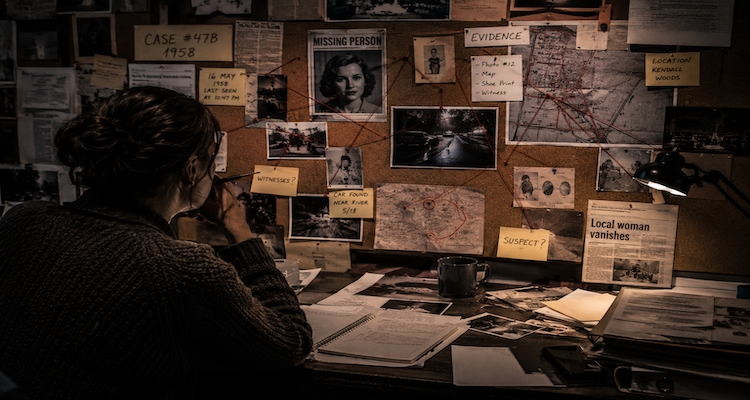
Some stories refuse to stay in the past.
Long after headlines disappear and official investigations go cold, certain mysteries continue to attract attention, spark debates, inspire documentaries, and generate new theories. Cases that once seemed destined for obscurity often find new life years, or even decades, ater, drawing audiences who were not even alive when the events first occurred.
The persistence of public fascination with unsolved mysteries is more than simple curiosity. It reveals something deeper about human psychology, modern media, and the way societies search for meaning in uncertainty. As digital platforms make old stories easier to revisit and reexamine, unresolved questions are becoming cultural artifacts that continue evolving long after the original events have ended.
The Human Mind Dislikes Unfinished Stories
One reason unsolved mysteries remain powerful is that the human brain is naturally uncomfortable with incomplete narratives.
Most stories follow a familiar structure: a problem emerges, an investigation unfolds, and a conclusion provides closure. Unsolved mysteries break that pattern. They leave a gap where certainty should exist.
That absence creates a mental tension that can persist for years. People continue revisiting the details because the story feels unfinished. Every new piece of information, however small, appears to offer a chance to complete the puzzle.
Unlike fictional mysteries, real-world cases carry the possibility that an answer may still exist somewhere. That possibility keeps interest alive even when new evidence is unlikely to emerge.
The Internet Has Changed How Mysteries Survive
In previous generations, many unsolved cases faded from public memory once media coverage ended.
Today, that is far less likely.
Online archives, podcasts, forums, streaming platforms, and social media have transformed forgotten mysteries into continuously accessible content. A case from decades ago can suddenly become relevant again after a documentary release, a viral discussion thread, or the discovery of previously overlooked evidence.
This shift has created a unique cultural phenomenon: mysteries no longer belong solely to their original era. They become shared investigations that new generations can discover and interpret through modern perspectives.
As a result, unresolved stories are no longer preserved only by journalists, historians, or law enforcement. They are sustained by digital communities that continually revisit and reinterpret the evidence.
The Appeal Goes Beyond Crime
Although criminal investigations often dominate discussions about unsolved mysteries, public fascination extends far beyond true crime.
People are drawn to unexplained disappearances, historical puzzles, strange artifacts, unidentified phenomena, and mysterious events that challenge conventional explanations.
Part of the attraction comes from uncertainty itself. In a world increasingly shaped by data, algorithms, and instant information, genuine mysteries have become relatively rare. When questions remain unanswered despite extensive investigation, they stand out.
The mystery becomes a reminder that not everything can be explained immediately, or perhaps ever.
That uncertainty creates a unique form of engagement. Rather than passively consuming information, audiences become participants, evaluating theories and weighing possibilities.
A Reflection of Cultural Anxiety
The enduring popularity of unsolved mysteries also reveals something about society.
Many of the cases that attract lasting attention involve themes that resonate with broader cultural concerns: trust, justice, safety, technology, power, or the limits of human knowledge.
When people revisit unresolved events, they are often exploring larger questions hidden beneath the surface. Why do institutions fail? Can truth remain hidden indefinitely? How reliable is evidence? What happens when certainty is impossible?
In this way, mysteries function as cultural mirrors. The theories people embrace often reflect contemporary fears and concerns more than the original events themselves.
A mystery discussed in the 1980s may be interpreted very differently today because audiences bring new assumptions, technologies, and worldviews to the conversation.
The Rise of Participatory Investigation
One of the most significant changes in recent years is the transformation of audiences from spectators into investigators.
Podcasts, video essays, discussion forums, and online communities encourage people to examine evidence directly. Rather than simply reading a summary, audiences can access documents, photographs, interviews, maps, and timelines.
This participatory approach changes the experience entirely.
The mystery becomes an intellectual challenge rather than merely a story. People enjoy comparing theories, identifying inconsistencies, and exploring alternative explanations.
The phenomenon reflects a broader shift in digital culture. Modern audiences increasingly prefer interactive engagement over passive consumption. Unsolved mysteries fit naturally into that preference because they invite contribution rather than simply delivering answers.
Why Closure Sometimes Reduces Interest
A surprising aspect of unresolved cases is that solving them can occasionally diminish public fascination.
When an answer finally emerges, the mystery transforms into history. The uncertainty disappears, and with it much of the speculation that fueled ongoing discussion.
This does not mean people prefer ignorance over truth. Rather, it highlights how much of the engagement comes from the process of searching rather than the destination itself.
The unanswered question creates a space for imagination, debate, and interpretation. Once that space closes, public attention often shifts elsewhere.
This helps explain why some mysteries remain culturally relevant for generations. Their unresolved nature becomes part of their identity.
What Unsolved Mysteries Reveal About the Digital Age
Perhaps the most important insight is that the popularity of unsolved mysteries reflects a broader change in how people interact with information.
Modern audiences are surrounded by constant updates, immediate answers, and endless streams of content. Yet many people increasingly gravitate toward stories that resist resolution.
This may seem contradictory, but it makes sense. In an environment where information is abundant, uncertainty becomes unusual, and therefore compelling.
Unsolved mysteries offer something many forms of modern media do not: enduring engagement. They invite audiences to think rather than simply consume. They encourage discussion rather than agreement. They remain relevant because they are never entirely finished.
That dynamic explains why decades-old mysteries continue attracting attention while countless resolved stories fade from memory.
The Mystery Beyond the Mystery
The lasting appeal of unsolved mysteries is not simply about discovering hidden facts. It is about humanity’s relationship with uncertainty.
People return to these stories because they challenge the expectation that every question has an answer. They remind us that knowledge has limits and that some events remain resistant to explanation.
As technology preserves more information and digital communities continue revisiting the past, unresolved mysteries are likely to remain a powerful part of popular culture. New generations will encounter old questions, bring fresh perspectives, and continue searching for answers.
Whether those answers ever arrive may be less important than the fact that people keep looking.
The real mystery may not be why these cases remain unsolved. It may be why the search itself remains so irresistible.
This content is published for informational or entertainment purposes. Facts, opinions, or references may evolve over time, and readers are encouraged to verify details from reliable sources.