










The Unexplained Sounds People Keep Hearing: From The Hum to Modern Audio Mysteries
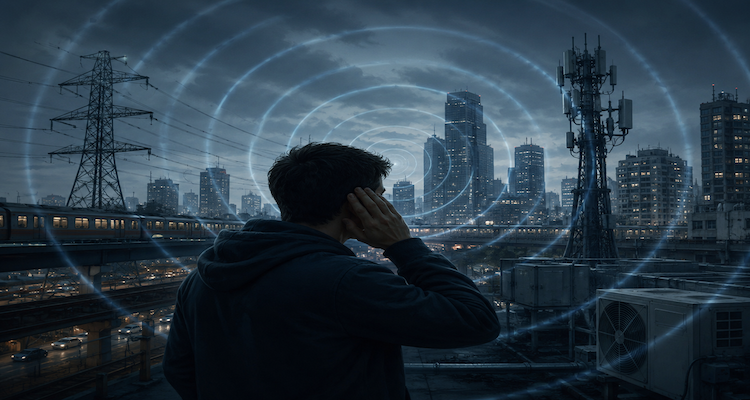
A low, persistent vibration. A distant engine that never seems to arrive. A droning sound audible to some people but completely absent to others standing nearby. For decades, reports of mysterious sounds have surfaced across continents, leaving residents frustrated, researchers intrigued, and communities searching for answers.
What makes these audio mysteries remarkable is not merely that they exist, but that they continue to appear in an age saturated with sensors, smartphones, and sophisticated monitoring technology. At a time when satellites can track weather systems from space and algorithms can identify songs within seconds, certain sounds still resist explanation.
The phenomenon reveals something deeper than an acoustic puzzle. It exposes the limits of human perception, the complexity of modern environments, and the growing tension between technology and the sensory experiences of everyday life.
The Sound Known Simply as “The Hum”
Among the most famous unexplained audio phenomena is a mysterious noise commonly referred to as “The Hum.” Reports have emerged from locations around the world, including communities in the United Kingdom, the United States, Canada, Australia, and New Zealand.
People who hear The Hum often describe it as a low-frequency rumble resembling a diesel engine idling in the distance. Others compare it to industrial machinery, electrical equipment, or a constant vibration felt as much as heard.
What makes the phenomenon particularly unusual is that only a small percentage of residents in affected areas seem able to detect it. In some cases, neighbors living in the same building report entirely different experiences.
Researchers have proposed numerous explanations. Industrial activity, power infrastructure, ventilation systems, transportation networks, and natural geological processes have all been considered potential contributors. Yet many reported cases remain unresolved, with no single source definitively identified.
The mystery has transformed The Hum from a local nuisance into a global cultural phenomenon that continues to attract attention from scientists, engineers, and curious observers.
Why Unexplained Sounds Capture Public Attention
Humans are naturally wired to investigate unexpected sounds. Throughout history, unusual noises often signaled danger, environmental changes, or important events. Even in modern cities, unfamiliar sounds trigger an instinctive need to identify their source.
This explains why reports of unexplained audio phenomena spread quickly through communities and online platforms. Once people become aware of a mysterious sound, they often begin actively listening for it themselves.
Digital communication has amplified this effect. Social media allows residents from different regions to compare experiences, share recordings, and discuss possible explanations. What might once have remained a local mystery can now become an international discussion within hours.
The growing popularity of podcasts, online investigations, and citizen science projects has further increased public interest in strange sounds and acoustic mysteries.
Modern Life Is Creating New Soundscapes
One overlooked factor behind many unexplained audio reports is the dramatic transformation of the environments people inhabit.
Cities today generate far more complex acoustic landscapes than those of previous generations. Data centers, renewable energy infrastructure, electric transportation systems, industrial automation, and dense communication networks contribute to a constantly evolving mix of sounds.
Many modern devices operate at frequencies that may be difficult to identify or isolate. Low-frequency vibrations can travel long distances and interact with buildings, terrain, and weather conditions in unexpected ways.
As technology becomes more integrated into daily life, people are increasingly exposed to sounds that did not exist, or were far less common, just a few decades ago.
This creates a fascinating challenge. Sometimes the mystery is not that a sound has no source, but that its source is hidden within an incredibly complex technological environment.
The Human Brain Plays a Bigger Role Than We Realize
Understanding unexplained sounds requires looking beyond the external environment.
Human hearing is not a passive recording system. The brain actively interprets incoming sensory information, filling gaps and attempting to identify patterns. This process helps people navigate the world efficiently, but it can also create uncertainty when signals are ambiguous.
Factors such as stress, fatigue, background noise, and individual hearing sensitivity can influence how sounds are perceived. Two people exposed to the same environment may experience it differently.
This does not mean mysterious sounds are imagined. Rather, perception itself becomes part of the investigation.
The relationship between sound and cognition has become an increasingly important area of scientific research. Understanding how people process auditory information may help explain why certain acoustic mysteries persist even when extensive environmental studies fail to identify a clear source.
The Rise of Digital-Era Audio Phenomena
The internet has given birth to a new category of sound mysteries.
Viral recordings of strange noises in the sky, unexplained metallic sounds, and unusual atmospheric acoustics frequently circulate online. Some recordings eventually receive plausible explanations involving construction activity, industrial equipment, weather events, or audio distortion. Others remain subjects of debate.
At the same time, advances in recording technology have created new challenges. Smartphones can capture sounds that appear unusual because of microphone limitations, compression artifacts, or environmental interference.
As a result, distinguishing between genuine acoustic anomalies and technological distortions has become increasingly difficult.
Ironically, the same tools that help document mysterious sounds can sometimes contribute to the mystery itself.
What These Mysteries Reveal About Modern Society
The enduring fascination with unexplained sounds reflects more than curiosity about acoustics.
It highlights a broader shift in how people relate to their environments. Modern life is filled with systems that most individuals use but rarely understand. Power grids, communication networks, automated logistics, and digital infrastructure operate largely out of sight.
When an unfamiliar sound emerges, it becomes a reminder that much of the machinery shaping everyday life remains invisible.
This may explain why audio mysteries continue to resonate culturally. They occupy a unique space between science, technology, psychology, and folklore. They remind people that despite extraordinary technological progress, not every experience can be immediately categorized or explained.
The Search for Answers Continues
The mystery of unexplained sounds is unlikely to disappear anytime soon.
As urban environments become more technologically sophisticated and interconnected, new acoustic phenomena will inevitably emerge. Some will eventually be traced to identifiable sources. Others may remain unresolved for years, continuing to inspire investigation and speculation.
What makes these mysteries enduring is not simply the sounds themselves but the questions they raise. They challenge assumptions about perception, reveal the complexity of modern environments, and demonstrate that even in a world rich with data, uncertainty still exists.
Perhaps that is why The Hum and similar phenomena continue to captivate people around the world. They remind us that some of the most intriguing mysteries are not hidden in distant galaxies or unexplored oceans but may be quietly resonating just beyond the limits of our understanding.
This content is published for informational or entertainment purposes. Facts, opinions, or references may evolve over time, and readers are encouraged to verify details from reliable sources.