








The Forgotten Emergency Broadcasts That Terrified Entire Regions
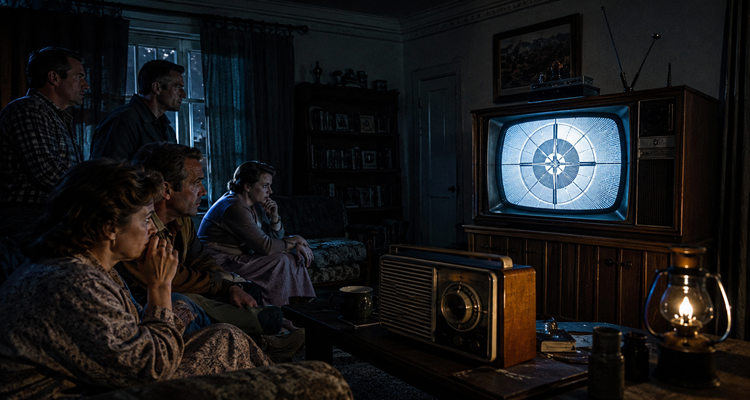
A sudden tone interrupts a quiet evening. Radios crackle to life. Television screens freeze. A voice, sometimes distorted, sometimes calm, delivers an urgent message. For a few moments, entire communities stop what they are doing and listen.
Most emergency broadcasts are designed to save lives. Yet some of the most memorable alerts in history became famous for a different reason: confusion, fear, and mystery. Long after the messages ended, people continued talking about them, wondering what had really happened and why those broadcasts felt so unsettling.
Today, emergency alert systems are woven into daily life through smartphones, social media, radio, television, and public warning networks. But scattered throughout the history of broadcasting are incidents that reveal something deeper than technological glitches or communication failures. They expose how societies respond when trusted systems suddenly become uncertain.
When a Warning Becomes a Mystery
Emergency broadcasts occupy a unique place in public consciousness. Unlike news reports or social media posts, they carry institutional authority. People are conditioned to believe that if an emergency system activates, something serious is happening.
That trust is precisely why unusual broadcasts leave such a lasting impact.
In several documented incidents around the world, alerts were triggered accidentally, transmitted incorrectly, interrupted by technical failures, or delivered in ways that created widespread confusion. Some warnings referenced threats that did not exist. Others contained incomplete information. A few were so strange that they became part of local folklore.
What made these events frightening was not necessarily the message itself. It was the uncertainty that followed.
For residents hearing an unexplained warning, the absence of clear information often became more alarming than the alert.
The Human Psychology Behind Broadcast Fear
Emergency broadcasts trigger an immediate emotional response because they bypass normal information filters.
People rarely stop to analyze an alert. Instead, they react.
Psychologists have long observed that uncertainty can create stronger anxiety than confirmed bad news. When people know what is happening, they can evaluate risks and make decisions. When they do not know, the imagination fills the gaps.
This is why unusual alerts often generate rumors within minutes. Communities begin sharing theories, searching for explanations, and comparing information. In many cases, the public conversation becomes more powerful than the original warning itself.
The phenomenon has only intensified in the digital age. A mysterious alert that once affected a single town can now become a global discussion within hours.
The Era Before Instant Verification
Many of the most unsettling emergency broadcasts occurred before smartphones and real-time fact-checking became common.
In earlier decades, radio and television were often the primary sources of urgent information. If an alert interrupted programming unexpectedly, audiences had limited ways to verify what they were hearing.
Some regions experienced false alarms caused by equipment failures. Others encountered test messages that reached the public accidentally. In a few cases, broadcasters themselves struggled to understand what had happened.
The result was a brief but powerful information vacuum.
People waited for answers while wondering whether a genuine disaster might be unfolding. Those moments of uncertainty often became more memorable than any official explanation that followed.
How Technology Changed the Nature of Fear
Modern emergency systems are far more sophisticated than those of previous generations.
Governments and broadcasters now employ multiple verification layers, redundant communication channels, and automated safeguards. Alerts can reach millions of devices within seconds.
Yet technological progress has not eliminated public anxiety.
Instead, it has changed its form.
Today, a confusing alert can spread across social media almost instantly. Screenshots, videos, and reactions circulate before authorities have time to provide context. The conversation expands far beyond the original broadcast area.
In some situations, the public learns about an alert through online discussion before receiving official clarification.
This creates an unusual paradox: people have more information than ever before, but they can still experience uncertainty when information arrives faster than explanations.
The Cultural Legacy of Forgotten Alerts
Many mysterious emergency broadcasts eventually fade from national headlines. Yet they often remain deeply embedded in local memory.
Residents who experienced these incidents frequently remember where they were when the warning appeared. Families recount the stories years later. Regional media revisit the events during anniversaries or discussions about emergency preparedness.
Over time, some broadcasts evolve into modern folklore.
The details become blurred, theories multiply, and the incident takes on a life beyond its original cause. What began as a technical error or communication problem transforms into a cultural story passed from one generation to the next.
This process reveals something fascinating about collective memory. Communities do not simply remember events; they remember how those events made them feel.
What These Broadcasts Reveal About Trust
Perhaps the most important lesson from forgotten emergency alerts is not about technology at all.
It is about trust.
Emergency communication systems depend on public confidence. People must believe alerts are accurate, timely, and necessary. Every unusual or unexplained broadcast tests that relationship.
Authorities around the world increasingly recognize that effective emergency communication requires more than sending warnings. It requires clear explanations, transparency, and rapid updates when mistakes occur.
The challenge is particularly important in an era when misinformation can spread quickly. If people lose confidence in official alerts, they may hesitate during genuine emergencies. Conversely, strong trust can help communities respond more effectively when real danger emerges.
Why Interest in These Stories Is Growing Again
A renewed fascination with forgotten emergency broadcasts has emerged through documentaries, podcasts, online archives, and digital communities dedicated to media history.
Part of the appeal is historical curiosity. People enjoy uncovering unusual events that slipped through the cracks of mainstream history.
But there is also a deeper reason.
These broadcasts sit at the intersection of technology, psychology, and culture. They reveal how societies manage fear, uncertainty, and communication during critical moments.
As modern warning systems become increasingly automated and interconnected, interest in past failures and mysteries serves another purpose: understanding the vulnerabilities that still exist.
Looking backward helps people evaluate the systems they rely on today.
The Lessons That Still Matter
The forgotten emergency broadcasts that once frightened entire regions are more than strange historical footnotes.
They remind us that communication infrastructure is not merely technical. It is social. The effectiveness of an alert depends not only on transmission systems but also on public understanding and trust.
A meaningful insight emerges from these incidents: people are often less frightened by danger itself than by uncertainty surrounding danger. Clear information can reduce panic even during serious emergencies, while confusion can amplify fear even when no real threat exists.
As warning technologies continue evolving, from traditional broadcasting to mobile alerts and interconnected digital networks, the lessons from these forgotten broadcasts remain surprisingly relevant.
The technology may change, but the human response to uncertainty remains remarkably consistent.
And that may be the most enduring mystery of all.
This content is published for informational or entertainment purposes. Facts, opinions, or references may evolve over time, and readers are encouraged to verify details from reliable sources.