










Why Your Recorded Voice Sounds So Strange to You
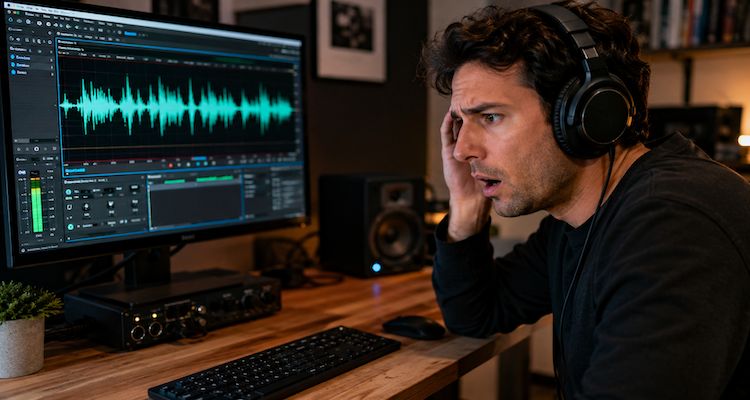
Most people have experienced the same unsettling moment. You hear a recording of your own voice, perhaps from a meeting, a video call, a podcast, or a social media clip, and immediately think, “Do I really sound like that?”
The reaction is surprisingly universal. Even confident public speakers, performers, and professionals often feel uncomfortable when listening to themselves. What seems like a minor annoyance has become more noticeable as digital communication increasingly records, stores, and shares our voices.
The discomfort is not simply vanity. It reveals something deeper about how the human brain constructs identity, how technology changes self-perception, and why modern life is making us confront versions of ourselves that previous generations rarely encountered.
The Voice You Hear Is Not the Voice Everyone Else Hears
The most common explanation is also the most important.
When you speak, you hear your voice through two different pathways. Sound travels through the air into your ears, just as it does for everyone around you. At the same time, vibrations travel through the bones and tissues of your skull, adding lower frequencies and creating a richer, deeper sound.
This means the voice you hear while speaking is not identical to the one other people hear.
A recording removes the internal vibrations and captures only the airborne sound. As a result, your recorded voice often sounds thinner, higher, or less familiar than the version you have listened to your entire life.
The surprise comes from the mismatch between expectation and reality. Your brain expects one voice but receives another.
Why Familiarity Matters More Than Sound Quality
What makes the experience uncomfortable is not necessarily that the recorded voice sounds bad. In many cases, it sounds perfectly normal to everyone else.
The issue is familiarity.
Humans are deeply accustomed to recognizing patterns in their own appearance, behavior, and voice. We develop an internal model of who we are. When a recording challenges that model, even slightly, the brain treats the experience as unusual.
Psychologists often describe a preference for familiar stimuli. We tend to like things we encounter repeatedly. Our internal version of our voice has benefited from years of exposure. The recorded version feels like a stranger.
That unfamiliarity can trigger discomfort even when the recording accurately represents reality.
The Digital Era Has Changed the Relationship With Our Voices
For most of human history, people rarely heard themselves from an external perspective.
A person might go through life without ever listening to a recording of their own speech. The technology simply did not exist or was not widely accessible.
Today, the situation is completely different.
Video conferencing platforms, social media apps, voice notes, podcasts, online courses, and AI-powered communication tools have made self-recording routine. Students record presentations. Professionals review meetings. Creators publish videos. Remote workers spend hours on recorded calls.
As a result, people are encountering their recorded voices more frequently than any previous generation.
What was once an occasional surprise has become a recurring experience.
The Hidden Connection Between Voice and Identity
The discomfort associated with hearing a recording goes beyond acoustics. It touches identity.
Voice is one of the most personal aspects of human expression. It communicates emotion, confidence, age, personality, and social belonging. People often associate their voice with their sense of self.
When a recording sounds different from the voice they imagine, it can create a subtle identity conflict.
This is similar to the experience of seeing an unexpected photograph of yourself. The image may be accurate, but it does not match the version you expected to see.
The brain naturally asks a simple question:
If that is how I sound, who am I compared to the version I thought I was?
Most people resolve the discrepancy quickly, but the momentary discomfort can be surprisingly powerful.
Why Content Creators Eventually Stop Caring
An interesting pattern emerges among podcasters, broadcasters, teachers, and video creators.
At first, many dislike hearing themselves. Over time, the discomfort often fades.
The reason is simple exposure.
Repeated listening helps the brain become familiar with the recorded version of the voice. Eventually, the external recording becomes integrated into a person’s self-image.
This adaptation offers an important lesson.
The unpleasant feeling is often not evidence that your voice sounds bad. Instead, it reflects a lack of familiarity. The more frequently people hear recordings of themselves, the less surprising those recordings become.
This is one reason why experienced media professionals can review hours of their own content without reacting negatively.
What This Reveals About Modern Self-Awareness
The growing discomfort around recorded voices reflects a larger cultural shift.
Technology increasingly allows people to observe themselves from the outside. Cameras capture expressions. Fitness trackers measure behavior. Social platforms archive conversations. AI tools analyze speech patterns and communication habits.
People are no longer relying solely on internal perceptions. They are constantly comparing their self-image against digital evidence.
Hearing a recorded voice is one of the clearest examples of this phenomenon.
The experience reminds us that self-perception is not fixed. It is constructed from memory, habit, and repeated exposure. Technology can reveal gaps between how we see ourselves and how others experience us.
That realization can feel uncomfortable, but it can also be valuable.
The Unexpected Professional Advantage
Many communication experts encourage people to listen to recordings of themselves despite the initial discomfort.
Recorded audio can reveal habits that are difficult to notice in real time. People may discover repetitive phrases, unclear pronunciation, rushed pacing, or vocal patterns that affect how their message is received.
For professionals, this awareness can improve presentations, interviews, teaching, leadership communication, and public speaking.
The same recording that feels awkward at first can become a useful tool for growth.
In this sense, the discomfort serves a purpose. It draws attention to information that might otherwise remain invisible.
Why the Feeling Is Unlikely to Disappear
As voice technology becomes more common, people will encounter recordings of themselves even more frequently.
Voice assistants, AI-generated speech, digital avatars, and personalized audio content are expanding the role of voice in everyday life. Future communication systems may make vocal identity as visible and editable as written text.
The uncomfortable reaction many people feel today may eventually become less common as exposure increases. Yet the underlying lesson will remain relevant.
Hearing your recorded voice reminds you that the version of yourself living in your mind is not always identical to the version experienced by others.
That gap is not a flaw. It is a natural consequence of being human.
And perhaps that is why hearing your own voice can feel so strange. It offers a rare opportunity to step outside yourself and listen from someone else’s perspective.
This content is published for informational or entertainment purposes. Facts, opinions, or references may evolve over time, and readers are encouraged to verify details from reliable sources.