










Why Liminal Spaces Fascinate Us More Than Ever
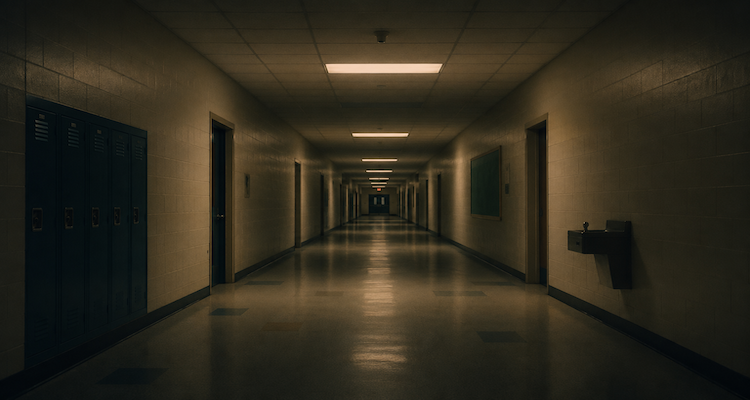
A deserted airport terminal at midnight. An empty school hallway during summer break. A shopping mall frozen in silence after closing time. These places are neither fully active nor completely abandoned, yet millions of people find them strangely captivating.
Across social media platforms, online communities, photography projects, and digital art collections, interest in so-called “liminal spaces” has grown into a cultural phenomenon. Images of vacant waiting rooms, endless corridors, empty parking garages, and quiet suburban streets regularly attract enormous engagement. What might seem ordinary at first glance often evokes an unexpectedly powerful emotional response.
The fascination raises an intriguing question: why are people so drawn to places that appear empty, transitional, and even unsettling?
The answer lies not only in architecture or aesthetics but also in the way the human mind interprets uncertainty, memory, and change.
The Meaning of a Liminal Space
The word “liminal” comes from the Latin term for threshold. Traditionally, it describes a state of transition, a point between one condition and another.
Applied to physical environments, liminal spaces are locations designed for movement rather than permanence. Airports connect destinations. Hallways connect rooms. Stairwells connect floors. Hotel corridors connect private spaces. Their purpose is temporary passage, not long-term occupation.
When these places are photographed empty or encountered during unusual circumstances, they can feel strangely disconnected from their intended function. The result is a sensation that many people struggle to describe but instantly recognize.
The space appears familiar, yet somehow wrong.
This tension between recognition and uncertainty is one of the key reasons liminal spaces leave such a strong impression.
Why the Brain Pays Attention
Human beings constantly rely on patterns to interpret the world. We expect certain places to contain specific activities and people.
A classroom should contain students. A shopping mall should contain shoppers. A playground should contain children.
When those expectations are violated, the brain becomes highly attentive.
Psychologists often note that humans are particularly sensitive to situations that sit between categories. We naturally seek clarity and predictability. Environments that feel unfinished, suspended, or ambiguous demand additional mental processing.
Liminal spaces create exactly this effect.
The brain recognizes the environment but struggles to understand why it feels incomplete. This subtle conflict generates curiosity, discomfort, fascination, or all three simultaneously.
Unlike obvious sources of fear, liminal spaces rarely present a direct threat. Instead, they trigger uncertainty, which can be even more psychologically compelling.
The Unexpected Role of Memory
One reason liminal spaces resonate so deeply is their connection to memory.
Many popular images resemble places people encountered during childhood: school corridors, recreation centers, hotel lobbies, waiting rooms, or suburban neighborhoods. Yet these locations often appear frozen in time.
Because the scenes lack people and activity, viewers unconsciously fill in the missing details using personal memories.
The emotional response is therefore highly individual.
An empty hallway may remind one person of a school vacation. Another might associate it with moving to a new city. Someone else may recall a hospital visit or a family trip.
The image becomes a psychological mirror, reflecting experiences that exist largely beneath conscious awareness.
This explains why two people can react very differently to the same liminal photograph. The power often comes not from the image itself but from what the viewer brings to it.
A Cultural Reflection of an Age of Transition
The growing popularity of liminal spaces may reveal something larger about contemporary life.
Many people today spend significant portions of their lives navigating periods of uncertainty. Careers change more frequently. Digital technologies continuously reshape daily routines. Remote work has altered traditional relationships with offices and public spaces. Social structures that once felt stable often appear more fluid.
In many ways, modern life increasingly resembles a liminal condition.
People are frequently between jobs, between cities, between identities, between technologies, or between major life stages. The future often feels less predictable than previous generations may have expected.
Viewed through this lens, liminal spaces become more than an internet trend. They symbolize a broader cultural experience.
Their popularity suggests that people may recognize something familiar in environments that feel suspended between what was and what comes next.
The Internet Turned Liminal Spaces Into a Shared Language
While liminal spaces existed long before social media, digital platforms accelerated their visibility.
Online communities gave people a vocabulary for a feeling they had previously struggled to articulate. Suddenly, images that once seemed merely strange became part of a recognizable aesthetic.
Photography creators began intentionally seeking transitional environments. Digital artists expanded the concept through surreal renderings of empty interiors and endless architecture. Video creators explored atmospheric interpretations using sound design and storytelling.
The phenomenon also benefited from internet culture’s ability to transform niche interests into global conversations.
People discovered that others experienced the same mixture of nostalgia, unease, curiosity, and comfort when viewing these spaces.
What was once a private feeling became a collective experience.
The Rise of Digital Liminality
An overlooked aspect of the trend is how increasingly digital lives may amplify interest in physical liminal environments.
Much of modern interaction occurs through screens. Work, shopping, entertainment, communication, and even social gatherings often happen online.
As a result, physical spaces can take on greater emotional significance.
Ironically, many liminal images depict locations that feel more tangible than the digital environments where people spend much of their time. Even when empty, they represent real places with texture, scale, and history.
This creates an interesting contrast.
The more life becomes virtual, the more people may become fascinated by physical environments that evoke emotional depth and mystery.
In this sense, liminal spaces are not merely architectural curiosities. They may represent a search for experiences that feel authentic, immersive, and psychologically meaningful.
Why They Are Both Comforting and Unsettling
Perhaps the most remarkable feature of liminal spaces is their emotional contradiction.
They can feel eerie and comforting at the same time.
Part of this duality comes from familiarity. The viewer recognizes the environment and understands its purpose.
At the same time, something is missing.
The absence of expected activity creates distance from reality while preserving enough familiarity to avoid complete alienation. The result is a rare emotional state that exists somewhere between nostalgia and uncertainty.
This emotional complexity helps explain why people return to liminal imagery repeatedly. The experience cannot be reduced to a single feeling.
It is a blend of memory, imagination, curiosity, and reflection.
What the Fascination Reveals About Us
The enduring appeal of liminal spaces is ultimately less about empty hallways or vacant buildings than about human psychology itself.
These environments expose how deeply people rely on context, routine, and expectation to make sense of the world. When those structures are temporarily removed, the mind begins searching for meaning.
At a time when many aspects of life feel increasingly transitional, liminal spaces offer a visual representation of uncertainty that people can safely explore.
They remind us that being between destinations is not unusual. It is a fundamental part of the human experience.
That may be why millions continue to find these spaces impossible to ignore. They are not simply images of places. They are reflections of moments when life itself exists on a threshold, amiliar, uncertain, and full of possibilities that have not yet taken shape.
This content is published for informational or entertainment purposes. Facts, opinions, or references may evolve over time, and readers are encouraged to verify details from reliable sources.