










The World’s Forgotten Mega-Projects Left Hanging Mid-Construction
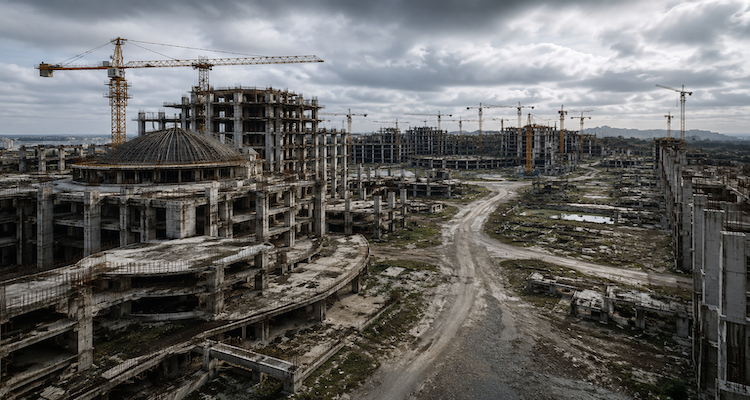
Some of the largest structures ever imagined were never completed. Across deserts, coastlines, forests, and city outskirts, unfinished bridges, abandoned skyscrapers, stalled airports, and half-built industrial complexes remain frozen in time. They were designed to symbolize progress, economic ambition, or national pride. Instead, many became monuments to uncertainty.
Interest in abandoned mega-projects has grown far beyond architecture enthusiasts and urban explorers. These unfinished giants reveal something deeper about how societies plan for the future, how economies shift unexpectedly, and how even the most ambitious visions can collide with reality.
What makes these projects fascinating is not simply that they failed. It is what their failure tells us about the changing world.
When Ambition Outruns Reality
Mega-projects are typically defined by their enormous scale, cost, and complexity. They often require years of planning, billions in funding, and cooperation among governments, investors, engineers, and contractors.
The challenge is that the world rarely stays the same during the years it takes to build them.
Economic downturns, political changes, environmental concerns, legal disputes, technological disruption, and shifting market demand can dramatically alter the conditions that originally justified a project.
What begins as a symbol of confidence can quickly become a financial burden.
Many abandoned projects were launched during periods of optimism. Leaders projected rapid population growth, expanding trade routes, booming tourism, or industrial expansion. When those expectations failed to materialize, construction often stopped abruptly.
The unfinished structures left behind became physical reminders of plans that no longer matched reality.
The Ghost Airports and Empty Cities
One of the most striking examples of abandoned mega-projects involves transportation infrastructure.
Around the world, airports have been built or partially built in anticipation of future demand that never arrived. Some terminals opened only briefly before falling into disuse. Others never welcomed a single commercial flight.
Similar stories can be found in planned cities and housing developments.
Entire districts have been designed to accommodate hundreds of thousands of residents, only to remain sparsely populated for years. Roads, utilities, public spaces, and residential towers were constructed, but the expected migration or economic activity failed to appear.
These projects highlight a recurring challenge in long-term planning: predicting human behavior is far more difficult than designing concrete and steel.
The Cost of Changing Priorities
Political transitions frequently play a major role in stalled construction.
Large infrastructure projects are often associated with specific administrations or political visions. When leadership changes, priorities can shift dramatically. New governments may question costs, environmental impacts, or strategic value.
As a result, projects that once received strong support can lose funding overnight.
In some cases, construction pauses temporarily before restarting years later. In others, the site remains abandoned indefinitely.
The visible remains of these projects can become controversial symbols. Supporters view them as wasted opportunities. Critics see them as evidence of poor planning and unrealistic promises.
Either way, they continue to influence public discussions long after construction crews leave.
The Hidden Economics Behind Failure
The popular explanation for abandoned mega-projects is often simple: they ran out of money.
The reality is usually more complicated.
Large projects depend on assumptions about future economic conditions. Investors may expect strong demand, governments may anticipate rising tax revenues, and businesses may project long-term growth.
When those assumptions change, financing becomes more difficult.
Rising construction costs can quickly transform a viable project into a risky investment. Inflation, supply chain disruptions, labor shortages, and interest rate increases can all dramatically affect budgets.
A project that seemed affordable at the start may require billions more to finish than originally expected.
This economic uncertainty has become increasingly relevant in the modern era, where global events can rapidly alter financial conditions across multiple countries.
Why People Are Fascinated by Unfinished Giants
The growing popularity of abandoned mega-project stories reflects more than curiosity about architecture.
These sites create a rare opportunity to see ambition interrupted.
Most modern infrastructure is designed to appear permanent and inevitable. Abandoned projects reveal the opposite. They expose the uncertainty hidden beneath grand plans.
There is also a psychological element.
People are naturally drawn to unfinished stories. An abandoned bridge leading nowhere or a skyscraper frozen midway through construction invites questions. What happened? Who believed in this vision? Could it still be completed someday?
Unlike historical ruins that represent distant civilizations, these structures often belong to our own era. They feel familiar, making their abandonment more striking.
A Lesson About Forecasting the Future
Perhaps the most valuable insight from abandoned mega-projects is that they reveal the limits of prediction.
Governments, corporations, and planners increasingly rely on sophisticated forecasting models. Yet many of the world’s unfinished projects demonstrate how difficult it remains to anticipate technological change, demographic shifts, economic cycles, and cultural behavior.
Consider how remote work has transformed office demand in some cities. Or how e-commerce has altered logistics networks. Infrastructure designed decades ago may no longer align with current needs.
The lesson is not that large projects should be avoided.
Rather, successful projects increasingly require flexibility. Plans must adapt as conditions change instead of assuming the future will unfold exactly as expected.
This shift in thinking is influencing modern infrastructure planning worldwide.
Can These Projects Be Saved?
Not every abandoned mega-project remains unfinished forever.
Some eventually find new purposes. Unused industrial facilities become cultural spaces. Stalled developments are redesigned to meet changing market demands. Transportation projects are revived when economic conditions improve.
Adaptive reuse has become an increasingly important strategy.
Instead of viewing abandoned construction solely as failure, planners are exploring ways to transform existing structures into assets. This approach can reduce waste while preserving some of the original investment.
However, many projects remain too costly or impractical to revive.
For these sites, abandonment becomes part of their legacy.
What These Structures Really Represent
At first glance, unfinished mega-projects appear to be stories about engineering failure.
In reality, they are stories about uncertainty.
They reflect how quickly assumptions can change in a connected global economy. They show how political priorities evolve. They demonstrate the difficulty of forecasting future behavior on a massive scale.
Most importantly, they remind us that progress is rarely a straight line.
The world’s forgotten mega-projects are more than abandoned construction sites. They are physical records of ambition, optimism, and the unpredictable forces that shape the future. Long after construction stops, they continue to tell a story about how societies imagine tomorrow, and what happens when tomorrow arrives differently than expected.
This content is published for informational or entertainment purposes. Facts, opinions, or references may evolve over time, and readers are encouraged to verify details from reliable sources.