










Modern Airports and the Strange Feeling of Being Outside Reality
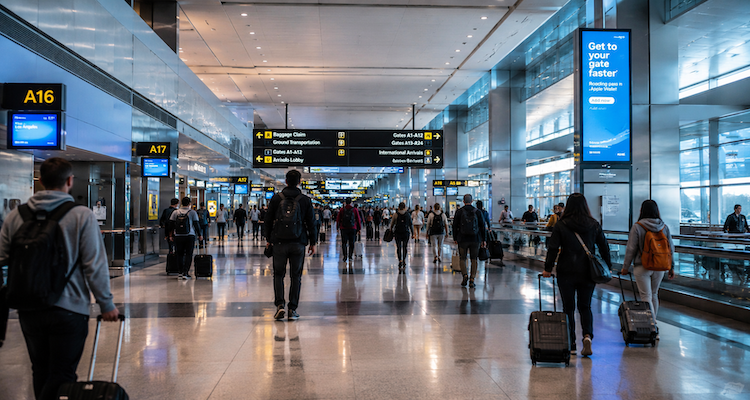
A traveler can leave a crowded city, pass through security, sit beneath a ceiling of artificial light, and suddenly feel as though they have entered a place disconnected from ordinary life. Time seems less important. Day and night become difficult to distinguish. Conversations are brief and transactional. The outside world fades into the background.
This sensation is increasingly familiar, yet many people struggle to explain it. Airports have always been transitional spaces, but modern airports appear to amplify that feeling. They are no longer simply transportation hubs. They have evolved into carefully engineered environments that operate according to their own logic, rhythms, and social rules.
The result is an experience that can feel oddly detached from reality, a phenomenon that says as much about modern society as it does about travel itself.
More Than Transportation Hubs
Historically, airports were functional places designed to move people from one location to another. Efficiency mattered more than atmosphere. Travelers arrived shortly before departure, boarded a flight, and left.
Today’s major airports serve a much broader purpose. Many resemble shopping districts, entertainment centers, business lounges, hotels, and cultural showcases all at once. Some contain gardens, museums, spas, sleeping pods, and high-end restaurants.
This transformation has changed how people experience travel. Instead of existing as gateways to destinations, airports increasingly function as destinations in their own right.
The more self-contained these environments become, the more they feel separated from the communities surrounding them.
A traveler may spend hours inside an airport without gaining any meaningful sense of the city just beyond its walls.
The Architecture of Disconnection
One reason airports can feel unreal lies in their design.
Most public spaces help people remain connected to their surroundings. Windows reveal neighborhoods, landmarks, weather conditions, and the passage of time. Streets provide visual cues about culture, history, and local life.
Airports often remove these references.
Large terminals prioritize movement, security, and operational efficiency. Interiors frequently feature neutral colors, controlled lighting, repetitive layouts, and long corridors. While these choices help manage millions of passengers, they also create environments that feel remarkably similar whether someone is in Europe, Asia, North America, or the Middle East.
Many travelers have experienced the strange sensation of forgetting where they are after spending several hours inside a terminal.
This is not necessarily a design failure. In many cases, it is intentional. Airports are built to reduce friction, minimize confusion, and accommodate international travelers from diverse backgrounds. The consequence is a form of architectural neutrality that can feel disconnected from place itself.
Living Between Time Zones
Perhaps the strongest contributor to the airport’s surreal atmosphere is its relationship with time.
Airports operate continuously. Flights depart before sunrise and arrive long after midnight. Travelers cross multiple time zones in a single journey. Digital screens display clocks from cities scattered across the globe.
Inside these environments, normal routines begin to dissolve.
Someone may eat breakfast at midnight, sleep during daylight hours, or work while crossing continents. Business travelers answer emails in one country while preparing for meetings in another. Vacationers experience anticipation, uncertainty, and jet lag simultaneously.
The airport becomes a space where conventional schedules lose their authority.
This temporal ambiguity helps explain why even experienced travelers sometimes feel mentally disoriented despite knowing exactly where they are.
A Place Filled With People but Lacking Community
Airports are among the busiest public spaces in the world, yet they often feel emotionally distant.
Thousands of people occupy the same terminal, but meaningful social interaction is limited. Most travelers focus on personal schedules, boarding times, security procedures, and connecting flights.
Unlike a café, neighborhood park, or city square, airports rarely encourage lasting relationships.
Everyone is moving toward somewhere else.
This creates an unusual social environment: intense human presence without a strong sense of community. People briefly intersect before disappearing in different directions.
The experience can feel isolating even when surrounded by crowds.
The Rise of the Globalized Interior
A deeper cultural shift may also be contributing to the airport’s detached atmosphere.
Modern life increasingly takes place in environments designed to feel globally familiar. International hotel chains, shopping malls, corporate offices, and digital platforms often prioritize consistency over local identity.
Airports represent one of the most advanced versions of this trend.
Luxury stores, international coffee brands, standardized signage, and multilingual announcements create spaces intended to be understandable to nearly everyone. While this improves convenience, it can also reduce the sense of geographical distinction.
A traveler might encounter many of the same brands and experiences whether departing from Tokyo, Dubai, London, or New York.
The airport becomes part of a growing category of spaces that feel connected to the global economy more than to a specific location.
Why Interest in This Feeling Is Growing
Online discussions about “liminal spaces” have helped bring attention to the strange emotional qualities of airports.
Liminal spaces exist between one state and another. They are transitional environments that feel suspended between destinations, identities, or moments in time.
Airports perfectly embody this concept.
Passengers are often between homes, jobs, countries, routines, and even versions of themselves. A person leaving for university, relocating for work, beginning a vacation, or returning after years abroad may experience significant life changes within the confines of a terminal.
The airport is not merely a place. It is a threshold.
This perspective helps explain why images of empty terminals, departure gates, and long airport corridors often evoke strong emotional reactions online. They symbolize transition itself.
The Hidden Insight: Airports Reflect the Modern Human Condition
The most interesting aspect of airport psychology may be what it reveals about contemporary life.
Many people now live in ways that resemble airport experiences. Remote work, digital communication, international business, streaming entertainment, and online communities have weakened traditional connections between physical location and daily activity.
People can work anywhere, communicate globally, and consume the same digital content regardless of geography.
In some respects, modern society has become more airport-like.
The detached feeling many travelers experience inside terminals may therefore be less about airports themselves and more about a broader cultural shift. Airports simply make visible a condition that increasingly exists elsewhere: being connected to everything while feeling rooted nowhere.
What Comes Next?
Future airports are likely to become even more immersive.
Advances in biometric identification, automation, artificial intelligence, personalized services, and digital navigation could make travel smoother and less stressful. Yet these same developments may further blur the boundary between the traveler and the surrounding environment.
Some airports may respond by emphasizing local culture, regional architecture, and authentic experiences to create stronger connections with place. Others may continue moving toward highly standardized global environments optimized for efficiency.
Either way, airports are likely to remain among the most fascinating spaces of the modern age.
They are places where geography, technology, psychology, commerce, and culture intersect. And perhaps that is why they can feel so strangely detached from reality. Airports exist in a world of their own, a world built for movement, transition, and the increasingly complex experience of being modern.
This content is published for informational or entertainment purposes. Facts, opinions, or references may evolve over time, and readers are encouraged to verify details from reliable sources.