










Why Buildings That Outlive Their Original Purpose Continue to Fascinate Us
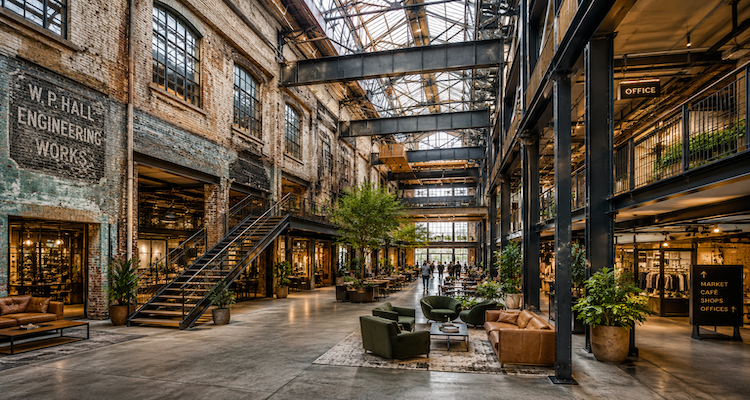
A former factory becomes a luxury apartment complex. An abandoned church transforms into a bookstore. A railway station evolves into a bustling marketplace. Across cities and towns around the world, buildings are increasingly being given second, third, or even fourth lives long after the purpose they were originally designed to serve has disappeared.
What makes these places so compelling is not simply their architecture. Many people feel a distinct emotional response when entering a structure that clearly belongs to another era while functioning in a completely different way today. The experience can feel comforting, intriguing, and slightly unsettling at the same time.
This reaction reveals something deeper than a preference for historic preservation. It exposes a fascinating psychological relationship between people, memory, and the built environments that surround them. Buildings that outlive their original purpose often become powerful symbols of continuity in a world defined by constant change.
More Than Structures, Buildings Become Stories
People rarely experience buildings as neutral objects. Over time, structures accumulate meanings that extend far beyond bricks, steel, and concrete.
A former warehouse may remind a community of its industrial past. An old school building may evoke memories of childhood, local identity, and shared experiences. Even individuals who never witnessed a building’s original purpose often sense that a story exists beneath the surface.
Psychologists have long recognized that humans naturally attach meaning to physical spaces. Places become linked with personal memories, cultural narratives, and collective identity. When a building survives long enough to outlive its intended function, it begins to embody the passage of time itself.
Unlike a newly constructed building, an adapted structure visibly carries evidence of previous lives. Exposed beams, worn stone steps, faded signs, and preserved architectural features act as reminders that history remains present rather than erased.
The result is a unique emotional experience. People encounter both the past and the present simultaneously.
Why Adaptive Reuse Feels Both Comforting and Strange
There is an interesting psychological tension inside repurposed buildings.
On one hand, they offer familiarity. The structure remains recognizable, providing a sense of continuity. On the other hand, their new purpose challenges expectations. Visitors may find themselves drinking coffee inside a former bank vault or shopping inside an old power station.
This creates what psychologists sometimes describe as a mild form of cognitive dissonance. The mind holds two realities at once: what the building was and what it is now.
Rather than causing discomfort, this tension often creates fascination. People enjoy discovering unexpected contrasts because they stimulate curiosity without introducing genuine uncertainty or risk.
The popularity of converted factories, industrial lofts, and repurposed civic buildings reflects this attraction. These environments feel layered and authentic because they resist the clean slate often associated with entirely new developments.
The Human Need for Continuity
One reason such buildings resonate so strongly is that they mirror a fundamental human experience: adaptation.
People rarely remain defined by a single role throughout life. Careers change. Communities evolve. Technologies transform daily routines. Individuals continuously reinterpret their identities while maintaining connections to their past.
Buildings that survive changing circumstances reflect this same process.
A manufacturing facility may become an office space. A church may become a cultural venue. A military installation may evolve into a public park. These transformations suggest that value does not disappear simply because an original function ends.
The structure adapts rather than vanishes.
At a psychological level, this can be reassuring. It reinforces the idea that change does not necessarily require erasure. Old identities and histories can coexist with new purposes.
Why Authenticity Matters More Than Ever
The growing interest in repurposed buildings also reflects a broader cultural shift.
Modern environments increasingly prioritize efficiency, standardization, and digital convenience. While these changes offer many benefits, they can sometimes create spaces that feel interchangeable.
Repurposed buildings often provide the opposite experience.
Visible imperfections, historical details, and architectural quirks create a sense of authenticity that many people find appealing. A former industrial building converted into a creative workspace carries physical evidence of its past that cannot easily be replicated through design alone.
This authenticity has become a significant cultural asset.
Retail brands, restaurants, hotels, and creative businesses frequently seek locations inside historic structures because customers often associate such environments with uniqueness and character. The building itself becomes part of the experience.
In many cases, visitors remember the space as much as the service or product being offered.
What These Buildings Reveal About Modern Cities
The rise of adaptive reuse projects also signals changing priorities in urban development.
For much of the twentieth century, progress was often associated with demolition and replacement. Older structures were frequently viewed as obstacles to modernization.
Today, many communities are adopting a different perspective. Historic buildings are increasingly seen as resources rather than liabilities.
This shift reflects growing awareness of sustainability, cultural preservation, and community identity. Reusing existing structures can reduce material waste while maintaining visible connections to local history.
More importantly, these buildings help cities retain a sense of continuity. They provide landmarks that link generations together, reminding residents that urban environments are not merely collections of new projects but evolving stories.
The most successful cities often balance innovation with preservation. They create space for the future without completely disconnecting from the past.
The Hidden Psychological Benefit of Preserved History
One of the most overlooked aspects of repurposed buildings is their role in reducing a sense of historical disconnection.
Rapid technological and social change can make people feel detached from earlier generations. Buildings that survive across decades or centuries help bridge that gap.
Walking through a converted railway station or a restored industrial complex creates a tangible connection to lives, industries, and communities that shaped the present. Unlike museums, these spaces remain integrated into everyday life.
People do not simply observe history; they interact with it.
This interaction helps create what many urban scholars describe as a stronger sense of place. Individuals become more aware that they are participating in an ongoing story rather than occupying a temporary moment disconnected from the past.
That awareness can strengthen community attachment, cultural identity, and even emotional well-being.
What Happens Next for Buildings With Multiple Lives
As cities continue to evolve, the number of buildings outliving their original purposes is likely to grow.
Changes in retail, remote work, manufacturing, transportation, and public infrastructure are already creating opportunities for new forms of adaptive reuse. Office buildings may become housing. Shopping centers may transform into mixed-use community spaces. Industrial facilities may become cultural hubs.
The most significant trend may not be architectural but psychological.
People increasingly seek environments that feel meaningful rather than merely functional. Buildings with visible histories satisfy that desire because they embody resilience, adaptation, and continuity.
Their appeal reminds us that places, like people, can evolve without losing their identity.
Perhaps that is why these structures continue to capture attention. They show that endings are not always endings. Sometimes they are simply the beginning of a new chapter built upon everything that came before.
This content is published for informational or entertainment purposes. Facts, opinions, or references may evolve over time, and readers are encouraged to verify details from reliable sources.