








Why Wildlife Monitoring Is Becoming More Invisible Than Ever
A growing share of wildlife conservation is now happening out of sight. The people protecting ecosystems are increasingly relying on tools that rarely disturb animals, require little human presence, and often operate silently in the background. As a result, one of the most significant shifts in conservation is becoming largely invisible to the public.
For decades, wildlife monitoring was associated with researchers trekking through forests, counting animals by sight, setting traps for identification, or conducting field surveys that demanded constant human involvement. Those methods remain valuable, but a new era is emerging—one where data can be gathered without researchers ever seeing the animals they are studying.
This transition is changing not only how wildlife is monitored but also how conservation decisions are made. The invisible era of wildlife monitoring is quietly transforming our understanding of nature at a time when ecosystems face mounting pressures from habitat loss, climate change, urban expansion, and changing land use patterns.
The Rise of Monitoring Without Direct Observation
Many species are difficult to observe directly. Some are nocturnal, highly elusive, or inhabit remote regions that are challenging for researchers to access. Traditional surveys often capture only brief snapshots of wildlife activity.
New monitoring approaches are helping overcome those limitations.
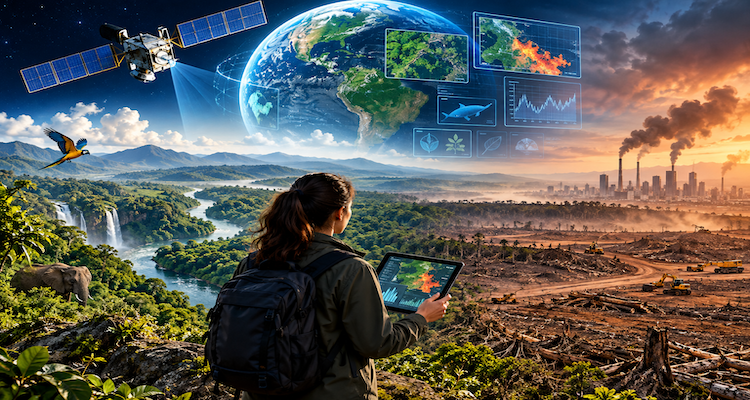
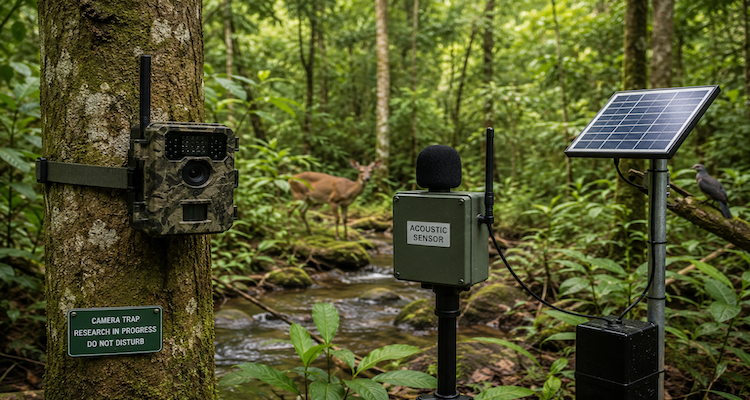
Motion-sensitive camera traps can record animals without human presence. Acoustic sensors can detect bird songs, frog calls, bat activity, and even insect populations through sound. Environmental DNA (eDNA) techniques allow scientists to identify species from traces of genetic material left behind in water, soil, or air. Satellite imagery and remote sensing technologies can track habitat changes across vast landscapes.
What makes these methods remarkable is that they often operate without direct interaction between humans and wildlife. Animals continue their natural behavior while data is collected in the background.
The result is a more continuous and less disruptive picture of ecological activity.
Why the Shift Matters
The move toward invisible monitoring is not simply about technological advancement. It reflects a deeper change in conservation priorities.
Researchers increasingly recognize that human presence can alter animal behavior. Some species avoid people altogether, while others may change feeding, movement, or breeding patterns when observers are nearby.
Less intrusive monitoring reduces this influence. In many cases, it provides a more accurate representation of how wildlife behaves under natural conditions.
The benefits extend beyond scientific accuracy. Remote monitoring can improve safety for field researchers working in difficult terrain or regions with dangerous wildlife. It can also reduce costs associated with repeated site visits, making long-term conservation projects more practical.
As environmental challenges become more complex, conservation efforts are increasingly dependent on consistent, large-scale data collection. Invisible monitoring makes that possible in ways traditional approaches often cannot.
Data Is Becoming the New Wildlife Footprint
One of the most important developments behind this shift is the growing value of ecological data.
Historically, conservation relied heavily on direct observations and physical evidence. Today, data streams generated by sensors, cameras, drones, and genetic sampling are becoming equally important.
In some ecosystems, researchers may learn more from millions of recorded sounds than from weeks of visual observation. A single acoustic sensor can reveal seasonal changes in biodiversity, identify species presence, and detect shifts in ecosystem health.
Similarly, traces of environmental DNA can reveal species that remain physically unseen throughout an entire survey period.
This evolution is creating a new kind of wildlife footprint one based not on tracks, sightings, or physical encounters, but on digital and biological signals.
The species may remain hidden, yet their presence becomes measurable.
Artificial Intelligence Is Expanding Monitoring Capabilities
The invisible era would not be possible without advances in data analysis.
Modern monitoring systems often generate enormous volumes of information. Camera traps can capture hundreds of thousands of images. Acoustic devices can record thousands of hours of environmental sound.
Sorting through this material manually can be overwhelming.
Artificial intelligence is increasingly helping researchers identify species, detect patterns, and process large datasets more efficiently. Automated systems can distinguish bird calls, classify animal images, and highlight unusual activity that may require closer examination.
Importantly, AI is not replacing field expertise. Rather, it is helping scientists focus their attention where it is needed most.
This partnership between ecological knowledge and advanced analytics is making wildlife monitoring more scalable and responsive than ever before.
The Hidden Benefits for Ecosystem Protection
Invisible monitoring is also revealing ecological changes that might otherwise go unnoticed.
Subtle shifts in species distribution, migration timing, breeding activity, or habitat use can provide early warnings about environmental stress. Detecting these changes sooner allows conservation organizations and land managers to respond more effectively.
In some cases, monitoring systems can help identify illegal activities such as poaching, unauthorized land clearing, or habitat disturbance before significant damage occurs.
The broader significance lies in prevention. Conservation has traditionally focused on responding to visible problems. Increasingly, invisible monitoring enables action before problems become obvious.
That shift could prove crucial as ecosystems face accelerating environmental pressures.
A New Relationship Between People and Nature
Perhaps the most interesting aspect of this transition is what it says about humanity’s evolving relationship with wildlife.
For generations, understanding nature often meant physically entering natural spaces and observing animals directly. Today, conservation is becoming more dependent on indirect observation and continuous data collection.
This does not make nature less important. In many ways, it makes ecological systems more visible than ever before.
The paradox is that wildlife monitoring is becoming increasingly invisible while our understanding of ecosystems is becoming increasingly detailed.
People may never see the sensors hidden in forests, the acoustic recorders attached to trees, or the DNA samples collected from streams. Yet those tools are helping build a richer picture of biodiversity than previous generations could have imagined.
What Comes Next
The future of wildlife monitoring is likely to involve even greater integration of remote sensing, environmental DNA analysis, artificial intelligence, and autonomous monitoring systems.
As technologies become more accessible and affordable, conservation efforts may expand into regions where traditional monitoring was previously difficult or impossible.
However, technology alone will not solve conservation challenges. Effective wildlife protection will continue to depend on habitat preservation, policy decisions, scientific expertise, and public support.
What is changing is the way information is gathered.
The next generation of conservation may rely less on what researchers can see with their own eyes and more on what ecosystems quietly reveal through data. In that sense, wildlife monitoring is entering an invisible era not because nature is disappearing from view, but because the tools used to understand it are becoming increasingly subtle, continuous, and powerful.
This content is published for informational or entertainment purposes. Facts, opinions, or references may evolve over time, and readers are encouraged to verify details from reliable sources.