








Why More People Are Relearning How to Be Bored
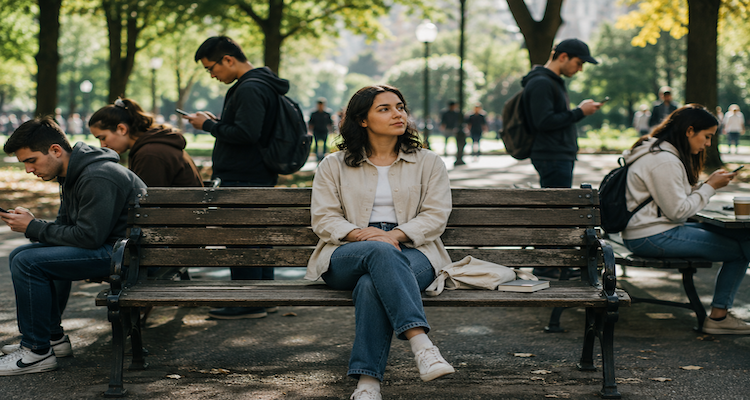
There was a time when boredom arrived without resistance. A delayed train, a quiet afternoon, a long line at a store, or a few idle minutes before a meeting were simply part of daily life. Today, many of those moments disappear almost instantly behind a screen.
The average pause in a day has become an opportunity to scroll, swipe, watch, listen, or respond. What once felt like empty time is now routinely filled with digital stimulation. Yet an unexpected shift is emerging. More people are deliberately stepping away from constant entertainment and rediscovering something they spent years trying to avoid: boredom.
This change is not driven by nostalgia. It reflects a growing recognition that endless stimulation may come with hidden costs, affecting attention, creativity, decision-making, and even the ability to think independently.
The Quiet Backlash Against Constant Stimulation
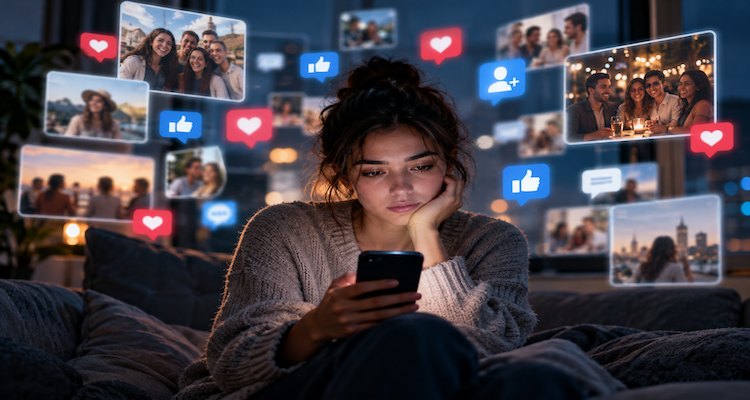
For years, digital platforms competed to eliminate boredom. Social media feeds became infinite. Streaming services expanded their libraries. Short-form video compressed entertainment into seconds. Notifications ensured that attention rarely remained unoccupied for long.
The result is a culture where moments of silence increasingly feel uncomfortable.
Many people now report a strange experience when they attempt to sit without a device. Even brief periods of inactivity can create an urge to check messages, open an app, or search for something new. The habit is so deeply embedded that boredom itself can feel unfamiliar.
This growing awareness has contributed to broader conversations about digital wellness, attention management, and intentional technology use. People are not necessarily abandoning technology. Instead, they are becoming more selective about how much stimulation they allow into every moment of the day.
Why Boredom May Be More Valuable Than It Appears
Boredom has traditionally been viewed as something negative a state to escape rather than embrace. Yet psychologists, educators, and creativity researchers have long suggested that boredom serves an important purpose.
When the mind is not actively consuming information, it often begins generating its own.
Ideas connect. Memories surface. Problems are reconsidered from different angles. Future plans emerge. Creative insights frequently appear during walks, showers, commutes, or other moments when attention is not fully occupied.
This does not mean boredom automatically produces brilliance. Rather, it creates mental space that constant stimulation often prevents.
A person who fills every spare second with content may gain entertainment but lose opportunities for reflection. Over time, that trade-off can influence how people learn, create, and process experiences.
The Attention Economy Changed the Relationship With Free Time
One reason boredom is receiving renewed attention is that free time itself has changed.
Historically, periods of waiting were unavoidable. Today, smartphones transform nearly every idle moment into a media experience. Whether standing in an elevator or waiting for coffee, people can immediately access news, videos, games, podcasts, or social feeds.
This shift has created a subtle expectation that every moment should be productive, informative, or entertaining.
The problem is not the technology itself. The challenge arises when uninterrupted consumption becomes the default setting. Many individuals are beginning to realize that they rarely experience genuine mental downtime.
As a result, practices such as device-free walks, screen-free mornings, intentional offline hours, and reduced notification settings are becoming increasingly popular. These habits are often less about reducing technology and more about reclaiming attention.
What This Trend Reveals About Modern Life
The renewed interest in boredom reflects something larger than personal productivity. It reveals changing attitudes toward time.
For years, efficiency dominated discussions about work and daily routines. Every minute could be optimized. Every task could be accelerated. Every gap could be filled.
Now, some people are questioning whether constant optimization has gone too far.
The ability to sit quietly, think deeply, or simply observe the world without immediate stimulation is beginning to feel like a scarce resource. In a culture built around engagement metrics and continuous content delivery, uninterrupted attention has become surprisingly valuable.
This is particularly evident among knowledge workers, students, creators, and professionals whose success depends on original thinking rather than constant reaction.
Creativity Often Begins Where Consumption Ends
One of the most interesting aspects of this trend is its connection to creativity.
Creative breakthroughs rarely occur when people are consuming information every second. They often emerge after information has been absorbed and the mind has time to process it.
Writers frequently discover ideas while walking. Entrepreneurs find solutions during downtime. Artists and designers often describe moments of inspiration arriving when they are not actively searching for them.
The growing interest in boredom suggests a recognition that creativity requires both input and space.
Modern life provides unprecedented amounts of input. What many people increasingly lack is the space needed to transform information into insight.
That distinction may explain why some professionals intentionally schedule periods without meetings, media, or digital distractions. They are not trying to do less. They are creating conditions that support deeper thinking.
Younger Generations Are Reconsidering Digital Habits
An unexpected aspect of this shift is that it is not limited to older generations seeking relief from technology overload.
Many younger users who grew up with smartphones are also experimenting with digital boundaries. Some are choosing simpler devices for parts of the day. Others are limiting social media use, disabling notifications, or creating phone-free routines.
This does not suggest a rejection of digital culture. Rather, it indicates growing awareness of its effects.
Younger generations understand technology more intimately than any previous generation. As a result, they may also be among the first to recognize when constant connectivity begins interfering with focus, rest, or personal well-being.
Their approach is often pragmatic rather than ideological: use technology when it adds value, but avoid allowing it to occupy every available moment.
The Hidden Skill Many People Are Rebuilding
Perhaps the most significant insight behind this trend is that boredom is not merely a feeling. It is increasingly becoming a skill.
The ability to remain present without immediate stimulation requires patience, self-regulation, and comfort with uncertainty. These qualities become harder to develop when every pause can be instantly filled.
People relearning boredom are often rebuilding a broader capacity for reflection, concentration, and independent thought.
In that sense, boredom may be less about doing nothing and more about creating conditions where something meaningful can emerge.
The irony is striking. In an age of limitless content, one of the most valuable experiences may be the occasional absence of it.
What Happens Next?
The movement toward intentional boredom is unlikely to replace digital entertainment or reverse technological progress. The convenience and benefits of connected devices remain undeniable.
However, the growing conversation suggests that society is entering a new phase of its relationship with technology one focused less on access and more on balance.
As people become more aware of how attention is shaped by digital environments, they may increasingly protect moments that once seemed unimportant. Waiting, wandering, reflecting, and simply being present could regain value in ways that seemed unlikely just a few years ago.
Boredom, long treated as a problem to solve, may instead become a reminder that the mind occasionally needs room to think for itself.
This content is published for informational or entertainment purposes. Facts, opinions, or references may evolve over time, and readers are encouraged to verify details from reliable sources.