








Why Simple Choices Feel More Exhausting Than They Used to
Choosing a restaurant, responding to a message, deciding what to watch, selecting a health plan, comparing products, planning a vacation, many everyday decisions that once seemed routine now feel surprisingly draining.
People often describe this feeling as being overwhelmed, distracted, or mentally exhausted. Yet the challenge may not be a lack of intelligence or motivation. Instead, it reflects a subtle shift in how modern life presents choices. Over the past five years, decision-making itself has become more complicated, not because people have changed dramatically, but because the environments surrounding those decisions have changed.
The result is a growing sense that even small choices require more effort than they once did.
The Hidden Cost of Unlimited Options
For decades, consumer culture celebrated choice. More options meant more freedom, better personalization, and greater control.
Today, that abundance can sometimes create the opposite effect.
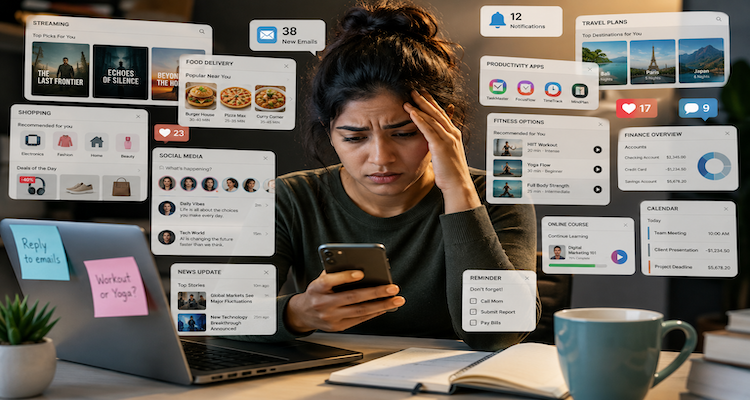
Streaming platforms offer thousands of viewing options. Online marketplaces present endless product comparisons. Food delivery apps showcase hundreds of nearby meals. Even choosing a workout routine, productivity app, or financial service often involves navigating countless alternatives.
When every option appears viable, the brain must spend more time evaluating possibilities. Instead of quickly deciding, people compare reviews, watch videos, read opinions, and seek reassurance that they are making the best choice.
The challenge is not merely having options. It is having too many options combined with constant access to information about them.
Information Has Become Part of Every Decision
Five years ago, many decisions relied on personal experience, recommendations from friends, or simple convenience.
Today, information accompanies almost every choice.
Before buying a product, people may read reviews, compare specifications, check social media discussions, and watch demonstration videos. Before visiting a restaurant, they may examine ratings, photos, menus, and customer feedback.
While this information can improve decisions, it also creates new mental work.
A decision is no longer simply “What do I want?” It often becomes “Have I researched this enough?” The fear of overlooking important information can make even straightforward choices feel unfinished.
In many cases, people are not deciding between options. They are deciding when to stop evaluating options.
The Rise of Micro-Decisions
One of the less discussed changes in modern life is the explosion of micro-decisions.
Notifications ask whether to respond now or later. Apps request permission updates. Streaming services suggest content. Social platforms present endless opportunities to engage, ignore, save, share, or react.
Each individual choice may seem insignificant. Collectively, they consume attention throughout the day.
The human brain evolved to make decisions, but it did not evolve for an environment where hundreds of small digital prompts compete for attention daily.
Many people finish a day feeling mentally depleted without having made any major life decisions at all. The exhaustion often comes from managing countless minor ones.
Why Mental Energy Feels More Valuable Than Time
A growing realization is changing how people think about productivity.
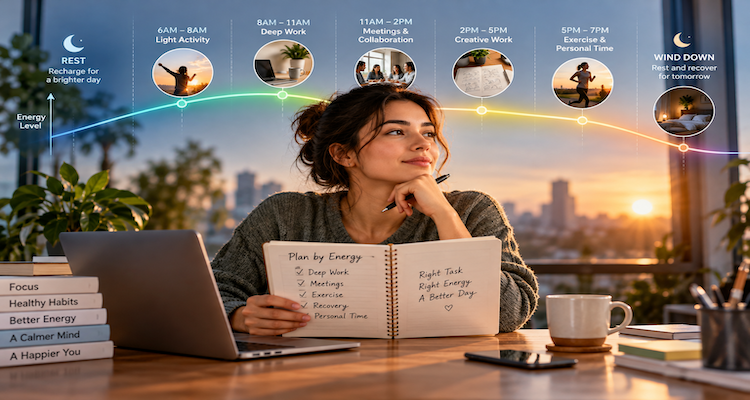
For years, time was viewed as the most important resource. Increasingly, mental energy may be the more limited asset.
Someone can have free time available and still feel incapable of making a decision. This happens because decision-making requires cognitive effort, and that effort accumulates throughout the day.
Workplace environments contribute to this trend. Hybrid work, constant communication channels, and digital collaboration tools have increased the number of judgments people make daily. Employees often switch between projects, messages, meetings, and priorities without clear boundaries.
By evening, even simple personal choices can feel surprisingly difficult because much of the day’s decision-making capacity has already been spent.
Personalization Creates a New Kind of Pressure
Many digital services now promise highly personalized experiences.
Music platforms recommend songs. Shopping sites suggest products. Algorithms curate news feeds. Navigation apps recommend routes.
These systems are designed to simplify life, and often they do. Yet personalization introduces an unexpected psychological effect.
People increasingly expect every choice to be optimized.
Rather than selecting something that is simply good enough, many search for the perfect option. The expectation that a better choice is always available can make commitment harder.
A movie might be enjoyable, but is there a better one hidden in the recommendations? A purchase might be useful, but is there a superior version available elsewhere?
Optimization culture encourages continuous comparison, which can make satisfaction more difficult to achieve.
The Attention Economy Has Changed Decision-Making
Many businesses now compete not just for money but for attention.
Social platforms, media companies, retailers, and technology providers all design experiences intended to keep users engaged for longer periods.
As a result, people are exposed to more information, more recommendations, and more competing priorities than ever before.
The challenge is not merely distraction. It is fragmentation.
Attention constantly shifts between competing inputs, making it harder to think deeply about any single choice. Decisions that once happened naturally can become prolonged because focus itself is interrupted.
This helps explain why many people report feeling mentally busy even during periods that appear relatively calm.
A Cultural Shift Toward Constant Evaluation
Another factor is cultural.
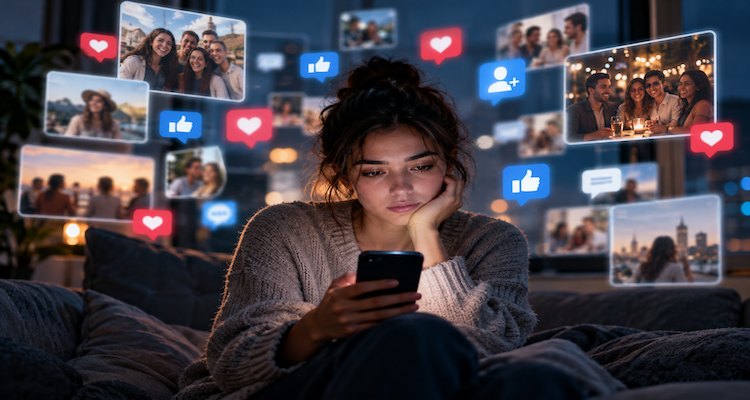
Many decisions are now publicly visible or socially influenced. Career moves, purchases, lifestyle choices, travel plans, and even hobbies are frequently discussed online.
This visibility can subtly increase pressure.
People may not consciously seek approval, but awareness of external opinions can shape decision-making. Choices become tied to identity, values, and self-presentation.
A vacation destination is no longer simply a destination. It may also become content. A purchase is not merely functional; it may signal preferences or status.
When decisions carry symbolic meaning, they naturally require more thought.
The Most Important Insight: Decision Difficulty Is Often Environmental
One of the biggest misconceptions about modern decision fatigue is that it reflects personal weakness.
In reality, many people are responding to environments that demand more cognitive effort than before.
The difficulty is not necessarily that individuals have become less capable. Rather, the systems surrounding them have become more complex, information-rich, and attention-intensive.
This distinction matters because it changes the solution.
Instead of trying to become endlessly more productive, many people benefit from reducing unnecessary decisions, simplifying routines, creating defaults, and setting boundaries around information consumption.
The goal is not to eliminate choice. It is to protect mental energy for decisions that truly matter.
What Happens Next?
As artificial intelligence, recommendation systems, and personalized digital experiences continue to expand, decision-making may evolve further.
Some choices will become easier because technology handles them automatically. Others may become more complex as people navigate increasing amounts of information and personalization.
The most valuable skill may not be making perfect decisions. It may be knowing which decisions deserve attention and which can be simplified.
The feeling that everyday choices have become harder is not an illusion. It reflects a broader transformation in how people interact with information, technology, work, and culture.
Understanding that shift can make the experience feel less frustrating and perhaps make the next decision a little easier.
This content is published for informational or entertainment purposes. Facts, opinions, or references may evolve over time, and readers are encouraged to verify details from reliable sources.