








Why Subscription Technology Is Redefining Ownership in Everyday Life
Ownership used to be straightforward. People bought products, used them for as long as they could, and replaced them when necessary. From software and entertainment to household essentials and personal devices, ownership was often viewed as a one-time transaction.
That model is changing. Increasingly, consumers are paying for access rather than possession, driven by subscription technologies that automate recurring purchases, digital services, maintenance, upgrades, and even product replacements. What began with streaming platforms and software subscriptions has expanded into nearly every corner of daily life.
The shift is about more than convenience. It reflects a deeper transformation in how people think about value, flexibility, and responsibility in a digitally connected economy.
From Ownership to Continuous Access
Subscription technology allows businesses to provide products and services through recurring payments instead of one-time purchases. While this model has become familiar through entertainment platforms and cloud software, it is now influencing categories once considered firmly rooted in ownership.
Smartphones can be upgraded through subscription plans. Vehicles increasingly include subscription-based digital features. Household products, personal care items, pet supplies, and even clothing can be delivered automatically on recurring schedules.
For many consumers, the appeal lies in reducing friction. Rather than remembering when to reorder necessities or save for large upgrades, subscription systems handle the process automatically.
The result is a subtle but significant shift. Consumers are no longer purchasing a single product. They are subscribing to an ongoing experience designed to evolve over time.
The Technology Behind the Transformation
Modern subscription systems rely on sophisticated digital infrastructure that was difficult to implement at scale in previous decades.
Cloud computing, mobile applications, digital payment systems, customer data analytics, and automated logistics networks now allow companies to manage millions of recurring relationships efficiently.
Businesses can monitor usage patterns, anticipate customer needs, personalize recommendations, and streamline deliveries. Consumers, meanwhile, gain greater control through apps that allow them to modify plans, pause services, or adjust preferences with a few taps.
This combination of automation and personalization has made subscriptions practical across industries that once depended entirely on traditional retail models.
Convenience Is Driving Consumer Behavior
One reason subscription models continue to expand is that they align closely with modern lifestyles.
People increasingly value time as much as money. Managing multiple purchases, researching upgrades, and remembering recurring needs can create small but persistent burdens. Subscription services promise to reduce that mental workload.
Consider everyday products such as razors, coffee, vitamins, cleaning supplies, or pet food. Automated replenishment ensures that products arrive before they run out, eliminating repeated shopping decisions.
This convenience may appear minor on an individual level, but across millions of consumers it represents a major behavioral change. The purchasing process becomes less transactional and more continuous.
As a result, the relationship between consumers and brands becomes more sustained than traditional retail interactions.
The Hidden Change Most Consumers Overlook
The most significant impact of subscription technology may not be what people receive but how they make decisions.
Historically, purchasing required a deliberate choice each time a product was needed. Consumers compared prices, explored alternatives, and evaluated quality before making a purchase.
Subscriptions can reduce those decision points.
While this often saves time, it can also create a form of purchasing inertia. Once consumers enter a subscription ecosystem, they may be less likely to explore competitors or reassess whether the service continues to meet their needs.
This dynamic is reshaping consumer loyalty. Brands are increasingly competing not only to attract customers but to become part of their routine.
In many cases, convenience becomes a stronger retention factor than traditional brand preference.
Businesses Are Rebuilding Revenue Models
For companies, subscription technology offers advantages beyond customer retention.
Recurring revenue creates greater predictability than one-time sales. Businesses can forecast demand more accurately, improve inventory management, and invest in long-term customer relationships.
This is one reason subscription models have spread across sectors ranging from software and entertainment to healthcare, transportation, and consumer goods.
Rather than focusing exclusively on acquiring new customers, companies can concentrate on improving customer lifetime value through ongoing engagement.
The model also encourages businesses to continuously enhance products and services rather than relying solely on new purchases to generate revenue.
In theory, this creates stronger incentives for innovation. Customers paying monthly expect regular improvements, updates, and added value.
When Ownership Becomes Less Important
One of the most intriguing cultural effects of subscription technology is the changing meaning of ownership itself.
Younger generations often prioritize flexibility over possession. Access to services, content, and experiences can feel more valuable than owning physical assets.
Streaming services replaced large media collections. Cloud-based software reduced the need for permanent software licenses. Subscription transportation services and mobility solutions have challenged traditional assumptions about vehicle ownership in some markets.
The trend suggests that ownership is increasingly being evaluated through a practical lens rather than an emotional one.
Consumers are asking a different question. Instead of “Do I own this?” they are increasingly asking, “Can I access it whenever I need it?”
That distinction may seem subtle, but it has profound implications for future business models.
The Challenges of Subscription Fatigue
Despite its growth, the subscription economy is not without drawbacks.
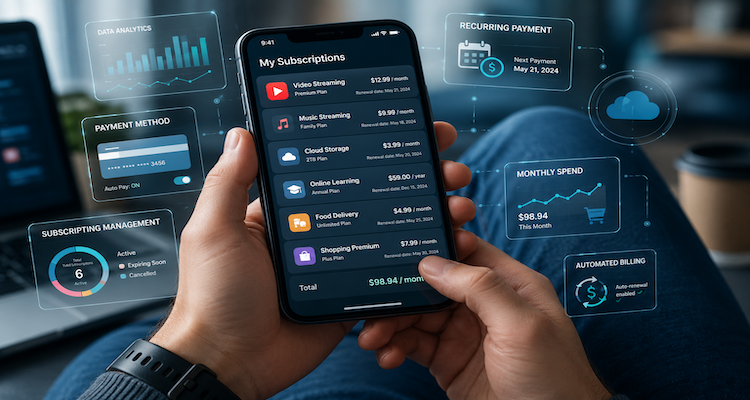
As more products and services adopt recurring payment models, consumers face growing complexity in managing multiple subscriptions.
Streaming platforms, software services, fitness memberships, digital tools, cloud storage plans, and product delivery programs can quickly accumulate into substantial monthly expenses.
This phenomenon, often referred to as subscription fatigue, is prompting consumers to become more selective.
Businesses that fail to provide clear value may find it increasingly difficult to retain customers. Transparency, flexibility, and ease of cancellation are becoming important competitive advantages.
The future of subscription technology may depend as much on trust as on convenience.
What Happens Next?
Subscription technology is likely to continue expanding as connected devices, artificial intelligence, predictive analytics, and automated commerce become more sophisticated.
Future systems may anticipate needs before consumers actively recognize them. Smart homes could automatically reorder supplies. Connected appliances may schedule maintenance subscriptions. Digital assistants may help manage multiple services from a single interface.
However, growth is unlikely to be unlimited.
Consumers are becoming more aware of recurring spending and more selective about which subscriptions genuinely improve their lives. The most successful offerings will probably be those that provide measurable value while respecting customer autonomy.
The future may not belong to companies that simply convert products into subscriptions. It may belong to those that create experiences flexible enough to justify ongoing relationships.
A New Definition of Value
Subscription technology is changing more than purchasing habits. It is reshaping the relationship between consumers, products, and businesses.
The transition from ownership to access reflects broader changes in technology, consumer expectations, and economic behavior. Convenience, flexibility, and personalization are becoming central factors in how people evaluate value.
As subscription models continue to evolve, the most important question may not be whether people own fewer things. It may be whether access, when delivered effectively, can become more valuable than ownership itself.
The information presented in this article is based on publicly available sources, reports, and factual material available at the time of publication. While efforts are made to ensure accuracy, details may change as new information emerges. The content is provided for general informational purposes only, and readers are advised to verify facts independently where necessary.