









The Hidden Cost of Constant Software Updates Nobody Talks About
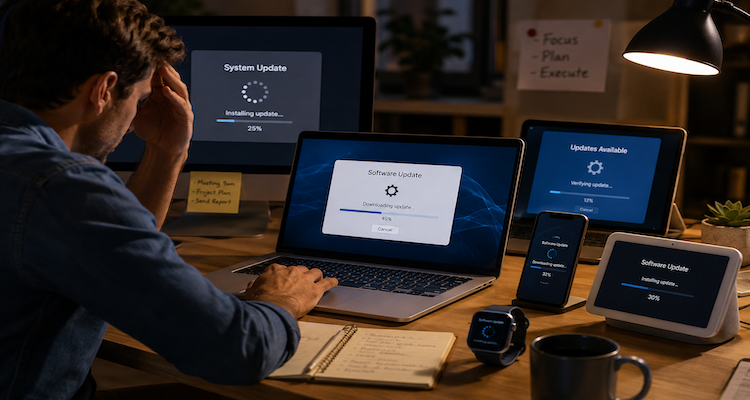
A smartphone asks for an update. A laptop prompts a restart. A smart TV downloads a new version overnight. Most people barely notice these interruptions anymore because software updates have become part of everyday digital life.
The benefits seem obvious. Updates patch security vulnerabilities, improve performance, introduce new features, and keep devices compatible with evolving technologies. For years, the conversation around updates has focused almost entirely on these advantages.
Yet beneath this widely accepted routine lies a growing issue that rarely receives the same attention: the cumulative cost of constant software updates. Not just financial costs, but hidden costs in productivity, digital stability, device longevity, and even the way people interact with technology itself.
As software increasingly becomes a service rather than a finished product, updates are no longer occasional improvements. They have become a permanent feature of modern life.
When Stability Becomes Temporary
There was a time when software was expected to remain largely unchanged after installation. Users learned a system, became familiar with its interface, and developed habits around its functionality.
Today, that stability is becoming harder to find.
Applications, operating systems, and cloud platforms are constantly evolving. Menus move. Features disappear. Workflows change. Sometimes these adjustments bring genuine improvements. Other times they require users to relearn tasks they had already mastered.
For businesses, this can create a subtle but ongoing productivity drain. Employees may spend time searching for relocated settings, adapting to redesigned dashboards, or troubleshooting unexpected compatibility issues after updates.
The individual interruptions may seem minor. Collectively, however, they represent a recurring tax on attention and efficiency.
The Hidden Productivity Drain
One overlooked consequence of frequent updates is the fragmentation of focus.
A software update rarely takes just a few minutes. It often triggers a chain reaction: downloading files, restarting devices, reconfiguring settings, updating connected applications, and resolving occasional glitches.
For remote workers, freelancers, students, and businesses that rely heavily on digital tools, these interruptions can occur at inconvenient moments.
The issue becomes even more significant when organizations manage hundreds or thousands of devices. IT departments spend substantial time testing updates, ensuring compatibility, and addressing problems that emerge after deployment.
Ironically, technologies designed to improve efficiency can sometimes consume considerable resources simply to stay current.
Feature Growth and Interface Fatigue
Software companies operate in highly competitive markets where innovation is a key selling point. New features often help attract customers and justify subscription fees.
The result is a steady expansion of functionality.
While some users appreciate additional capabilities, others experience what could be described as “interface fatigue.” Applications gradually become more complex as layers of tools, options, notifications, and integrations accumulate over time.
Many users only need a fraction of these features, yet they must navigate increasingly crowded interfaces.
This trend reveals an interesting paradox: software becomes more powerful while often feeling less simple.
In some cases, users actively seek older versions, minimalist alternatives, or specialized tools that perform a limited set of functions exceptionally well.
The Environmental Cost Few People Consider
Software updates are often viewed as purely digital events, but they have physical consequences.
Large updates consume network bandwidth, require server infrastructure, and contribute to growing data center workloads. Individually, these effects are negligible. At global scale, however, they represent substantial resource consumption.
More importantly, software evolution can accelerate hardware obsolescence.
As applications become more demanding, older devices may struggle to keep pace. Features designed for newer processors, higher memory capacities, or advanced graphics systems can reduce performance on aging hardware.
Consumers frequently interpret this slowdown as a hardware problem when the underlying cause may be a combination of hardware limitations and increasingly resource-intensive software.
The result is a cycle in which devices are replaced sooner than they might otherwise need to be.
Security Versus User Control
Security remains one of the strongest arguments for frequent updates.
Cybersecurity threats evolve constantly, and software vendors must respond quickly to newly discovered vulnerabilities. In many cases, automatic updates protect users who might otherwise delay critical patches.
Yet this approach has also shifted control away from users.
Many platforms now update automatically with limited options to postpone or reject changes. While this improves overall security, it can leave users feeling that devices they own are increasingly governed by decisions made elsewhere.
The tension between security and autonomy is becoming one of the defining challenges of modern software design.
People want protection from threats, but they also want predictability and control over tools they depend on every day.
The Subscription Era Changed the Rules
A deeper shift is driving many of these changes.
Software is no longer primarily sold as a product. Increasingly, it is delivered as a continuously evolving service.
Cloud-based platforms, productivity suites, streaming applications, and business software are updated constantly because their business models reward ongoing engagement and continuous improvement.
This has created an expectation that software should never stand still.
In some ways, this model benefits users. Bugs are fixed faster. Features arrive more quickly. Security vulnerabilities can be addressed without waiting for major releases.
However, it also means that the concept of a “finished” product is disappearing.
Users are no longer purchasing a stable tool. They are participating in an ongoing process of development.
The Psychological Effect of Perpetual Change
One of the most underappreciated consequences of constant updates is psychological rather than technical.
Humans generally prefer a balance between novelty and familiarity. Too little change can feel stagnant, but too much change can create fatigue.
Frequent software updates introduce a steady stream of small adjustments that require mental adaptation. New icons, modified workflows, redesigned interfaces, and altered settings all demand cognitive attention.
Most users barely notice these changes individually. Over time, however, they contribute to a broader sense that digital environments are never fully settled.
The modern digital experience increasingly resembles a moving target rather than a fixed destination.
What This Trend Reveals About Technology’s Future
The hidden cost of constant software updates is not that updates are bad. In many cases, they are essential.
The more important insight is that society has quietly accepted perpetual change as the default state of technology.
Software is no longer something people learn once and use for years. It is something they continuously adapt to.
This shift reflects a broader transformation in the relationship between humans and technology. The expectation of constant improvement has become so deeply embedded that stability itself is starting to feel unusual.
In the years ahead, software developers may face a new challenge: finding ways to innovate without overwhelming users. The most successful platforms may not be those that change the fastest, but those that balance progress with predictability.
Because while updates often promise a better future, users still need enough consistency to feel comfortable in the present.
The information presented in this article is based on publicly available sources, reports, and factual material available at the time of publication. While efforts are made to ensure accuracy, details may change as new information emerges. The content is provided for general informational purposes only, and readers are advised to verify facts independently where necessary.