






Where Borders Blend and New Travel Cultures Begin
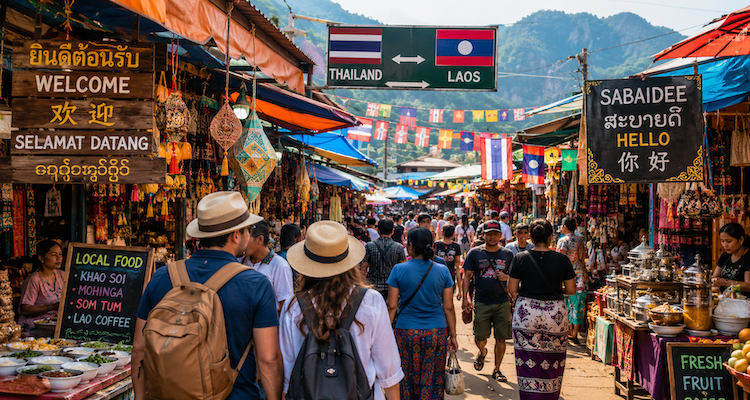
Travel guides often treat borders as dividing lines. On a map, they separate countries, languages, currencies, and political systems. On the ground, however, many border regions tell a different story. Rather than acting as barriers, they have become places where cultures overlap, identities mix, and entirely new ways of living and traveling emerge.
For a growing number of travelers, these areas are becoming more interesting than the destinations they connect. The appeal is no longer just crossing from one country to another. It is experiencing what happens in between: the shared traditions, hybrid cuisines, multilingual communities, and unique social rhythms that develop when people live alongside a border for generations.
This shift reflects a broader change in travel itself. Many travelers are moving beyond checklist tourism and seeking experiences that reveal how people actually live. Border regions, with their layered identities and evolving cultural landscapes, offer exactly that.
The Rise of the Cultural In-Between
Historically, border areas have often been viewed through political or economic lenses. They were places of trade, migration, negotiation, and sometimes conflict. Yet over time, many of these regions developed distinct identities that cannot be fully claimed by either side.
Consider the communities along the border between France and Germany, where architecture, food traditions, and language influences have blended for centuries. Similar patterns appear in regions connecting Spain and Portugal, the United States and Mexico, or Thailand and Laos. Local culture often becomes something entirely unique rather than a simple combination of neighboring influences.
Travelers increasingly recognize the value of these cultural intersections. Instead of experiencing one national narrative, they encounter multiple perspectives at once. A meal, a festival, or a local conversation can reveal how identities evolve when cultures continuously interact.
The result is a travel experience that feels more nuanced and authentic than traditional destination-based tourism.
Why Travelers Are Seeking Border Experiences
The popularity of border-region travel reflects changing traveler expectations. Many people no longer want tourism that feels packaged or predictable. They are looking for places that offer complexity, local character, and stories that cannot be replicated elsewhere.
Border regions naturally provide this depth.
A traveler might hear multiple languages spoken in a single marketplace, encounter architectural styles influenced by neighboring countries, or participate in celebrations that combine traditions from different cultural backgrounds. These experiences challenge simple assumptions about national identity and create a stronger sense of discovery.
Social media has also played a role. Travelers often share experiences that feel unusual or difficult to categorize. Border communities frequently offer exactly this kind of content places where cultures intersect in ways that surprise visitors and spark curiosity among wider audiences.
Yet the appeal goes beyond shareable moments. Many travelers are becoming more interested in understanding how globalization affects everyday life. Border regions provide a living example of cultural adaptation, cooperation, and exchange.
When Food Becomes a Cultural Map
One of the most visible signs of emerging travel cultures appears on the dining table.
Cuisine in border regions rarely follows strict national definitions. Recipes evolve as ingredients, cooking techniques, and traditions move across boundaries. Over time, entirely new food cultures can emerge.
Travelers often discover dishes that cannot be easily classified as belonging to one country alone. Local markets may feature products from multiple cultural traditions, while family recipes reflect generations of exchange between neighboring communities.
Food becomes more than a culinary experience it becomes evidence of how cultures interact.
This helps explain why gastronomic tourism increasingly highlights regions rather than nations. Travelers are learning that some of the most distinctive flavors emerge not from cultural isolation but from cultural interaction.
Language Is Creating New Cultural Identities
Language provides another window into how border travel cultures develop.
In many border communities, bilingualism or multilingualism is not unusual. Residents may switch between languages depending on context, audience, or tradition. Over time, local dialects and linguistic expressions can emerge that reflect influences from both sides of a border.
For travelers, this creates a fascinating cultural environment. Signs, conversations, music, and media often reveal a blend of influences that differs from national norms.
More importantly, language demonstrates that identity is rarely fixed. Border communities often develop a sense of belonging that extends beyond political boundaries. Their cultural reality reflects everyday interactions rather than official maps.
This complexity is increasingly appealing to travelers interested in understanding people rather than simply visiting places.
The Hidden Trend Behind Border Tourism
A deeper trend is driving interest in border regions: travelers are becoming less interested in national stereotypes and more interested in cultural realities.
Traditional tourism often presents countries as unified cultural experiences. In reality, most nations contain multiple identities, traditions, and regional differences.
Border regions make this diversity impossible to ignore.
They reveal how cultures continuously evolve through contact with one another. They show that identity is often shaped by exchange rather than separation. For travelers, this can be a powerful reminder that culture is dynamic, not static.
The growing popularity of these destinations suggests a broader shift in travel behavior. People increasingly want experiences that challenge assumptions and provide a richer understanding of how societies function.
In that sense, border tourism is not merely about geography. It is about perspective.
Economic and Social Impacts on Local Communities
The rise of interest in border regions is also creating new opportunities for local economies.
Communities that may have previously been overlooked by mainstream tourism can attract visitors seeking authentic cultural experiences. Local businesses, guides, restaurants, and artisans often benefit when travelers explore beyond major tourist centers.
At the same time, increased attention brings challenges.
Communities must balance tourism growth with cultural preservation. There is always a risk that unique traditions become commercialized or simplified to meet visitor expectations. Maintaining authenticity while welcoming tourism requires careful management.
Successful border destinations often focus on community-led experiences that allow local residents to share their stories without reducing culture to a performance.
This approach aligns with broader trends in sustainable and responsible tourism, where meaningful engagement is valued more than mass visitation.
What Border Regions Reveal About the Future of Travel
The growing fascination with border cultures points toward a larger transformation in the travel industry.
Travel is increasingly shifting from destination consumption to cultural exploration. Travelers want to understand how people adapt, connect, and create meaning in a rapidly changing world. Border regions offer a unique lens through which to observe these processes.
As transportation improves and travelers seek experiences beyond famous landmarks, these cultural crossroads may become some of the most compelling destinations of the coming decade.
Their appeal lies not in choosing one culture over another but in witnessing what happens when cultures meet.
That may be the most valuable travel experience of all. Borders once defined separation. Today, many of them are becoming places where entirely new identities, traditions, and travel cultures are taking shape offering visitors a richer understanding of both the world and the people who inhabit it.
This content is published for informational or entertainment purposes. Facts, opinions, or references may evolve over time, and readers are encouraged to verify details from reliable sources.