









How Translation Technology Is Quietly Changing the Way We Travel
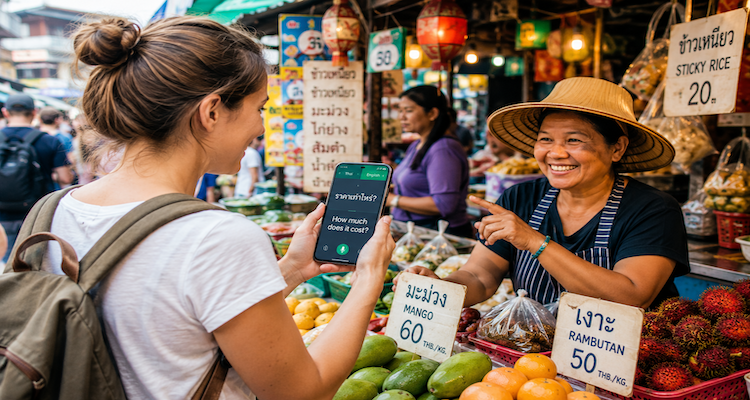
A traveler standing in a crowded street market once faced a familiar dilemma: point, gesture, and hope for understanding or search for someone who spoke a common language. Today, many travelers simply raise a smartphone, translate a sign, ask a question through an app, or hold a live conversation with the help of artificial intelligence.
What appears to be a convenience feature is quietly reshaping travel behavior on a much deeper level. Translation technology is no longer just helping people communicate abroad; it is influencing where they go, how they interact with locals, what experiences they pursue, and even how confident they feel navigating unfamiliar places.
As translation tools become faster, more accurate, and more accessible, they are reducing one of the biggest psychological barriers to international travel: the fear of not being understood. The result is a subtle but significant shift in how people explore the world.
The Language Barrier Is No Longer What It Used to Be
For decades, language differences shaped travel decisions. Many travelers favored destinations where English was widely spoken or where communication felt manageable. Others limited themselves to organized tours because navigating independently seemed too intimidating.
Translation technology is changing that calculation.
Smartphone apps can now translate menus, street signs, transportation information, and conversations within seconds. While these tools are not perfect, they often provide enough clarity to help travelers move confidently through unfamiliar environments.
This growing accessibility means travelers may feel less restricted by language when choosing destinations. Places once considered difficult to visit independently are becoming more approachable, opening new possibilities for exploration beyond traditional tourist routes.
A Shift Toward More Independent Travel
One of the most noticeable behavioral changes is the rise of independent decision-making.
Travelers increasingly rely on digital tools rather than human intermediaries. Instead of joining a guided group simply for language support, many feel comfortable arranging transportation, booking accommodations, ordering meals, and asking for directions on their own.
This shift aligns with a broader travel trend favoring flexibility and personalization. Modern travelers often seek experiences that feel authentic rather than heavily structured. Translation technology provides a safety net that makes spontaneous exploration less risky.
The result is not necessarily fewer tours or travel services, but a growing willingness among travelers to venture beyond carefully planned itineraries.
Local Experiences Are Becoming More Accessible
The appeal of immersive travel has grown steadily in recent years. Many travelers want more than landmarks and photo opportunities; they want genuine interaction with local culture.
Language has traditionally been a major obstacle to that goal.
Translation tools are helping bridge the gap. Travelers can ask vendors questions at neighborhood markets, communicate with hosts at family-run guesthouses, or participate in local activities that previously felt inaccessible.
Even simple conversations can create a stronger sense of connection.
The hidden impact is that technology is enabling experiences that feel more personal and culturally engaging. Rather than separating travelers from local communities, translation tools can sometimes encourage interaction that might never have happened otherwise.
The Rise of Confidence-Driven Exploration
An important behavioral change is psychological rather than technological.
Travel decisions are often influenced by confidence. People are more likely to explore unfamiliar neighborhoods, try local restaurants, or travel independently when they believe they can manage unexpected situations.
Translation technology contributes to that confidence.
Knowing that assistance is available at any moment reduces uncertainty. Travelers may feel more comfortable taking public transportation, asking for help, or navigating destinations without extensive preparation.
This confidence can transform the travel experience itself. Instead of focusing on potential communication problems, travelers can devote more attention to discovery and engagement.
When Convenience Changes Cultural Interaction
The influence of translation technology is not entirely straightforward.
While digital tools can increase communication, they may also alter the nature of cultural exchange.
Historically, language barriers often encouraged travelers to learn basic local phrases, study customs, or prepare more extensively before visiting a destination. Those efforts sometimes created deeper engagement with local culture.
Today, instant translation can reduce the urgency of learning another language.
For some travelers, this may lead to a more transactional form of communication. Conversations become easier, but they may not always foster the same cultural understanding that comes from learning how people express ideas within their own language.
This creates an interesting tension. Technology can facilitate interaction while simultaneously changing how travelers approach cultural immersion.
The Hidden Insight: Translation Tools Are Reshaping Travel Expectations
Perhaps the most significant impact is not communication itself but expectation.
As translation technology becomes commonplace, travelers increasingly assume that communication challenges can be solved instantly. This expectation influences behavior before a trip even begins.
Destinations are evaluated differently. Travelers may worry less about language compatibility and focus more on experiences, affordability, safety, or cultural interest.
Businesses within the travel industry are adapting as well. Hotels, restaurants, attractions, and transportation providers increasingly recognize that visitors may arrive with powerful translation tools in their pockets. Information that once required multilingual staff can often be supplemented through digital solutions.
The broader insight is that translation technology is transforming travel from a language-dependent activity into an experience-driven one. Language still matters, but it no longer defines accessibility in the same way.
How the Travel Industry Is Responding
The tourism sector has begun integrating translation technology into customer experiences.
Airports, hotels, travel platforms, and customer service systems are increasingly experimenting with multilingual AI support. Digital kiosks, automated assistants, and translation-enabled applications aim to reduce friction for international visitors.
Travel platforms also benefit from the ability to connect users across languages. Reviews, recommendations, and travel information can reach broader audiences, making destinations more visible to global travelers.
As these tools improve, travelers may encounter fewer communication barriers throughout the entire journey from planning and booking to arrival and exploration.
What Could Happen Next?
The next phase of translation technology may move beyond smartphones.
Wearable devices, real-time voice translation systems, and AI-powered assistants could make multilingual communication feel increasingly natural. Travelers may eventually interact across languages with minimal awareness that translation is occurring in the background.
However, technological progress will not eliminate the value of cultural understanding.
Language carries nuances, humor, traditions, and perspectives that automated systems cannot always capture perfectly. The most meaningful travel experiences often involve more than simply exchanging information.
Future travelers may benefit most when they view translation technology as a bridge rather than a replacement for cultural curiosity.
A New Era of Global Exploration
Translation technology is doing more than helping travelers understand foreign words. It is influencing destination choices, increasing confidence, enabling independent exploration, and expanding access to local experiences.
Its most profound impact may be psychological. By reducing the fear of miscommunication, it encourages people to travel differently to venture further, engage more openly, and explore places they might once have avoided.
As these tools continue to evolve, the travel industry will likely see even greater changes in how people move through the world. Yet the essence of travel remains unchanged. Technology can make communication easier, but the desire to connect with new people, cultures, and experiences is still what drives the journey.
This content is published for informational or entertainment purposes. Facts, opinions, or references may evolve over time, and readers are encouraged to verify details from reliable sources.