









Why Returning to a Familiar Place Can Feel So Unsettling
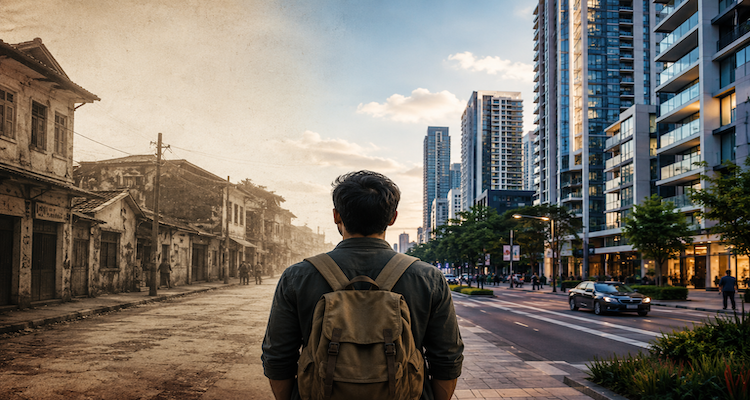
There is a peculiar moment that many people experience but rarely talk about. You return to a street where you grew up, a favorite vacation destination, an old workplace, or even a neighborhood café that once felt deeply familiar. The buildings are still there. The roads remain recognizable. Yet something feels off.
The place has changed, but so have you.
What often surprises people is that the discomfort of revisiting a transformed place is not simply about nostalgia. It can trigger a complex psychological response that challenges memory, identity, and our sense of continuity. As cities evolve faster, communities shift, and digital life accelerates change, more people are encountering this unexpected emotional experience.
The result is a growing realization that returning somewhere familiar is not always a comforting journey into the past. Sometimes it reveals how much has been left behind.
When Memory Meets Reality
Human memory does not function like a video recording. Instead, it reconstructs experiences through emotions, personal meaning, and selective details.
When people think about a childhood neighborhood, an old school, or a beloved travel destination, they often carry an internal version of that place. This mental image may remain relatively stable for years, even decades.
The challenge emerges when reality no longer matches that internal map.
A local bookstore has become a luxury apartment building. A quiet village has turned into a bustling tourist hub. A workplace once filled with familiar faces now operates under an entirely different culture.
The emotional reaction is often stronger than expected because the brain is processing two versions of the same place simultaneously: the remembered version and the current reality.
This gap between memory and reality can create feelings of sadness, confusion, disappointment, or even disorientation.
Places Are Part of Personal Identity
People often assume that identity is shaped primarily by relationships, achievements, and life experiences. Yet physical environments play a significant role as well.
Certain places become intertwined with important chapters of life. They are where friendships formed, careers began, families grew, or personal transformations occurred.
Psychologists sometimes describe this connection as “place attachment” the emotional bond people develop with meaningful environments.
When those places change dramatically, the sense of loss may extend beyond the location itself. It can feel as though a piece of personal history has been altered.
This helps explain why returning to a transformed hometown can provoke surprisingly strong emotions. The reaction is not necessarily about the buildings or streets. It is about the memories and identities attached to them.
In some cases, people discover that the place no longer reflects who they once were, forcing them to confront how much they themselves have changed over time.
The Rise of Accelerated Change
The psychological impact of returning to changed places appears increasingly relevant today because transformation is happening faster than ever.
Urban redevelopment, tourism growth, remote work trends, digital commerce, and shifting demographics are reshaping communities across the world.
Neighborhoods can undergo dramatic changes within a few years. Small towns become tourist destinations. Industrial districts become residential hubs. Traditional marketplaces evolve into modern retail centers.
For travelers, this means returning to a favorite destination may feel fundamentally different from previous visits. For former residents, hometowns may become nearly unrecognizable.
The speed of change creates a unique challenge: people often expect familiarity but encounter something entirely new.
This mismatch can amplify emotional reactions because there has been little time to mentally prepare for the transformation.
Why Some Changes Feel More Painful Than Others
Not all change produces the same psychological effect.
Many people welcome improvements such as cleaner public spaces, restored historic buildings, better transportation, or economic growth. Positive changes can create pride and excitement.
The emotional difficulty often arises when changes appear to erase personal meaning.
A historic cinema replaced by a parking structure may represent more than a business decision. For some residents, it symbolizes the disappearance of shared memories and community identity.
Similarly, travelers sometimes report disappointment when destinations become heavily commercialized. What once felt authentic and distinctive may now feel standardized and predictable.
The emotional response is not necessarily resistance to progress. Rather, it reflects a concern that something unique has been lost in the process.
The Unexpected Role of Nostalgia
Nostalgia is frequently portrayed as a longing for the past, but its psychological function is more complex.
Research and psychological observations have often linked nostalgia with feelings of connection, meaning, and personal continuity. Memories help people understand where they came from and how they became who they are.
Returning to a changed place can disrupt this process.
Instead of reinforcing continuity, the experience highlights separation. The familiar landmarks that once anchored memories may be gone. The atmosphere may feel different. The people who shaped the experience may have moved away.
Ironically, this disruption can strengthen nostalgia rather than diminish it.
People often find themselves valuing memories more deeply after discovering that the physical environment associated with them no longer exists in the same form.
A Larger Cultural Shift
The growing emotional significance of changed places reflects a broader cultural trend.
Modern life increasingly prioritizes movement, flexibility, and constant adaptation. People relocate for education and work. Businesses reinvent themselves. Communities evolve rapidly.
While these shifts create opportunities, they can also weaken long-term connections to physical places.
As a result, many individuals are becoming more conscious of the role environments play in emotional well-being and personal identity.
This helps explain the popularity of heritage preservation efforts, local history projects, and community storytelling initiatives. People are seeking ways to preserve meaning even when physical spaces continue to evolve.
The conversation is no longer just about architecture or urban planning. It is about memory, belonging, and continuity in a rapidly changing world.
What Returning to Changed Places Can Teach Us
Perhaps the most valuable insight is that revisiting transformed places often reveals more about ourselves than about the locations.
The experience highlights how memory works, how identity develops, and how deeply humans connect meaning to physical environments.
A changed hometown, workplace, or travel destination can feel unsettling because it reminds us that time has moved forward even when parts of us hoped it had stood still.
Yet these encounters can also be surprisingly meaningful.
They offer an opportunity to recognize personal growth, appreciate past experiences, and understand that memories do not disappear simply because the landscape changes.
The place may no longer exist in the form we remember. But the experiences attached to it remain part of who we are.
In that sense, returning to a dramatically changed place is not merely a journey through geography. It is a journey through time, identity, and the evolving relationship between memory and reality.
This content is published for informational or entertainment purposes. Facts, opinions, or references may evolve over time, and readers are encouraged to verify details from reliable sources.