







The Untamed World Around Us: Why Wild Nature Still Matters
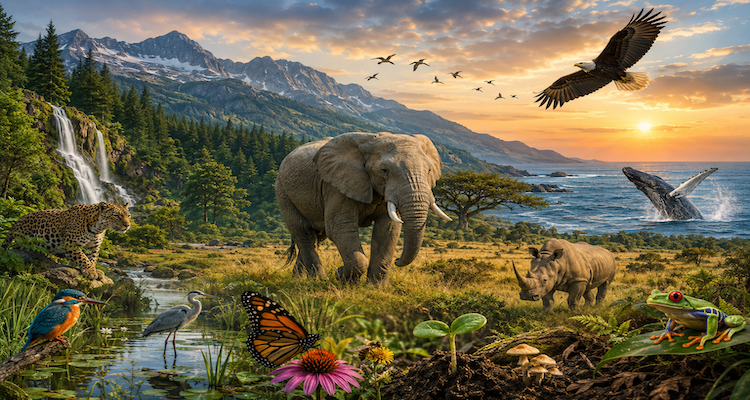
Wildlife is often imagined as something distant: a tiger moving through a forest, a whale crossing an open ocean, or an eagle circling above a remote mountain. Yet the untamed world is much closer than that. It exists in wetlands beside cities, insects moving through agricultural fields, birds nesting in neighbourhoods, fungi beneath forest soil and countless organisms whose presence helps ecosystems function.
That hidden network is becoming increasingly important because the natural systems surrounding human society are under growing pressure. The International Union for Conservation of Nature (IUCN) reported in July 2026 that its Red List had reached 175,909 assessed species, including 49,505 considered threatened with extinction. The number is not a count of all species on Earth; it reflects species that have been assessed. That distinction matters, because large gaps in biodiversity knowledge remain.
The bigger story is therefore not simply that individual animals are disappearing. It is that humanity is changing the conditions under which wild species survive and, in doing so, changing the living systems on which people also depend.
Key Takeaways
- The wild world is not confined to remote forests; biodiversity exists across farms, wetlands, oceans, cities and even ordinary neighbourhoods.
- Habitat destruction, exploitation, pollution, invasive species and climate change are placing increasing pressure on wildlife.
- Biodiversity supports food production, freshwater, pollination, soil health, climate regulation and other benefits people often take for granted.
- The IUCN Red List shows serious extinction risks, while also documenting species recoveries that demonstrate conservation can work.
- New tools such as environmental DNA and biodiversity metrics are improving the ability to detect threats and target conservation.
- Protecting wild nature increasingly means managing human landscapes differently rather than simply setting aside distant reserves.
The Wild Is Closer Than We Think
A forest may appear wild because its trees and animals are visible. A city park may not. Yet both can function as habitats for an extraordinary range of life.
Birds use urban trees for nesting and feeding. Pollinating insects move between gardens and agricultural landscapes. Wetlands provide habitat for fish, amphibians and waterbirds while also helping regulate water. Soil contains complex communities of organisms that influence nutrient cycling and plant growth.
This changes the way the word “wild” should be understood.
Wildlife conservation is not only about protecting spectacular species. It is also about preserving relationships among organisms and their surroundings. An ecosystem depends on interactions among plants, animals, fungi, microorganisms, soil, water, climate and physical geography.
The United Nations Environment Programme describes ecosystems as systems in which living organisms interact with one another and with their non-living environment. Those interactions generate benefits for people, including food, freshwater, pollination, climate regulation and other forms of what scientists call nature’s contributions to people.
That makes the untamed world less like a separate realm and more like infrastructure that happens to be alive.
Why Biodiversity Is Under Pressure
The pressures facing wildlife rarely come from a single cause.
The IUCN identifies habitat destruction, invasive species, overexploitation, pollution and climate change among the major threats to biodiversity. These pressures can also interact.
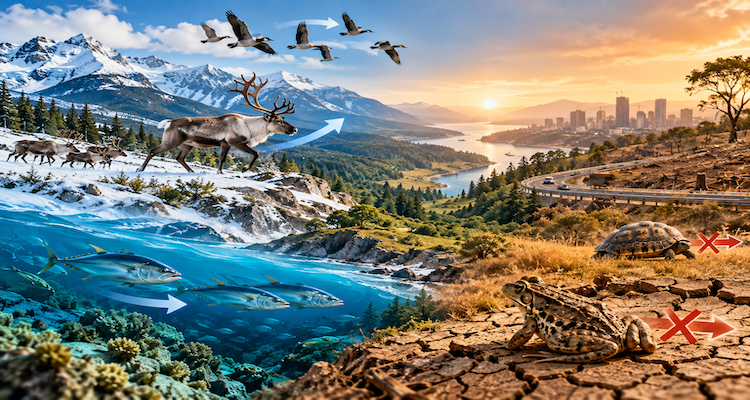
A species may lose part of its habitat because land is converted for development or agriculture. At the same time, changing temperatures may alter the availability of food or water. Pollution can add another layer of stress, while roads and other infrastructure can fragment remaining habitat.
The result is often more complicated than a simple question of whether an animal still exists.
A species can remain present while its population becomes smaller, more isolated or less genetically connected. In ecological terms, survival is therefore not necessarily the same as security.
The IUCN Red List is useful precisely because it attempts to distinguish different levels of extinction risk. Its categories range from Least Concern through Vulnerable, Endangered and Critically Endangered to Extinct and other classifications.
But the Red List also has an important limitation: only assessed species can be classified. The July 2026 update reached 175,909 assessed species, illustrating both the enormous scale of scientific work involved and the fact that assessment itself is an ongoing process.
The Hidden Cost of Losing Species
The disappearance of a species can be emotionally powerful, but its ecological significance may be harder to see.
Consider pollinators. Their importance does not depend on whether people notice them. Their interactions with flowering plants contribute to food production and ecosystem functioning.
The same principle applies to soil organisms, predators, decomposers and countless less celebrated species.
An ecosystem is not maintained by its most photogenic members alone.
Predators can influence prey populations. Plants provide food and habitat. Decomposers return nutrients to ecological cycles. Microorganisms participate in processes that make soils productive. Wetland organisms live within systems that can also help filter water and reduce some environmental pressures.
This is why biodiversity loss can have consequences beyond conservation itself.
UNEP notes that healthy ecosystems provide services such as freshwater provisioning, erosion control, pollination and climate regulation. When ecosystems are degraded, those contributions can decline, creating consequences for communities, agriculture and economies.
In other words, protecting biodiversity is not simply about preserving beautiful places. It is also about maintaining functioning ecological systems.
Conservation Is Not a Story Without Hope
The biodiversity crisis can easily produce a misleading impression that decline is inevitable.
The evidence does not support that conclusion.
IUCN reports that conservation action has already produced measurable improvements for some species. Its Red List work includes examples of species recovering after targeted interventions, demonstrating that populations can respond when threats are reduced and habitats are protected or restored.
That matters because conservation is sometimes discussed as if its only objective were preventing extinction.
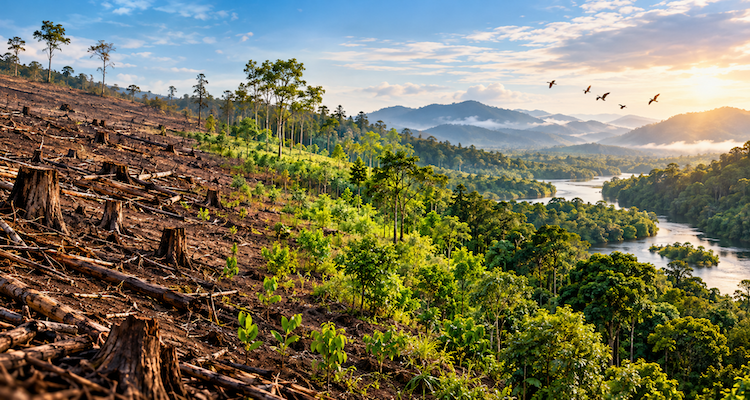
In reality, successful conservation can involve restoring habitats, reducing illegal exploitation, improving land management, reconnecting fragmented landscapes, protecting breeding areas, controlling invasive species and changing practices that place unsustainable pressure on wildlife.
The important lesson is practical: ecological damage is not always irreversible.
But successful recovery usually requires sustained action rather than a single intervention.
Technology Is Changing How We See Wildlife
One of the most interesting developments in conservation is happening where biology meets technology.
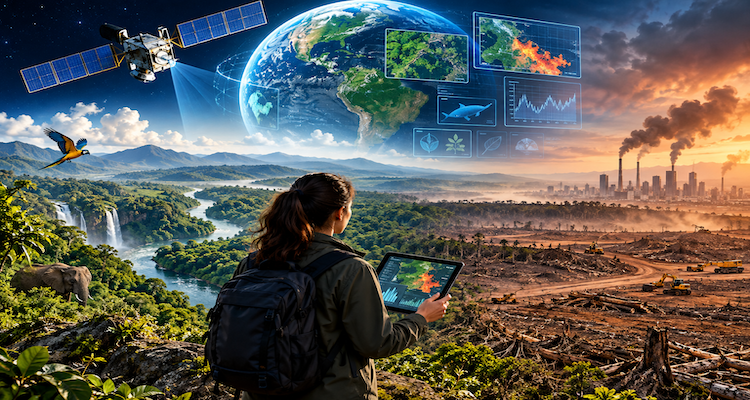
Environmental DNA, or eDNA, allows scientists to detect genetic material that organisms leave behind in water, soil or other environmental samples. The approach can help identify species without requiring researchers to physically capture or observe every animal.
In 2025, IUCN announced a partnership involving environmental DNA technology to strengthen biodiversity assessment, particularly for marine fish. The motivation is straightforward: conservation decisions are difficult when scientists do not know which species are present or how their populations are changing.
Better detection can therefore improve the information available for conservation.
Other tools are also changing decision-making. IUCN’s Species Threat Abatement and Restoration (STAR) metric is designed to estimate how specific actions such as reducing threats or restoring habitat could contribute to reducing extinction risk.
This represents a broader shift in conservation thinking.
Instead of asking only, “Which species are threatened?” researchers and decision-makers increasingly need to ask, “Where can an intervention produce the greatest measurable benefit?”
That turns biodiversity data into something closer to an action-planning system.
The Untamed World Does Not Need to Be Untouched
There is a temptation to define conservation as keeping humans away from nature.
Sometimes strict protection is essential. But much of the world’s biodiversity exists outside isolated wilderness areas. Wildlife shares landscapes with farms, villages, roads, industries and cities.
That means conservation increasingly involves coexistence.
Agriculture can influence biodiversity through land conversion, pesticide use, water demand and habitat fragmentation. Urban planning can determine whether wildlife corridors survive. Infrastructure can either divide ecosystems or incorporate ecological connectivity into its design.
UNEP’s work on nature-based solutions reflects this broader approach: ecosystems can be protected, restored and sustainably managed while also addressing social, economic and environmental challenges.
The challenge is not to eliminate human activity.
It is to make human activity compatible with the ecological systems that sustain it.
What We Risk Losing Is More Than Wildlife
The phrase “wildlife loss” can make the problem sound as though humans are watching something beautiful disappear from a distance.
The reality is more interconnected.
When habitats decline, communities can lose ecological functions. When pollinators decline, agriculture can face additional pressures. When wetlands are degraded, societies can lose some of the natural functions those ecosystems provide. When marine ecosystems are damaged, coastal communities and economies can be affected.
There is also a cultural loss that cannot easily be expressed through economic measurements.
A forest is not merely timber. A wetland is not merely undeveloped land. A species is not merely a unit in a database.
Nature has ecological, cultural and intrinsic value, and different societies understand those values in different ways. Effective conservation therefore has to consider both measurable benefits and the less tangible relationship people have with the living world.
The Next Conservation Challenge Is Coexistence
The future of wildlife will not be decided only inside national parks and protected forests.
It will also be decided in agricultural landscapes, coastal zones, cities, rivers, oceans and the everyday spaces where human development meets nature.
That makes conservation partly a design challenge.
Where should development occur? Which habitats need restoration? Which species require urgent protection? How can agricultural systems reduce pressure on biodiversity? How can technology improve monitoring? Which interventions produce measurable ecological benefits?
These questions move the discussion beyond simply asking whether people “care about nature.”
They ask whether societies are capable of organizing themselves around the reality that human prosperity depends on functioning natural systems.
Conclusion
The untamed world around us is not a distant backdrop to human life. It is a living network operating beneath, beside and beyond the structures we have built.
The current biodiversity crisis is serious, but the evidence also shows that conservation can work. Species can recover, habitats can be restored and better information can make intervention more precise.
The most useful way to think about wildlife conservation may therefore be neither romantic nor purely economic. It is practical.
A healthy natural world gives human society room to thrive. Protecting it means recognizing that forests, rivers, oceans, soils, wetlands and the species within them are not separate from our future.
They are part of it.
This content is published for informational or entertainment purposes. Facts, opinions, or references may evolve over time, and readers are encouraged to verify details from reliable sources.