








Why Some Ancient Temples Have a Door That Is Never Opened Even During Worship
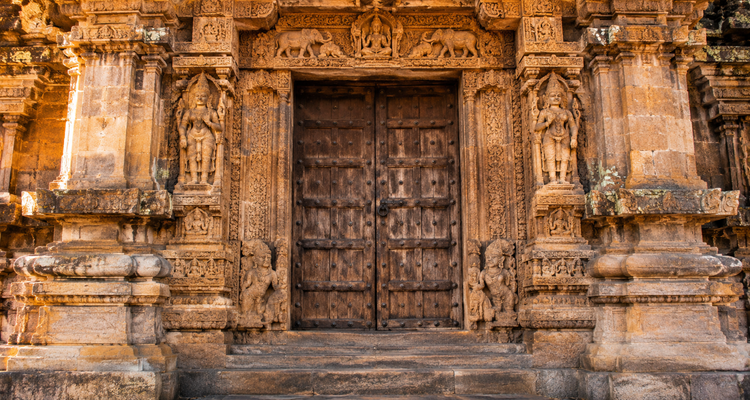
In some ancient temples, the most intriguing feature is not the towering entrance, elaborate carvings, or sacred idol. It is a door that remains closed, sometimes for generations, even while prayers, festivals, and daily worship continue around it.
To an outsider, such a door might suggest a hidden chamber, a forgotten treasure, or a mystery deliberately kept from public view. But within temple traditions, a closed doorway can carry a meaning far more complex than secrecy.
Some temple doors remain shut because of religious restrictions, others because they protect sacred spaces or fragile structures, and a few because opening them is permitted only under specific ritual conditions. The reasons differ from temple to temple, and not every closed door conceals a chamber.
Understanding these doors requires looking beyond the locks themselves. They reveal how architecture, faith, history, and the boundaries of human access have shaped sacred spaces for centuries.
A Temple Door Is Not Always Meant to Be an Entrance
Modern buildings generally treat doors as practical features: they allow people to move between rooms. Sacred architecture can give them an additional purpose.
In many Hindu temples, the innermost sanctuary is known as the garbhagriha, often translated as the womb chamber. It houses the principal deity or sacred representation and occupies a central place in the temple’s ritual life.
Access to this chamber may be restricted to authorized priests, while worshippers offer prayers from an adjoining hall or designated viewing area.
This distinction is important. A temple can remain fully active as a place of worship even when certain interior spaces are inaccessible to ordinary visitors.
A closed doorway may mark the separation between public worship and a more restricted sacred area. In other circumstances, it may belong to a chamber that has no role in daily worship at all.
The architecture is therefore not necessarily unfinished or impractical. It may reflect a carefully maintained boundary.
The Difference Between a Sacred Door and a Sealed Chamber
Not all closed temple doors belong to the same category.
A door may be closed to visitors but opened regularly by priests. Another may be opened only during an annual festival. A third may lead to a storage chamber, while a fourth may have been sealed for reasons that are no longer fully documented.
These differences matter because popular accounts sometimes describe every inaccessible temple space as an ancient mystery.
In reality, a door’s meaning depends on its location, construction, historical use, and the practices of the religious community responsible for it.
The most useful question is not simply why the door is locked. It is who is permitted to open it, under what circumstances, and for what purpose.
The Temple Vault That Became a National Mystery
Dedicated to Lord Vishnu, the temple has attracted considerable attention because of the valuable objects discovered in its underground vaults.
During court-supervised inventory proceedings beginning in 2011, several vaults were examined. One chamber, commonly called Vault B or Kallara B, became particularly controversial.
Religious concerns about opening the chamber contributed to its exclusion from the inventory. Stories about curses and supernatural consequences circulated widely, but these should be understood as beliefs and popular narratives, not demonstrated facts.
The historical record is also more complicated than the familiar claim that the vault has never been opened.
Former Comptroller and Auditor General Vinod Rai described records suggesting that Vault B had been accessed on multiple occasions between 1990 and 2002. Members of the former Travancore royal family disputed the interpretation of those records, including which doorway had actually been opened.
The distinction between an outer entrance and an inner chamber is essential. Access to one does not necessarily establish that the entire vault was entered or examined.
In 2020, India’s Supreme Court left the question of opening Kallara B to the judgment of the temple’s administrative and advisory committees. In August 2025, those committees were reported to be seeking the chief priest’s opinion on the matter.
This case illustrates how a closed temple door can become the meeting point of religious belief, property administration, legal authority, and public curiosity.
It also demonstrates why the absence of public access should not be confused with proof of a supernatural mystery.
When a Temple Is Sealed to Protect Its Architecture
Built in the 13th century and dedicated to Surya, the Sun God, the monument is celebrated for its monumental stone architecture.
Its assembly hall, known as the Jagamohana, was sealed and filled with sand during British-era conservation work in the early 20th century. The purpose was to support the aging structure and reduce the risk of collapse.
The entrances remained inaccessible for generations, not because an ancient religious rule forbade their opening, but because engineers considered the structure vulnerable.
In April 2026, the Archaeological Survey of India began work on a passage intended to facilitate sand removal and conservation, following technical assessments of the structure.
Konark is therefore an important contrast to Padmanabhaswamy. One involves a dispute shaped by ritual and administrative considerations; the other involves documented structural conservation.
It also shows that a door described as permanently closed at one point in history may later become the subject of carefully managed restoration.
Why Religious Traditions Sometimes Restrict Access
In religious architecture, a doorway can represent more than the physical separation of two spaces. It may also mark a distinction between ordinary activities and sacred responsibilities.
Three ideas help explain why certain temple interiors are restricted.
Sacred space is not always public space
A place can be central to a community’s worship without being accessible to every worshipper.
In many Hindu temples, the deity’s inner chamber is approached through prescribed rituals. Priests perform particular duties, while devotees participate through prayer, offerings, and darshan the devotional viewing of the deity.
Educational material on Hindu temple architecture describes the garbhagriha as the innermost chamber and notes that entry is commonly reserved for priests.
Such restrictions vary across temples and religious traditions. They should not be interpreted as a universal rule applying to every Hindu shrine.
Ritual authority determines who may enter
In some temples, access depends on inherited customs, priestly responsibilities, ceremonial requirements, or established temple regulations.
These rules may concern ritual preparation, the handling of sacred objects, or the performance of ceremonies at particular times.
A closed door can therefore express a living tradition rather than an abandoned part of the building.
Some spaces are considered too sacred for ordinary access
Certain communities understand restricted chambers as spaces requiring special reverence.
Within those traditions, opening a chamber without the proper religious authority may be considered inappropriate, even if the door could be opened physically.
This is a theological or ritual understanding. It does not, by itself, establish that opening the chamber would cause physical harm or supernatural consequences.
What About Doors Said to Be Protected by Curses?
Stories about forbidden chambers often become more dramatic as they spread.
A closed door may eventually be associated with guardian serpents, divine warnings, hidden wealth, or disasters supposedly awaiting anyone who breaks a seal.
Such stories can have genuine cultural significance. They may communicate a community’s respect for sacred boundaries or preserve beliefs associated with a particular place.
But their significance as folklore is different from their status as historical evidence.
For example, accounts of Vault B at Padmanabhaswamy have included warnings of misfortune if the chamber is disturbed. The existence of these beliefs is documented; the supernatural consequences themselves are not established.
Responsible interpretation requires distinguishing among what worshippers believe, what historical records show, and what remains unknown.
This distinction does not diminish religious faith. It prevents uncertainty from being presented as certainty.
Could a Closed Door Hide Something Valuable?
Yes. Temples have historically housed valuable ritual objects, donations, jewelry, manuscripts, and other possessions. Some have used secure rooms or underground chambers to protect them.
The discoveries associated with Padmanabhaswamy demonstrate that temple vaults can contain substantial collections of historical and material importance.
However, it would be misleading to assume that every inaccessible chamber contains treasure.
Some spaces may be empty. Others may hold objects used in ceremonies, architectural remains, or materials associated with the temple’s history.
A sealed chamber might also be inaccessible because its contents have not been safely documented.
Without reliable records or authorized examination, the contents of a particular chamber cannot be established simply from the fact that its door remains closed.
That uncertainty is often what makes these spaces so fascinating.
Why Not Open Every Sealed Temple Door for Archaeological Research?
Opening a historical chamber is not always a straightforward archaeological decision.
A sealed entrance may be part of a fragile wall. Removing masonry, disturbing old foundations, or changing conditions inside a long-enclosed space can create conservation risks.
There are also religious and legal considerations.
An active temple is not merely an archaeological monument. It is a place of worship whose custodians, priests, and devotees may have legitimate interests in how sacred spaces are treated.
The challenge is to balance historical investigation with structural safety, religious practice, conservation responsibilities, and applicable law.
Konark demonstrates why technical evaluation matters. Padmanabhaswamy demonstrates why religious and administrative decisions can be equally consequential.
Neither case supports the idea that every closed door should automatically be forced open in the name of curiosity.
How to Understand a Closed Temple Door Without Falling for Myths
When encountering a story about a temple door that is supposedly never opened, it helps to examine the evidence behind the claim.
Consider whether the door belongs to an active sanctuary, a treasury, a disused passage, or a structurally unsafe building. Look for documented accounts of when it was sealed and whether authorized access has occurred.
It is also worth asking whether the explanation comes from temple authorities, historical records, conservation specialists, or an unattributed online story.
A claim that a chamber has remained unopened for a thousand years requires evidence covering that history. A modern photograph of a locked door cannot establish it.
And when a tradition says that a door should remain closed, that belief deserves accurate representation without being transformed into an unsupported claim about hidden forces.
The Deeper Meaning of a Door That Remains Closed
The fascination with sealed temple doors comes partly from a simple human instinct: when we cannot enter a place, we wonder what lies beyond it.
Yet the most revealing part of a temple’s history may not be what is hidden behind the doorway. It may be the reason generations of people have chosen to preserve the boundary.
Some doors protect sacred rituals. Others safeguard valuable objects or vulnerable architecture. A few stand at the center of unresolved disagreements about tradition, access, and authority.
The reasons are not interchangeable, and they are rarely explained adequately by a single dramatic legend.
A closed temple door is sometimes a mystery. But it can also be an expression of continuity a reminder that sacred architecture is shaped not only by what people build, but by what they choose to protect, preserve, and leave undisturbed.
This content is published for informational or entertainment purposes. Facts, opinions, or references may evolve over time, and readers are encouraged to verify details from reliable sources.
Related News
- Why Some Pilgrimages End Where the Journey Began and the Traveller Is Never Quite the Same
- Why Shiva Drinks the Poison but Never Swallows It: The Mystery Hidden in His Blue Throat
- Why Some Sacred Rituals Begin by Destroying What Took Days to Create
- The Forgotten Hindu Temple in Pakistan That Survived Centuries but Not 1992