









The Fruit That Makes Sour Lemons Taste Sweet Without Adding a Single Grain of Sugar
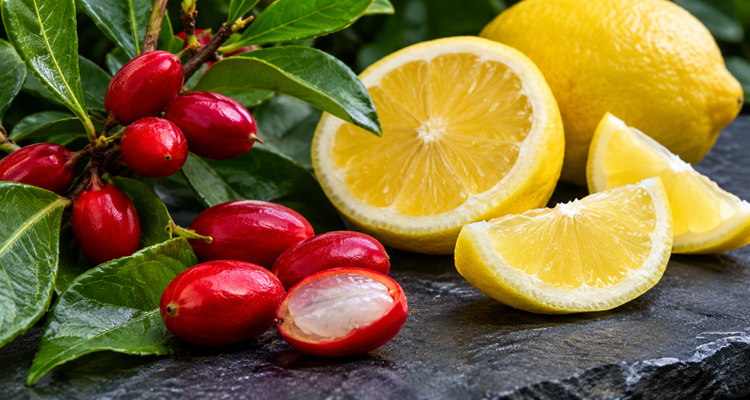
Meet the miracle berry, a tiny red fruit that temporarily changes how your tongue interprets sour flavors. Its unusual effect reveals something fascinating about the science of taste.
A fresh lemon is one of nature’s most unmistakably sour foods. Its sharp acidity can make your mouth tighten before you’ve even finished a bite. But imagine tasting that same lemon and experiencing something closer to sweet lemonade without sprinkling sugar on it or adding any artificial sweetener.
This surprising transformation is possible with a small red berry called miracle fruit, scientifically known as Synsepalum dulcificum.
Native to West Africa, miracle fruit contains a naturally occurring protein called miraculin. Rather than changing the chemical composition of a lemon, miraculin temporarily changes how the tongue responds to acidic foods.
The lemon remains sour in chemical terms. Its citric acid is still there. Yet the person eating it may experience a remarkably sweet sensation.
This isn’t a magic trick or a viral food illusion. It’s a scientifically documented interaction between a plant protein and the human sweet taste receptor.
What Exactly Is Miracle Fruit?
Despite their extraordinary reputation, the berries themselves aren’t intensely sweet. Their flavor is generally mild, and their most remarkable property becomes apparent only after another food is eaten.
The fruit’s taste-modifying effects have been known in West Africa for generations. Historical accounts describe its use before consuming sour foods, making otherwise sharp flavors more pleasant.
The scientific interest came later, as researchers began investigating how a fruit could change the experience of tasting something without changing the food itself.
The answer turned out to involve an unusual protein and the way our sensory system interprets chemical signals.
The Science Behind Making Sour Foods Taste Sweet
The secret lies in miraculin, a glycoprotein found in the berry’s flesh.
Under ordinary circumstances, the human tongue detects sweetness through specialized receptor proteins known as TAS1R2 and TAS1R3, which work together to form a functional sweet taste receptor.
Sugars and certain other sweet-tasting compounds activate this receptor, initiating signals that the brain interprets as sweetness.
At approximately neutral pH, it does not strongly activate the sweet taste receptor. That helps explain why the miracle berry itself doesn’t taste exceptionally sweet.
But when an acidic substance enters the mouth, the situation changes.
Research published in the Proceedings of the National Academy of Sciences in 2011 demonstrated that miraculin can interact with the human sweet taste receptor in a pH-dependent manner.
As acidity increases, the miraculin-associated receptor becomes activated, producing a sweet taste signal.
How the taste transformation works
Miraculin changes the receptor response, not the lemon’s sugar or acid content.
The distinction is important: miraculin does not turn acid into sugar. Nor does it simply eliminate sourness.
Instead, it creates an additional sweet sensation when acidic foods stimulate the tongue. The resulting flavor may be dominated by sweetness even though the food remains acidic.
This is a remarkable example of how taste depends not only on the molecules present in food, but also on the biological machinery detecting them.
What Happens When You Eat a Lemon After Miracle Fruit?
For someone unfamiliar with miracle fruit, the experience can be startling.
A lemon that would normally taste aggressively sour may seem surprisingly sweet. Some people describe the sensation as resembling lemonade or a sweet citrus candy.
The experience is not identical for everyone. Perceived sweetness depends on factors including the amount of miraculin consumed, the acidity of the food, and individual differences in taste sensitivity.
Research examining acidic beverages has found that miracle fruit can produce different levels of perceived sweetness depending on the beverage being tested.
And lemons aren’t the only foods affected.
Other acidic foods, including limes, grapefruit, and certain sour berries, can also taste sweeter after consuming miracle fruit.
The transformation is most noticeable with acidic foods. It is not a universal ability to make every bitter, salty, or unpleasant food taste like candy.
How Long Does the Sweetening Effect Last?
Miracle fruit’s effect is temporary, but it can last considerably longer than the time needed to eat the berry.
According to Memorial Sloan Kettering Cancer Center, the taste-modifying sensation can persist for approximately one to two hours, although it gradually becomes weaker.
The duration varies between individuals and circumstances.
As saliva and normal oral activity gradually reduce the effect, sour foods begin tasting more like they ordinarily would.
Importantly, the transformation does not permanently alter the tongue or create a lasting change in taste perception.
Could Miracle Fruit Help People Reduce Sugar?
One of the most interesting potential applications of miracle fruit is its ability to create sweetness without requiring added sugar.
Many foods and beverages are sweetened to balance their natural acidity. Lemon drinks, for example, frequently contain sugar because the sourness would otherwise be too intense for some consumers.
Miracle fruit offers a different approach: rather than increasing a food’s sugar content, it changes the way acidity is perceived.
That makes it an intriguing subject for food scientists exploring alternatives to conventional sweetening methods.
However, there are important limitations.
Miraculin works best in acidic conditions, so it cannot directly replace sugar in every recipe. Sugar also contributes texture, bulk, preservation properties, and other characteristics that taste modification alone cannot reproduce.
Furthermore, a pleasant sweet sensation does not automatically establish that miracle fruit produces meaningful weight loss, improved blood glucose control, or other long-term health benefits.
A 2024 scientific review identified potential applications in food preferences while emphasizing the need for further research on dosage, food types, and differences between individuals.
Miracle fruit is therefore better understood as a promising taste-modifying ingredient than as a proven solution to excess sugar consumption.
Could Miracle Fruit Help People Experiencing Changes in Taste?
Beyond its novelty, miracle fruit has attracted attention in medical nutrition research.
Some people receiving chemotherapy experience changes in taste that make familiar foods unpleasant or difficult to enjoy. These disturbances can affect appetite and everyday eating experiences.
Researchers have explored whether miracle fruit might improve food enjoyment for people experiencing such changes.
Small studies have reported improvements in taste perception among some chemotherapy patients.
However, Memorial Sloan Kettering Cancer Center emphasizes that the evidence remains preliminary. Miracle fruit has not been demonstrated to prevent weight loss in these patients, and larger studies are necessary to establish its usefulness.
It should not be considered a treatment for cancer, a replacement for nutritional support, or a proven therapy for taste disorders.
Its potential value lies in sensory modification—an area that researchers are continuing to investigate.
Is Miracle Fruit Safe to Eat?
Miracle fruit has a history of consumption, but that does not mean every product or use has been evaluated equally.
In January 2024, the U.S. Food and Drug Administration issued a response concerning a manufacturer’s conclusion that a specific miracle fruit powder was generally recognized as safe (GRAS) for particular uses in water-based beverages.
The FDA stated that it had no questions about that conclusion under the proposed conditions of use. This was not a blanket approval of every miracle fruit product or application.
Memorial Sloan Kettering also notes that stomach discomfort and throat discomfort have been reported, and that people with an allergy to the fruit should avoid it.
Another consideration is acidity.
A lemon that tastes sweet after miracle fruit is still acidic. Its potential to irritate sensitive tissues or contribute to dental enamel erosion has not disappeared.
This means that consuming unusually large quantities of lemons or other acidic foods simply because they taste sweeter would be unwise.
People with relevant medical conditions, allergies, or ongoing treatment should consult a qualified healthcare professional before using miracle fruit supplements.
How to Experience the Miracle Fruit Effect
For curious food enthusiasts, the simplest way to understand miracle fruit is through a small, controlled tasting experience.
-
Obtain food-grade miracle fruit from a reputable supplier, either as a fresh berry or a product intended for consumption.
-
If using a fresh berry, remove the seed and allow the pulp to spread across the tongue.
-
After the pulp has coated the tongue, taste a small piece of lemon or another familiar acidic food.
-
Compare the flavor with what you ordinarily expect, without consuming excessive quantities of acidic foods.
Follow product directions where applicable, and avoid trying unfamiliar fruits collected from unidentified plants.
The experience may be subtle or dramatic depending on the individual, the product, and the acidity of the food.
There is no need to consume large amounts to appreciate the phenomenon.
What Miracle Fruit Teaches Us About the Human Senses
Perhaps the most interesting thing about miracle fruit isn’t its potential as a food ingredient. It’s what the berry reveals about perception.
We tend to think of taste as an inherent property of food. A lemon is sour, sugar is sweet, and coffee can be bitter.
But those descriptions are actually the result of interactions between chemical compounds, sensory receptors, nerve signals, and the brain.
Miracle fruit demonstrates how changing one part of that process can alter the experience of eating without substantially changing the food itself.
The lemon still contains citric acid. Its nutritional composition remains essentially the same. Yet the sensory experience can be dramatically different.
In that sense, miracle fruit offers a memorable lesson in biology: what we taste is not simply what exists on our plate, but how our nervous system responds to it.
A Tiny Berry With an Extraordinary Ability
Miracle fruit doesn’t create sugar, neutralize lemon juice, or permanently change the tongue.
Its remarkable ability comes from miraculin, a natural protein that causes acidic foods to activate the human sweet taste receptor.
That simple interaction can make an intensely sour lemon taste surprisingly sweet.
Although scientists are exploring its possible applications in food technology and clinical nutrition, many of those uses still require stronger evidence.
For now, the berry’s most established achievement is also its most fascinating: it can change the experience of flavor without changing the chemistry of the food being tasted.
Sometimes, the difference between sour and sweet isn’t in the food at all. It’s in how we perceive it.
This content is published for informational or entertainment purposes. Facts, opinions, or references may evolve over time, and readers are encouraged to verify details from reliable sources.