









The Secret Chemistry That Makes Yesterday’s Curry Taste Better Today
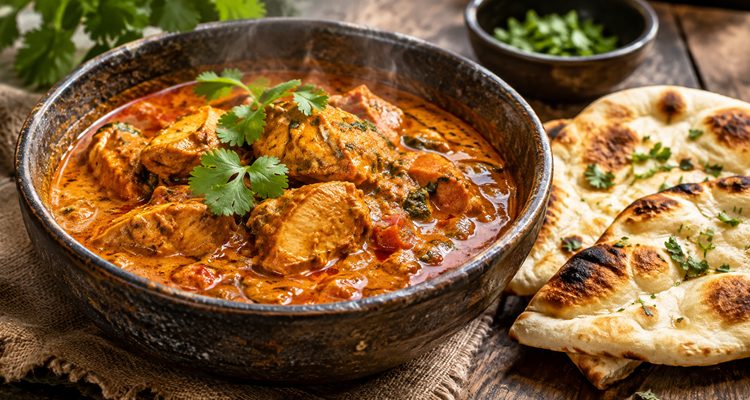
Why does a curry that tasted delicious at dinner sometimes become even richer, deeper, and more satisfying the following day? The answer lies in a fascinating combination of aroma chemistry, fat, texture, and the way our senses experience flavor.
There is something wonderfully familiar about opening the refrigerator, finding a container of yesterday’s curry, and discovering that the leftovers taste even better than the original meal.
The spices seem more harmonious. The sauce feels richer. The sharpness of individual ingredients has softened into something rounder and more satisfying.
It is tempting to imagine that the curry has spent the night quietly developing new flavors. There is some truth to that idea, but the science is more interesting than the popular explanation that spices simply need time to blend.
Yesterday’s curry can taste better because cooling, storage, and reheating change how flavor compounds are distributed and released, while the sauce’s texture and our perception of its aromas also influence the experience.
Not every curry improves overnight, and refrigeration does not magically create flavor. But understanding what happens inside that container reveals why some dishes are particularly rewarding the next day.
A Curry Is More Than a Mixture of Spices
To understand why leftover curry can taste different, it helps to understand what makes curry flavorful in the first place.
A typical curry may contain onions, garlic, ginger, tomatoes, chilies, ground spices, oil, water, vegetables, meat, or legumes. Each ingredient contributes different chemical compounds, and those compounds do not all behave alike.
Some dissolve readily in water. Others dissolve more easily in fat. Many are volatile, meaning they can escape from food into the air and reach our noses.
Consider a few familiar spices:
-
Cumin: Contains aromatic compounds such as cuminaldehyde, which contribute to its distinctive warm, earthy character.
-
Turmeric: Contains curcuminoids responsible for much of its yellow color, alongside volatile compounds that contribute to its aroma.
-
Cloves: Contain eugenol, associated with their powerful, warm, slightly medicinal fragrance.
-
Cinnamon: Contains cinnamaldehyde, an important contributor to its characteristic aroma.
-
Chilies: Contain capsaicinoids, including capsaicin, which produce the sensation of heat rather than a conventional taste or smell.
Cooking releases, transforms, and redistributes these substances.
When spices are heated in oil, for example, some of their aroma compounds move into the fat. As the curry simmers, those compounds become distributed throughout the sauce.
The finished dish is therefore not simply a collection of separate ingredients. It is a complex system in which water, oil, proteins, starches, and aromatic molecules interact.
That complexity helps explain why the same curry can seem different after a night in the refrigerator.
What Actually Happens to Curry Overnight?
The most important distinction is between what happens during cooking and what happens during refrigerated storage.
Cooking produces many of the major chemical transformations responsible for flavor. Overnight refrigeration generally slows chemical reactions rather than accelerating them.
Nevertheless, several changes can influence the curry’s flavor and texture.
1. Flavor compounds continue to redistribute
A curry contains both water-based and fat-based components.
Aromatic substances can move between the sauce, oil droplets, and solid ingredients according to their chemical properties. This redistribution does not necessarily stop the moment the stove is switched off.
During cooling and storage, some compounds may continue moving between these components.
That can alter how flavor is experienced when the curry is reheated, particularly if it contains pieces of vegetables, meat, or legumes surrounded by a strongly seasoned sauce.
However, it would be misleading to claim that every spice penetrates deeply into every ingredient overnight. The extent of movement depends on the molecule, the ingredient’s structure, temperature, and time.
The practical result is more subtle: the distribution and release of existing flavor compounds can change, even when the overall ingredients remain the same.
2. The sauce’s texture changes
Texture plays a surprisingly important role in flavor.
Many curries contain starch from potatoes, lentils, beans, or other ingredients. Some contain gelatin released from collagen-rich cuts of meat. Others gain thickness from onions, nuts, coconut, or reduced tomato sauces.
As these dishes cool, their structure can change.
Cooked starch, for example, can undergo retrogradation, a process in which some starch molecules reassociate after heating. This can affect firmness and the way water is held within the food.
Gelatin-rich sauces may become noticeably thicker or set when refrigerated.
These changes can make a curry feel denser and more substantial. Reheating then softens or reverses some of those effects, although the final texture may not be identical to that of the freshly cooked dish.
A thicker sauce also behaves differently in the mouth. It coats food and oral surfaces differently, potentially affecting how aromas and tastes are released.
That means a curry can seem richer without necessarily containing more flavor compounds.
3. Cooling and reheating change aroma release
Much of what we call flavor actually comes from smell.
When we chew food, aromatic molecules travel from the mouth toward the nasal cavity. This process, called retronasal olfaction, contributes enormously to the experience of eating.
Temperature affects how readily volatile compounds escape from food.
A steaming curry may release a strong burst of aromas. A cooler, thicker sauce may release them differently.
When refrigerated curry is reheated, its temperature rises, fats soften or melt, and volatile molecules become more available to the surrounding air.
The resulting aroma profile may feel different from that of the freshly cooked curry.
This does not prove that reheating always improves flavor. Some delicate aromas may be lost through repeated heating, especially if the curry is simmered aggressively.
But it does help explain why serving temperature and reheating technique matter.
The Role of Fat: Curry’s Flavor Carrier
One reason curry can have such a complex flavor is that many spice-derived aromatic compounds interact strongly with fat.
Oil, ghee, coconut milk, cream, and fats released from meat can all influence how these compounds are distributed.
When cumin, coriander, mustard seeds, or other spices are heated in oil, the fat becomes an important carrier of aromatic substances.
In a finished curry, some of those substances remain associated with its fat-rich components.
During refrigeration, certain fats may partially solidify. During reheating, they melt again, changing the physical environment surrounding the aroma compounds.
This can influence their release and perception.
It is not accurate, however, to say that oil simply absorbs all the spices overnight or that fat automatically makes a curry more flavorful the next day.
Fat can retain certain aroma compounds, but it can also slow their release. The effect depends on the particular compound and the food’s composition.
The important point is that fat helps shape when and how we experience flavor, not merely how much flavor exists.
Why Slow-Cooked Curries Often Make Better Leftovers
Not all curries are equally suited to overnight storage.
A slow-cooked meat curry, a lentil dal, and a delicate fish curry have very different structures.
Consider a rich chicken or lamb curry containing browned onions, tomatoes, oil, and a long-simmered sauce.
By the time it finishes cooking, the ingredients have already undergone substantial transformations. Onion cells have softened, proteins have changed structure, and the sauce may have become concentrated through evaporation.
After refrigeration, the dish’s texture changes further. Reheating can redistribute softened fats and restore a warm, aromatic sauce.
In contrast, a curry built around crisp vegetables, fresh herbs, or delicate seafood may lose some of its appeal after storage.
Fresh coriander leaves can lose their bright character. Vegetables may become softer. Fish can become dry or break apart when reheated.
The difference is not simply that one curry has more spices.
It is that some dishes depend on slow-developed, robust flavors and soft textures, while others depend on freshness and delicacy.
How different curries tend to behave as leftovers
| Curry type | Possible next-day result |
|---|---|
| Slow-cooked meat curry | Rich sauce may remain satisfying; meat can dry out if overheated |
| Lentil dal | Often thickens during storage; water may be needed when reheating |
| Chickpea curry | Sturdy ingredients generally hold up well |
| Potato curry | Potatoes may become firmer or change texture |
| Coconut-based curry | Fat may separate; gentle reheating can help |
| Fish or seafood curry | Delicate texture may deteriorate with reheating |
| Fresh herb-heavy curry | Some bright aromas may fade |
These are tendencies, not guarantees. The recipe, storage conditions, and reheating method all matter.
Does Curry Become More Flavorful, or Do We Simply Perceive It Differently?
This is perhaps the most interesting question.
When someone says yesterday’s curry tastes better, they are describing a real sensory experience. But that does not necessarily mean the curry contains a greater quantity of desirable flavor molecules.
Three different possibilities need to be separated.
First, the food may have physically changed. The sauce can thicken, fats can solidify and melt, and ingredients can redistribute moisture.
Second, the chemical composition may have changed. Some reactions continue during storage, although refrigeration slows many of them. Volatile compounds may also be lost or altered.
Third, the eater’s perception may have changed. Temperature, hunger, expectations, accompanying foods, and the balance of aromas can influence how enjoyable a dish seems.
A curry eaten immediately after cooking may be extremely hot, making its subtle flavors harder to appreciate. The next day’s portion may be served at a more comfortable temperature.
The experience can also depend on what accompanies it. A curry eaten with fresh rice, warm naan, or a cooling yogurt side dish may seem different from the same curry eaten alone.
There is no need to choose just one explanation.
Flavor is an interaction between the food and the person eating it.
The Myth of Spices Magically Blending Overnight
The popular claim that spices simply blend together while curry rests is an appealing shorthand, but it is not a complete scientific explanation.
Spices do not merge into one new substance. Their individual chemical compounds remain subject to different physical and chemical processes.
Some molecules dissolve in oil. Others remain in the water-rich sauce. Some are bound to food structures, while volatile compounds can escape into the air.
The dish may taste more harmonious because the relative availability of those compounds changes, because its texture has changed, or because the strongest freshly cooked aromas are less dominant.
But there is no universal overnight reaction that guarantees better curry.
In fact, some desirable flavor compounds can deteriorate during storage.
The more accurate explanation is that resting can alter the balance of flavor delivery and sensory perception. Whether those changes represent an improvement depends on the curry and the person tasting it.
How to Make Leftover Curry Taste Its Best
If you enjoy the flavor of next-day curry, a few simple practices can help preserve its quality without compromising food safety.
Cool it promptly
Do not leave curry sitting on the stove overnight in the hope that its flavor will improve.
According to the USDA, perishable leftovers should be refrigerated within two hours of cooking or serving, or within one hour when temperatures exceed 32°C (90°F).
Transfer large quantities into smaller, shallow containers so they cool more quickly. Keep the refrigerator at 4°C (40°F) or below.
Store it in a sealed container
A clean, airtight container helps reduce moisture loss, contamination, and the absorption of odors from other refrigerated foods.
If you have prepared a large batch, divide it into portions rather than repeatedly reheating the entire quantity.
Reheat thoroughly, but avoid unnecessary overcooking
Reheat leftover curry until it reaches an internal temperature of at least 74°C (165°F), checking with a food thermometer.
Stir regularly to distribute heat, particularly when reheating a thick curry. Sauces and gravies should be brought to a boil, following USDA guidance.
Once the curry is safely heated, avoid prolonged additional simmering that could damage delicate ingredients or drive off more aromas.
Restore the sauce if necessary
A refrigerated lentil or potato curry may become considerably thicker.
Adding a small amount of water or stock while reheating can help restore the desired consistency.
Coconut-based curries may also benefit from gentle stirring if their fat and water components have separated.
Add fresh finishing ingredients
One particularly useful technique is to combine the depth of a reheated curry with the brightness of freshly added ingredients.
Depending on the recipe, try finishing with a little fresh coriander, lime juice, lemon juice, or a small amount of freshly prepared spice-infused oil.
These additions do not reproduce the original curry exactly. Instead, they introduce fresh aromatic and acidic notes that may have diminished during storage.
The result can offer both the richness of a rested dish and the liveliness of a freshly prepared one.
Can You Leave Curry Overnight to Improve Its Flavor?
No. Leaving cooked curry at room temperature overnight is unsafe, even if the dish contains substantial amounts of spices.
Spices such as turmeric, cloves, and cinnamon contain compounds that have been investigated for antimicrobial activity. But their presence in ordinary cooking quantities does not make a prepared curry safe to store without refrigeration.
Bacteria can multiply in improperly stored cooked foods, including dishes containing meat, vegetables, legumes, and rice.
The USDA recommends consuming properly refrigerated leftovers within three to four days or freezing them for longer storage.
It is also important to remember that harmful bacteria do not always produce noticeable changes in smell, appearance, or taste.
A curry that smells perfectly normal is not necessarily safe if it has been stored improperly.
A Simple Kitchen Experiment: Does Your Curry Really Improve Overnight?
Curious cooks can explore the difference for themselves.
Prepare a batch of curry using a familiar recipe. Once it is fully cooked, serve a small portion and pay attention to the aroma, sauce consistency, spice intensity, and overall balance.
Refrigerate the remaining curry promptly in shallow, covered containers.
The next day, reheat a portion safely and compare it with your memory of the original.
For a more informative comparison, prepare two identical small batches on consecutive days. Refrigerate the first safely, then compare it the following day with the freshly prepared second batch. Serve both at similar temperatures.
Notice whether the difference comes from the sauce’s thickness, the prominence of particular spices, the tenderness of the ingredients, or the overall experience.
This is a home tasting exercise, not a controlled scientific study. Expectations, small cooking differences, and individual preferences can influence the outcome.
Still, it can reveal something valuable: the flavor of a dish is not a fixed property that exists independently of its texture, temperature, and the person eating it.
The Science Behind the Comfort of Leftovers
There is also a human dimension to the appeal of yesterday’s curry.
Food is more than chemistry. Familiarity, memory, and context influence how we experience a meal.
A curry served the next day may be associated with the comfort of a homemade dinner, the convenience of having food ready, or the pleasure of enjoying a favorite dish again.
Those associations can influence enjoyment, even when the underlying chemical differences are modest.
That does not make the experience imaginary. Sensory perception is a genuine biological process shaped by both physical stimuli and the brain’s interpretation of them.
Research into flavor release shows that food structure, the movement of aroma compounds, and the processes of chewing and swallowing all affect what reaches our sensory receptors.
The chemistry of the curry and the psychology of eating work together.
So, Is Yesterday’s Curry Actually Better?
Sometimes, yes but not because time automatically improves food.
The chemistry of leftover curry involves several interacting processes: the redistribution of aromatic compounds, changes in fat and starch structures, differences in texture, and the release of aromas during reheating.
Some of these processes can make a curry seem richer or more balanced. Others may reduce freshness or damage delicate ingredients.
The science supports these individual mechanisms, but it does not establish that all curries become objectively more delicious after 24 hours. Research on starch retrogradation, for example, demonstrates real structural changes during cooling and storage, yet those changes can improve or worsen eating quality depending on the food.
The secret, then, is not a mysterious overnight transformation.
It is the way a complex dish continues to behave as a physical and chemical system and the way our senses respond when we encounter it again.
The next time yesterday’s curry seems especially delicious, appreciate the layers of flavor. Just remember that the best leftovers owe as much to careful cooking, safe storage, and thoughtful reheating as they do to time.
This content is published for informational or entertainment purposes. Facts, opinions, or references may evolve over time, and readers are encouraged to verify details from reliable sources.