








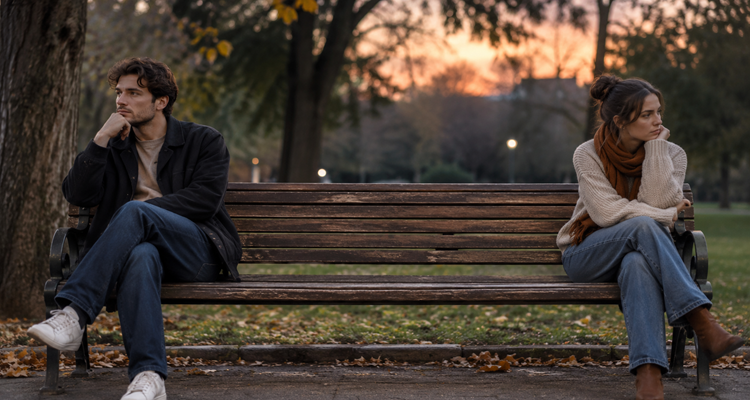
Why Sacred Places Can Feel Different Even When Nothing Around You Has Changed
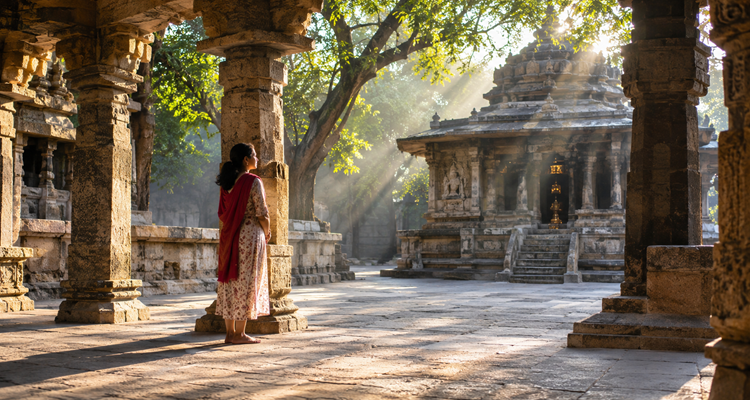
A temple courtyard can feel peaceful on one visit and strangely ordinary on another. A familiar church, mosque, monastery, or sacred landscape may seem deeply meaningful one day, even though its architecture, surroundings, and daily routines remain exactly as they were before.
What has changed?
Sometimes, the difference lies not in the place itself but in the person experiencing it.
Sacred places can feel different because human perception is shaped by attention, emotion, memory, expectation, and personal meaning. Religious traditions may interpret these experiences through the language of divine presence, blessings, or spiritual connection. Psychology offers another perspective: the mind does not experience a place as a collection of physical objects alone. It also responds to what those objects represent.
These explanations need not dismiss one another. They address different questions about an experience that can be deeply personal.
A Familiar Place Is Never Experienced in Exactly the Same Way
Imagine visiting a temple you have known since childhood.
The entrance is unchanged. The same bells ring. Incense carries a familiar fragrance, and people move through the courtyard as they always have.
On one occasion, you may barely notice these details. Your thoughts are occupied with work, responsibilities, or the journey home.
On another, the same surroundings may produce an unexpected feeling of stillness.
The physical environment may be almost identical, but your attention is not.
Human perception is an active process. The brain continually interprets sensory information in relation to memories, expectations, emotions, and present concerns.
This helps explain why the same location can feel welcoming, overwhelming, comforting, or emotionally distant at different times.
A sacred place is not exempt from this process. In fact, its personal and cultural significance may make changes in perception especially noticeable.
The Role of Attention: What You Notice Changes What You Experience
Attention influences which details of an environment become prominent in conscious experience.
Consider the difference between entering a sacred building while checking your phone and entering it after spending several quiet minutes outside.
In the first situation, your attention may remain divided between messages, plans, and immediate responsibilities.
In the second, you may become more aware of the sound of footsteps, the temperature of the floor, the movement of light, or the rhythm of a prayer.
Nothing extraordinary needs to happen for the experience to feel different.
The difference may arise because details that were previously overlooked become meaningful.
This is particularly relevant in places designed around contemplation. Repetition, silence, music, ritual, and deliberate movement can help direct attention away from everyday distractions.
However, the effect is not automatic. A quiet setting does not guarantee a quiet mind, and an active religious gathering can be meaningful without being physically silent.
The important factor is often how a person engages with the environment rather than any single feature of the environment itself.
Why Emotional State Matters More Than We Realize
A person does not arrive at a sacred place emotionally empty.
They bring their worries, hopes, relationships, disappointments, gratitude, and unanswered questions.
These experiences can influence how the surroundings feel.
Someone visiting after receiving encouraging news may experience the setting as warm and uplifting. Another person coping with loss may find the same location unusually solemn.
For someone seeking reassurance, a familiar prayer or ritual may provide comfort. For someone experiencing inner conflict, it may bring difficult feelings closer to awareness.
This does not necessarily mean the place has caused those emotions. Rather, the setting may provide an opportunity for feelings already present to become more noticeable.
Sacred environments often invite reflection on subjects that ordinary routines leave little room to consider: mortality, forgiveness, gratitude, suffering, belonging, and purpose.
As a result, an emotional response may seem to arise suddenly, even when it has roots in experiences outside the sacred setting.
Memory Gives Sacred Places Their Personal Meaning
A place can become emotionally significant through the experiences associated with it.
A small shrine may remind someone of a grandparent. A church may carry memories of childhood celebrations. A mosque may evoke the familiar rhythm of communal prayer. A riverbank considered sacred may recall a meaningful family journey.
Over time, these associations become part of how the place is experienced.
The physical surroundings serve as reminders of people, events, and earlier stages of life.
This is one reason a location that seems ordinary to a visitor can feel profoundly important to someone else.
The visitor sees the building or landscape.
The returning worshipper may experience years of memory alongside it.
Such associations can also change.
A sacred place once connected with happiness may feel painful after a bereavement. A location associated with difficult experiences may become comforting as a person’s relationship with those memories evolves.
The meaning of a place is not fixed simply because its physical appearance remains unchanged.
Sacredness Is Also Shaped by Culture and Tradition
Sacred places are not experienced only as private emotional spaces. Their meaning is also shaped by communities, religious teachings, history, and shared practices.
A temple may be understood as the dwelling or manifestation of a deity within a particular Hindu tradition. A mosque is a place of worship where Muslims gather in devotion to Allah. A church may be regarded by Christians as a consecrated space for prayer and worship.
Sacred mountains, rivers, forests, and pilgrimage routes can carry religious meanings that have developed across generations.
These traditions influence how people approach such locations.
Removing shoes, covering the head, washing before prayer, bowing, observing silence, or participating in a ceremony can mark a transition from ordinary activity to religious practice.
The precise meaning of each action differs across traditions.
For believers, these practices may be expressions of devotion, obedience, reverence, or spiritual preparation. From a psychological perspective, they may also influence attention and expectations.
The two descriptions operate at different levels.
One concerns religious meaning. The other concerns processes that may contribute to the experience.
Neither should be casually substituted for the other.
The Psychology of Awe and Spiritual Connection
Some sacred-place experiences involve more than calmness.
A person may feel humbled, deeply connected, emotionally moved, or briefly less preoccupied with everyday concerns.
Psychologists often study related experiences through the concept of awe.
Awe can arise when people encounter something they perceive as vast, extraordinary, or greater than their usual understanding of the world. It may be inspired by mountains, music, architecture, collective ceremonies, or religious contemplation.
Research published in Perspectives on Psychological Science explores how awe may involve reduced self-focus, stronger feelings of connection, and an increased sense of meaning.
This offers a useful way to understand certain experiences in sacred settings.
Standing beneath a towering cathedral ceiling, observing a mountain considered holy, or joining a large religious gathering may shift attention beyond immediate personal concerns.
Yet awe does not always require a spectacular environment.
A modest shrine, familiar prayer, or quiet moment of reflection may become significant because of the meaning a person attaches to it.
Researchers also recognize that awe is not exclusively pleasant. It can involve uncertainty, fear, or a sense of being overwhelmed.
The emotional intensity of a sacred-place experience therefore should not automatically be interpreted as happiness, peace, or spiritual progress.
Can a Sacred Place Feel Different Without Anything Supernatural Happening?
Yes.
Changes in attention, memory, emotional state, expectation, and personal circumstances can produce a meaningful difference in experience without requiring an externally detectable change.
Researchers studying place attachment describe how people develop emotional and symbolic relationships with locations. These relationships can evolve as life circumstances and personal identities change.
This provides a psychological explanation for why a familiar sacred place may feel different across visits.
But it does not settle every philosophical or religious question about the experience.
Science can investigate observable behavior, emotional responses, perception, and certain physiological processes. It cannot establish every claim about divine presence or spiritual significance simply by measuring a person’s emotional state.
Likewise, a powerful personal experience does not, by itself, provide scientific evidence that a supernatural event occurred.
A respectful approach recognizes both boundaries.
Believers may understand an experience within their religious worldview. Others may interpret the same kind of feeling through psychology, memory, or cultural meaning.
The experience can be genuinely important to the individual even when its ultimate interpretation remains open.
Why the Same Sacred Place May Sometimes Feel Ordinary
One overlooked aspect of sacred experiences is their inconsistency.
A person may visit a religious site expecting the same peace or emotional intensity they experienced previously, only to feel distracted or indifferent.
This can be disappointing, especially when the earlier visit seemed unusually meaningful.
But emotional experiences cannot always be reproduced on demand.
Several factors may contribute:
-
Familiarity: Repeated exposure can make once-striking surroundings feel routine.
-
Expectation: Hoping to recreate a previous experience may shift attention toward evaluating whether it is happening again.
-
Mental preoccupation: Stress, fatigue, or unresolved concerns can compete for attention.
-
Changing personal meaning: A person’s relationship with faith, memory, or community may evolve.
-
Different circumstances: Crowding, sound, temperature, and social interactions may vary even when the place appears unchanged.
An ordinary-feeling visit is not necessarily evidence of weakened faith, spiritual failure, or lost connection.
Nor does an intensely emotional visit necessarily demonstrate greater devotion.
Religious participation can be meaningful through commitment, reflection, community, and practice, even without a dramatic emotional response.
How to Approach Sacred Places Without Forcing an Experience
A meaningful visit does not need to become an exercise in searching for unusual sensations.
For someone who wants to engage more thoughtfully with a sacred environment, a few simple approaches may help.
Arrive without demanding a particular feeling. Expectations can influence attention. Allowing the experience to unfold without constantly judging it may make it easier to notice what is actually happening.
Pay attention to the surroundings. Observe the architecture, sounds, rituals, people, and natural features. These details may carry cultural or personal significance that is easy to overlook.
Consider the place’s history and traditions. Understanding why a location is sacred to a community can deepen appreciation without requiring personal agreement with every religious belief associated with it.
Notice your emotional state. Ask yourself whether your response may be connected to something happening elsewhere in your life.
Respect the experience of others. One visitor may feel profound devotion while another feels curiosity, grief, discomfort, or nothing unusual. These differences do not make one person’s experience automatically more authentic.
The purpose is not to manufacture a spiritual response. It is to approach the place with awareness, respect, and openness.
What Sacred Places Reveal About the Relationship Between People and Places
A sacred place is more than its physical dimensions.
Its significance may emerge through a relationship between the environment, the community that preserves its meaning, and the individual who enters it.
Architecture, landscape, ritual, history, and cultural identity contribute to that relationship. Personal memories and emotional circumstances add another layer.
This helps explain a striking possibility: two people can stand in the same location at the same moment and have profoundly different experiences.
One may see an impressive historical monument. Another may recognize a place of worship. A third may remember someone they loved.
The surroundings are shared, but their meanings are not identical.
And those meanings can change without any alteration to the stones, walls, trees, or pathways.
The Deeper Meaning of an Unchanged Place
When a sacred place suddenly feels different, the change does not necessarily indicate that something mysterious has happened in the environment.
It may reflect a change in attention, a memory becoming more vivid, an emotion reaching awareness, or a new stage in a person’s relationship with faith and meaning.
For religious believers, the experience may also carry spiritual significance understood through their tradition.
These interpretations deserve careful distinction rather than automatic dismissal or unquestioning acceptance.
Perhaps the most useful insight is that a place does not need to change physically for our experience of it to change profoundly.
The familiar surroundings may remain exactly where they were.
What changes is the relationship between the place, its meaning, and the person standing within it.
And sometimes, that is enough to make an ordinary moment feel extraordinary.
This content is published for informational or entertainment purposes. Facts, opinions, or references may evolve over time, and readers are encouraged to verify details from reliable sources.
Related News
- Why Mark Zuckerberg Visited Kainchi Dham: The Neem Karoli Baba Connection Behind a Silicon Valley Story
- Kainchi Dham: How a Himalayan Ashram Became a Global Spiritual Landmark
- How Religious Architecture Continues to Shape Human Emotions Long After Belief Fades
- The New Search for Silence and Why It Is Becoming a Spiritual Movement