









Why the Same Meal Can Taste Like a Different Recipe on Different Days
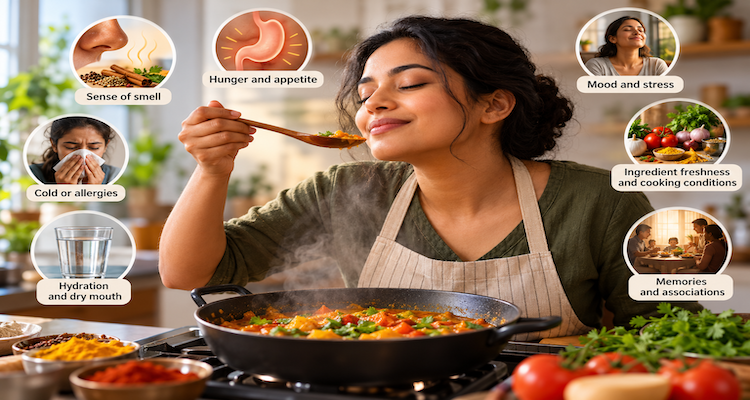
The same dal, curry, pasta, or homemade sandwich can taste wonderful one day and surprisingly ordinary the next, even when you follow exactly the same recipe. The ingredients have not changed, the cooking method is familiar, and the person preparing the meal may be the same. Yet the experience feels different.
This everyday mystery reveals something fascinating about taste: flavour is not created by food alone. It emerges from the interaction between our senses, our physical condition, our memories, and the environment in which we eat.
Understanding why food tastes different from one day to another can help explain why favourite dishes sometimes disappoint us, why a simple meal can feel extraordinary after a tiring day, and why our appetite occasionally changes without an obvious reason.
1. Taste Is Only One Part of Flavour
When people say that a meal tastes different, they often assume that their taste buds are responsible. But flavour is a much more complicated experience.
The tongue detects five basic taste qualities: sweet, sour, salty, bitter and umami, the savoury taste found in foods such as mushrooms, tomatoes and broths. Smell, temperature, texture and sensations such as the heat of chilli also contribute to what we experience as flavour.
Consider a bowl of homemade vegetable curry. Its flavour comes from several things working together: the sweetness of cooked onions, the aroma of spices, the acidity of tomatoes, the saltiness of the gravy and the texture of the vegetables.
If even one of these sensory elements becomes less noticeable, the entire dish may seem different.
This is particularly obvious when you have a blocked nose. You can still recognise basic tastes, but much of the aroma that helps distinguish one food from another may be reduced. A familiar curry can suddenly seem flat, even when its seasoning is exactly right.
2. Your Sense of Smell Can Change the Entire Experience

These aromas help us identify ingredients and recognise familiar foods. During chewing, aromatic molecules can travel from the mouth towards smell receptors through a passage connecting the back of the throat and the nose. This is one reason smell and taste are so closely connected.
On the first day, your nose is clear and the aroma of roasted spices is easy to recognise. On the second, seasonal allergies or a cold reduce your ability to smell those same spices. The meal may seem less rich, even though nothing changed in the cooking.
Smell can also influence whether a dish feels appetising before you take the first bite. A pleasant aroma can prepare you to enjoy a meal, while an unfamiliar or unpleasant smell can make the same food less appealing.
This explains why flavour is not simply a property of the ingredients. It is the result of information gathered by several senses.
3. Hunger Can Change How You Experience Food
The same meal can feel more satisfying when you are genuinely hungry than when you have recently eaten.
Imagine coming home after a long day and sitting down to a simple plate of rice, dal and vegetables. The meal might feel comforting and delicious. The following afternoon, after eating snacks shortly beforehand, you may find the same combination less exciting.
That difference does not necessarily mean your taste buds have become less sensitive. Hunger, appetite, expectations and the desire to eat all influence the experience of a meal.
When you are hungry, familiar foods may be especially appealing because they offer the nourishment and satisfaction you are looking for. When you are already full, the same food may not produce the same sense of anticipation.
There is another distinction worth understanding: liking a food and wanting to eat it are not always the same thing. You may enjoy the flavour of a dish but feel little desire to eat it because you are full.
Your appetite can also vary with sleep, physical activity and stress. These factors do not affect everyone in the same way, but they can change when and how much a person wants to eat.
4. Your Mood and Expectations Can Influence Flavour
Food is never experienced in complete isolation from the rest of life.
A meal eaten during a relaxed family gathering may feel more enjoyable than the same meal consumed while you are rushing to meet a deadline. The ingredients may be identical, but the circumstances surrounding the meal are different.
Mood can influence attention, appetite and the pleasure you take in eating. When you are distracted by work or worried about something, you may pay less attention to the aroma, texture and subtle flavours of the food in front of you.
Expectations matter, too.
If you remember a particular dish as exceptionally delicious, you may approach it with high expectations the next time you eat it. When the meal turns out to be merely good, the difference between what you expected and what you experienced can make it seem disappointing.
The reverse can also happen. A simple dish may exceed your expectations when you are tired, relaxed or especially eager for something familiar.
This does not mean flavour is imaginary. The food supplies real chemical and physical sensations, but the brain helps interpret them and contributes to the pleasure associated with eating.
5. Small Changes in Cooking Can Produce Noticeable Differences

A recipe provides instructions, but cooking is also a physical and chemical process. Small differences in heat, moisture, timing and ingredient proportions can alter the final result.
For example, onions cooked slowly may develop a sweeter, deeper flavour than onions exposed to high heat for a short period. Garlic can taste mellow when gently cooked but become bitter if it burns. Spices released into warm oil can produce a different aroma from the same spices added directly to a finished sauce.
Other factors matter as well:
-
Ingredient freshness: Herbs, spices and oils can lose aroma or develop unwanted flavours as they age.
-
Water content: Vegetables release different amounts of moisture, changing how concentrated a sauce becomes.
-
Temperature: A dish served piping hot may present its aromas and textures differently from one served lukewarm.
-
Seasoning: A small variation in salt, acidity or spice quantity can shift the balance of a recipe.
-
Storage and reheating: Cooling, storing and reheating food can change its texture, moisture and flavour.
These differences can be difficult to notice while cooking, particularly when several ingredients are combined.
A curry prepared with slightly more water may seem milder because its flavours are less concentrated. A soup simmered for longer may taste richer because moisture has evaporated and its ingredients have had more time to interact.
So before concluding that your taste has changed, remember that even a familiar recipe can produce a slightly different result.
6. Hydration and Dry Mouth Can Affect Taste
Your mouth plays an important role in how you experience food. Saliva helps dissolve food chemicals so that taste receptors can detect them, and it also supports chewing and swallowing.
When your mouth feels unusually dry, food may seem less enjoyable or taste different. Dry mouth can be associated with dehydration, certain medications and various health conditions. Some medications can also affect taste or smell directly.
For example, a meal that normally tastes rich and well-seasoned may seem less satisfying when your mouth is dry. You might interpret the change as a need for more salt or spices, even though the underlying issue is not the recipe.
Drinking enough water throughout the day and maintaining good oral hygiene can help support normal eating and taste perception. However, persistent dry mouth deserves attention, especially if it makes eating uncomfortable.
It is also worth avoiding the habit of automatically adding extra salt or sugar whenever food tastes bland. First consider whether the problem is temporary or whether something else has changed.
7. Familiar Foods Carry Memories and Associations

A particular dal might remind you of childhood lunches. A certain soup may bring back memories of someone who cared for you when you were ill. A familiar recipe can also remind you of a festival, a family gathering or a place you once lived.
These associations can influence how you respond to the food.
When a meal brings back pleasant memories, it may feel comforting and rewarding. The same dish eaten in an unfamiliar setting, without the people or circumstances associated with it, may not create quite the same experience.
This is not evidence that memory literally changes the chemical composition of food. Rather, memory and expectation contribute to the meaning and enjoyment of eating.
Food is therefore both a sensory experience and a personal one. Its appeal can depend on what you taste in the present and what the meal reminds you of from the past.
8. Why the Same Meal Sometimes Tastes Better the Next Day
Leftovers offer an interesting example of how flavour can change.
Some soups, stews and curries taste more integrated after resting because their ingredients have had additional time to interact. Chilli, garlic, herbs and other seasonings may become more evenly distributed, while ingredients absorb liquid and develop a different texture.
However, this is not a universal rule. Freshly cooked vegetables may lose their crispness, herbs can lose their brightness, and some dishes are noticeably better immediately after preparation.
There are two separate processes to consider:
The food itself can change. Cooling, storage and reheating affect its physical structure and the way flavour compounds are released.
Your experience of the food can change. You may be hungrier, less distracted or more interested in the meal when you eat it again.
Both can contribute to the impression that yesterday’s recipe tastes different today.
Food safety remains important. Refrigerate perishable leftovers promptly, store them safely and reheat them thoroughly according to applicable food-safety guidance. A change in taste or smell should never be used as the sole test of whether stored food is safe to eat.
9. How to Find Out Why Your Favourite Dish Tastes Different
If a familiar meal suddenly seems too bland, too bitter or less enjoyable, there is no need to immediately change the recipe. A few simple observations may help you identify what is happening.

Notice whether coffee, fruit, spices and other familiar foods also seem less aromatic. If several foods have changed, the issue may not be specific to your cooking.

Think about whether you have a blocked nose, dry mouth, a recent illness or a new medication. These can be relevant clues.

Check whether the ingredients were fresh, the cooking time was similar, and the proportions of salt, acid, oil and spices remained consistent.

Take time to notice aroma, texture, temperature and individual flavours. Eating more attentively may help you distinguish a change in flavour from a change in appetite or enjoyment.
If changes in taste or smell persist, recur without an obvious explanation or begin affecting your ability to eat, seek advice from a healthcare professional. Sudden loss of taste or smell, particularly alongside other new symptoms, also warrants prompt medical assessment.
10. What This Everyday Experience Reveals About Human Perception
The changing taste of a familiar meal illustrates a broader principle: our experience of the world depends on both what is outside us and how our bodies process it.
We often assume that perception is a direct reflection of reality. If a curry tastes bland today, we may conclude that the cook made a mistake. If coffee tastes unusually bitter, we may assume that the beans have changed.
Sometimes those conclusions are correct. At other times, the ingredients are nearly identical, but our senses, attention or expectations are different.
The same principle appears elsewhere in everyday life. Music can sound more moving when we are relaxed. A familiar room can feel different under different lighting. A scent can evoke a strong memory that changes how we respond to it.
Food provides a particularly accessible example because we experience it repeatedly. We have familiar recipes against which we can compare each new experience.
The lesson is not that flavour is unreliable. It is that flavour is dynamic. The ingredients matter, but so do the senses that detect them and the brain that brings their signals together.
The next time your favourite meal tastes unexpectedly different, pause before blaming the recipe. The explanation may be in the cooking, your surroundings, your physical condition or the expectations you brought to the table.
Sometimes, the food has changed. Sometimes, you have. And sometimes, both are true.
This content is published for informational or entertainment purposes. Facts, opinions, or references may evolve over time, and readers are encouraged to verify details from reliable sources.