






The Animals That Change Their Behavior When Nobody Is Watching
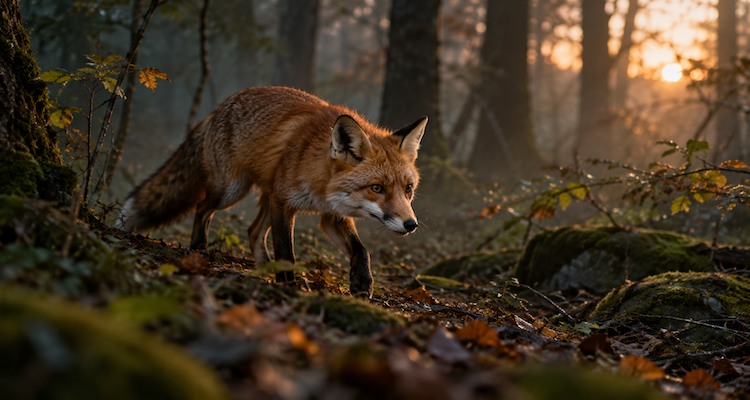
Wild animals do not always behave the same way when humans are nearby. Some avoid busy paths until nightfall. Others become more active around people because gardens, roadsides, and settlements offer food or other opportunities. Certain animals even learn to respond differently to individual humans.
Scientists have documented these patterns using camera traps, GPS tracking, and systematic observations. The findings reveal something fascinating: human presence can change not only where animals go, but also when they move, how they find food, and how they interact with other species.
A 2024 study published in Nature Ecology & Evolution examined camera-trap data covering 163 mammal species across 102 research projects in 21 countries. The researchers found that responses to human activity varied considerably between species and landscapes. Some mammals became less active in less-developed areas when human activity increased, while others showed different patterns in developed environments.
This is not a story about animals deliberately hiding their secret lives from human observers. It is about how living creatures respond to their surroundings and how much their behaviour can change when one of the most influential features of their environment, us, enters or leaves the picture.
1. Wildlife That Becomes More Active After Dark
Researchers call the timing of an animal’s daily activity its diel activity pattern. Depending on the species and its surroundings, an animal may be primarily diurnal (active during the day), nocturnal (active at night), or crepuscular (most active around dawn and dusk).
Human activity can influence these patterns. A 2024 study in Nature Communications, which examined wildlife across 10 tropical forest landscapes in Southeast Asia, found that disturbances were associated with shifts in activity timing. Many rarer specialist species showed greater nocturnality in disturbed habitats, while other groups responded differently.
But this is not a universal rule. Some animals remain active during the day despite human presence, while others change where they move rather than when they move. The response depends on the species, its habitat, food availability, predators, and the kind of disturbance it experiences.
2. Predators That Wait for Human Activity to Decline
Human presence can influence where large carnivores travel, how much time they spend in particular habitats, and when they hunt or move. Camera-trap research in Nepal’s Barandabhar Corridor Forest, for example, found that several prey species overlapped strongly with human activity, while predators were generally more active when humans were absent. The study also found that human presence affected the spatial relationships between predators and prey.
Some prey animals may use human activity as a form of protection if predators avoid people. In other settings, animals may avoid human-dominated areas altogether. Predators can also exploit food sources near settlements, so human presence does not always drive them away.
The result is a changing pattern of movement and interaction rather than a simple division between animals that hide and animals that hunt.
3. Animals That Behave Differently Around Familiar Humans
In a 2010 study published in the Journal of Applied Animal Welfare Science, researchers investigated whether giant Pacific octopuses (Enteroctopus dofleini) responded differently to two individual people. Eight octopuses were exposed to one person who regularly fed them and another who touched them with a bristly stick. After two weeks, the researchers recorded significant differences in body patterns and certain behaviours in response to the two people.
That is not the same as proving that an octopus understands human intentions in the way people do. Its responses could reflect learned associations between a particular person and previous experiences.
Nevertheless, the research challenges the assumption that an animal’s behaviour is fixed regardless of who is nearby.
An animal that appears unresponsive to one person may react differently to another. Its behaviour can depend on familiarity, previous interactions, and whether the situation predicts food, disturbance, or something else.
For researchers and animal caretakers, this matters. The presence of a familiar person may be part of the environment influencing the behaviour being observed.
4. Zoo Animals Can Change Their Activity When Keepers Are Present
A 2024 study examined 15 individual animals from six species to investigate whether the presence of their primary keepers in public viewing areas affected their behaviour. Overall, the animals were more active when their keepers were present. The researchers also found evidence that keeper presence could act as a cue anticipating activities such as feeding, enrichment, or training.
This is a useful reminder that human presence does not always suppress animal activity.
For an animal accustomed to a predictable care routine, a familiar keeper may signal that something relevant is about to happen. The animal may become alert, move around, or approach an area where food or enrichment is normally provided.
The absence of people, therefore, does not necessarily reveal a more natural or more active state. Sometimes the opposite is true.
Zoo observations must also be interpreted in context. The study involved a limited number of animals and species, so its findings should not be assumed to apply to every zoo animal or every captive environment.
5. Why Scientists Use Camera Traps to See What Humans Miss
A person walking through a forest sees only a small portion of its activity. Many animals move through the same landscape at different times, often avoiding places where people are present.
Camera traps help researchers observe those patterns without needing to stand nearby continuously. Motion-triggered devices can record animals passing through a location at night, at dawn, or during periods when people are absent.
These recordings can reveal differences in the timing and frequency of animal detections, helping scientists investigate whether human activity is associated with changes in wildlife behaviour.
However, camera traps have limitations. An animal may notice the camera, avoid it, or respond to the light or sound produced by the equipment. Research on mammalian predators has documented behaviours suggesting that some animals detect and react to camera traps themselves.
A camera is therefore not always a completely invisible observer.
Scientists must also account for changes in weather, food availability, habitat, season, and animal movement before concluding that people caused a behavioural shift. A reduction in photographs does not necessarily mean that fewer animals live in an area; they may simply be using a different route or visiting at another time.
The strongest conclusions come from careful study designs that compare observations across locations or periods while accounting for these other factors.
6. What Happened When Human Activity Changed During the Pandemic?
The COVID-19 pandemic created an unusual opportunity to examine wildlife responses to changes in human movement.
When restrictions reduced human activity in some places, researchers could compare animal detections and activity patterns with periods when people were more active. The results were more complicated than the popular image of wildlife suddenly reclaiming empty cities.
The 2024 Nature Ecology & Evolution study covering 163 mammal species found substantial variation across locations. In some less-developed landscapes, mammals became less active when human activity increased. In developed areas, some showed the opposite pattern, and many species exhibited changes in nocturnality. Carnivores were among the groups showing particularly strong sensitivity to human activity.
A fox living near a town may benefit from discarded food or other resources associated with people. A predator in a relatively undisturbed forest may respond to human presence as a greater risk. The same broad change in human activity can therefore produce different outcomes in different habitats.
The pandemic did not provide a perfectly controlled global experiment, and the findings should not be interpreted as evidence that all wildlife benefits when people disappear. Instead, it demonstrated how context-dependent animal behaviour can be.
7. Are Animals Really Different When Nobody Is Watching?
The phrase when nobody is watching suggests that animals have a hidden personality they reveal only in private. The scientific reality is more nuanced.
Animals do not need to understand the idea of being watched in the human sense to respond to the presence of people. They can react to sound, smell, movement, light, previous encounters, perceived danger, and familiar routines.
An animal may become less active because people are nearby. Another may approach because it associates humans with food. A third may continue behaving as usual because it has become accustomed to a particular environment.
These responses are forms of behavioural flexibility, not necessarily evidence of deliberate concealment.
Scientists can observe measurable changes in movement, activity timing, habitat use, and interactions. But they must be cautious about interpreting those observations as proof of what an animal is thinking or feeling.
The distinction matters because careful science can be fascinating without attributing human motives to wildlife.
What we can say is that an animal observed in the presence of people may not behave exactly as it would in their absence. To understand its behaviour, researchers need to consider the conditions under which they observed it.
Conclusion: The Wildlife We Rarely See
A forest is never truly inactive simply because no animal is visible. Beneath its canopy, creatures may be resting, hunting, feeding, travelling, or avoiding disturbances beyond our awareness.
Some wait for quieter hours to move. Others learn to live alongside people. Some distinguish between familiar individuals, while others change their activity according to predictable human routines.
Their responses remind us that human beings are not merely observers of the natural world. We are part of the environment to which wildlife must respond.
That creates a responsibility to pay attention to the effects of our presence. Managing visitor access, protecting undisturbed habitats, reducing unnecessary disturbance, and studying wildlife over time can all help researchers and conservationists understand how animals share landscapes with us.
The most important lesson is not that animals have secret lives they hide from humanity. It is that what we see is only a partial picture of how they live.
When scientists observe wildlife without assuming that every species behaves in the same way, they uncover a richer understanding of animal behaviour and a clearer picture of how human activity reshapes the living world around us.
This content is published for informational or entertainment purposes. Facts, opinions, or references may evolve over time, and readers are encouraged to verify details from reliable sources.