







Into the Wild: Stories of Life Unbound
There is a powerful idea behind the phrase “the wild”: a world that exists beyond our schedules, borders and built environments, where survival depends on relationships that have evolved over thousands or millions of years. A tiger needs territory, a migratory bird needs several habitats across continents, a frog depends on functioning freshwater systems, and an insect can be critical to the reproduction of plants far larger than itself.
But the wild is not simply disappearing because individual animals are becoming rare. The deeper story is about whether ecosystems still have enough space, connectivity and ecological integrity to allow life to function on its own terms.
The evidence is sobering. The UN-backed IPBES assessment estimated that around one million animal and plant species are threatened with extinction, while the IUCN’s Red List continues to document substantial extinction risk across major groups. At the same time, international conservation policy has shifted toward protecting not only individual species, but the habitats and ecological systems on which they depend.
Key Takeaways
- Wildlife conservation increasingly depends on protecting functioning habitats, not simply rescuing individual species.
- Habitat loss and degradation remain among the central pressures driving biodiversity decline.
- A species can survive on paper while losing the ecological connections it needs to remain viable.
- Global conservation targets now emphasize protected areas that are connected, effective and fairly governed.
- Restoration can give damaged ecosystems a second chance, but prevention remains critically important.
- The strongest conservation stories are often about ecosystems recovering enough to sustain life independently.
The Wild Is More Than a Place
A forest is not merely a collection of trees. A wetland is not simply a patch of water. A grassland is not an empty landscape waiting for development.
Each is a network of relationships.
Predators influence prey populations. Herbivores shape vegetation. Pollinators help plants reproduce. Fungi and microorganisms recycle nutrients. Rivers transport sediment and nutrients downstream. Seasonal migrations connect habitats that may be hundreds or thousands of kilometres apart.
This is why conservation becomes more complicated when viewed at the ecosystem level.
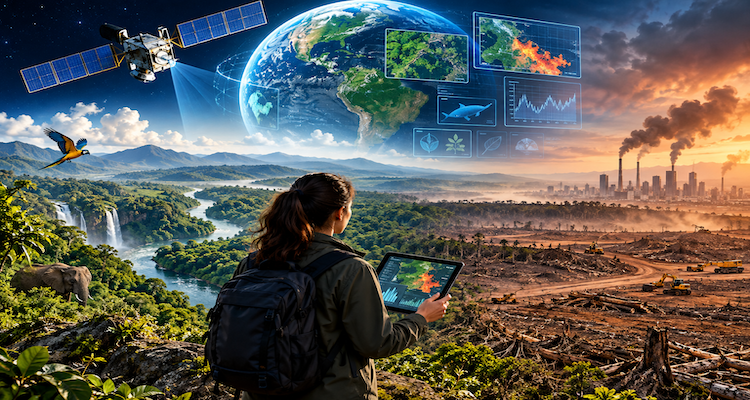
A protected patch of forest may look healthy from a satellite image while becoming increasingly isolated from other habitats. A population of animals may remain visible but become too fragmented to move, find mates or respond to environmental change.
The problem, therefore, is not always the disappearance of a species overnight. Sometimes it is the gradual erosion of the conditions that allow that species to remain wild.
What the Evidence Says About Wildlife Decline
The global biodiversity picture is difficult to reduce to a single number because different measurements answer different questions.
The IPBES Global Assessment estimated that around 1 million species are threatened with extinction, while emphasizing that the estimate is based on incomplete knowledge, particularly for many less-studied groups. It also identified habitat loss and deterioration as major drivers of biodiversity decline.
The IUCN Red List provides a different but complementary perspective by assessing extinction risk species by species. In its 2025-1 dataset, IUCN reported that 1,363 of the 6,025 assessed mammal species were threatened, along with 1,311 birds, 1,846 reptiles and 2,873 amphibians. Coverage is not equally comprehensive across all groups, which is an important limitation when interpreting global totals.
This distinction matters.
A Red List assessment does not mean that every threatened species is heading inevitably toward extinction. Conservation status is a measure of risk, and risk can change. Populations can recover when pressures are reduced and habitat is restored.
That is one of the most important reasons not to tell the wildlife story solely as a story of loss.
Stories of Recovery Matter Too
Conservation is often portrayed through images of animals at the edge of extinction. Those stories can reveal the seriousness of the crisis, but they can also obscure another reality: nature can respond when pressure is removed.
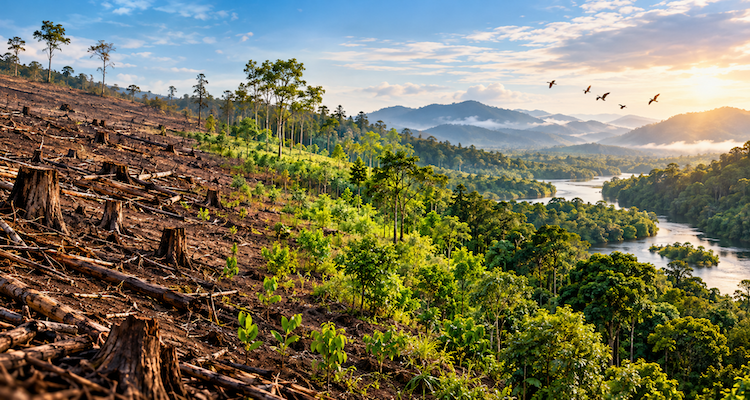
Restoration can rebuild degraded habitat. Protected areas can provide refuge. Wildlife corridors can reconnect fragmented landscapes. Better management can reduce overharvesting and other direct pressures.
The global biodiversity framework adopted by governments in 2022 reflects this broader approach. Its Target 2 calls for at least 30% of degraded terrestrial, inland-water, coastal and marine ecosystems to be under effective restoration by 2030. Target 3 calls for at least 30% of terrestrial, inland-water and coastal and marine areas to be effectively conserved and managed by 2030.
The wording is significant: effectively conserved and managed.
Simply drawing a boundary around land does not automatically create a functioning ecosystem.
Why a Protected Area Is Not Automatically Protected Nature
Global conservation has traditionally placed considerable emphasis on coverage: how much land or ocean is officially protected?
That measurement remains important, but it does not tell the whole story.
The Protected Planet Report 2024 found that 17.6% of the world’s land and inland waters and 8.4% of its ocean and coastal areas were within documented protected and conserved areas. Those figures remain well below the international 30% target for 2030.
More importantly, UNEP-WCMC and IUCN emphasize that location, ecological representation, connectivity, management effectiveness and governance matter alongside coverage. In other words, a protected-area map is not the same thing as a map of healthy nature.
This changes the question conservationists need to ask.
Instead of simply asking, “How much have we protected?”, a more useful question is:
“Have we protected enough of the right places, and are those places functioning?”
That is a much harder question—but also a more meaningful one.
The Invisible Architecture of Wild Life
One of the least visible elements of wildlife conservation is connectivity.
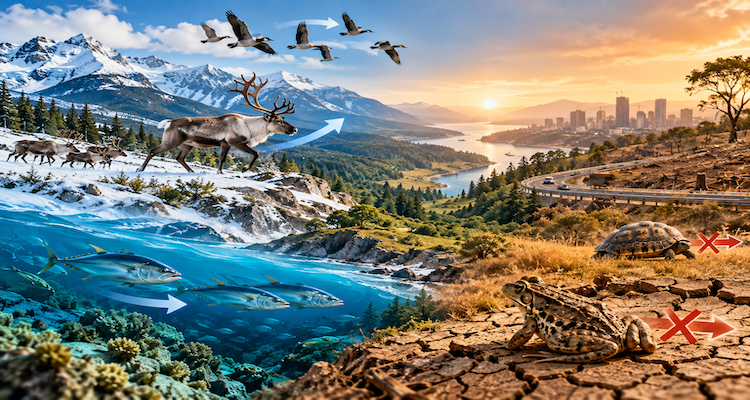
Animals do not recognize the boundaries shown on human maps. They move between feeding grounds, breeding sites, seasonal habitats and water sources.
When roads, farms, cities, fences or other infrastructure divide landscapes, animals may still occupy the remaining fragments. But the ecological system can become increasingly disconnected.
For some species, that fragmentation can make movement more difficult. For others, it can isolate populations and reduce opportunities for genetic exchange.
Connectivity is therefore not simply about giving animals more space. It is about maintaining the relationships between spaces.
This is increasingly reflected in international conservation policy. The Kunming-Montreal Global Biodiversity Framework specifically calls for protected and conserved areas to be ecologically representative and well connected.
The People Who Live Alongside the Wild
There is another part of the story that cannot be separated from conservation: people.
Many ecologically important landscapes are also places where communities farm, fish, graze livestock, collect forest products or maintain long-established cultural relationships with nature.
Conservation that ignores those realities can create conflicts rather than durable protection.
The global biodiversity framework therefore explicitly recognizes the rights of Indigenous Peoples and local communities in the design and governance of conservation areas.
This is more than a political consideration. Local knowledge can be valuable to understanding seasonal changes, wildlife movements and landscape conditions, while communities can become important custodians of ecosystems when conservation goals and local interests are aligned.
The future of conservation will consequently depend not only on biology, but also on governance, livelihoods and trust.
What “Life Unbound” Really Means
The most compelling wildlife stories are not necessarily stories about animals escaping human control.
They are stories about ecological freedom.
A wild animal needs more than survival. It needs the ability to move, feed, reproduce, compete, adapt and interact with the rest of its ecosystem.
That is why the success of conservation cannot be measured only by whether a photograph still exists of a particular species.
A more meaningful measure is whether the landscape can continue supporting life without requiring constant human intervention.
This is also where restoration becomes especially important. The goal should not always be to create permanently managed wildlife exhibits in larger spaces. Where conditions allow, the stronger ambition is to restore ecological processes so that nature can increasingly sustain itself.
The Next Chapter Is About Giving Nature Room
The global response to biodiversity loss is moving toward a more comprehensive idea of conservation: protect important habitats, restore degraded ecosystems, improve connectivity, reduce damaging pressures and involve the people who live with nature.
That does not guarantee success.
The biodiversity crisis is occurring across enormous geographic areas, and scientific knowledge remains incomplete. The IUCN itself notes that assessment coverage differs substantially among groups, meaning that the known picture is not necessarily the complete picture.
But uncertainty is not an argument for inaction. It is an argument for better monitoring and better decisions.
The wild does not need to be romanticized to be valuable. Its importance is visible in the relationships that make ecosystems function and in the consequences when those relationships begin to break down.
Conclusion
“Into the Wild” is ultimately not a story about a world untouched by people. Very little of today’s planet fits that description.
It is a story about whether there will continue to be places where ecological processes can operate with enough space, diversity and freedom to sustain themselves.
The encouraging part is that conservation is not exclusively about preventing the next disappearance. It is also about creating conditions in which populations can recover, damaged landscapes can regenerate and ecosystems can become functional again.
The real measure of success may therefore be surprisingly simple: not how many wild animals we can keep alive behind boundaries, but how much living space we can return to nature—and how well that space can remain alive on its own.
This content is published for informational or entertainment purposes. Facts, opinions, or references may evolve over time, and readers are encouraged to verify details from reliable sources.