







Wildlife Beyond the Beaten Path: Why Going Further Should Mean Traveling Better
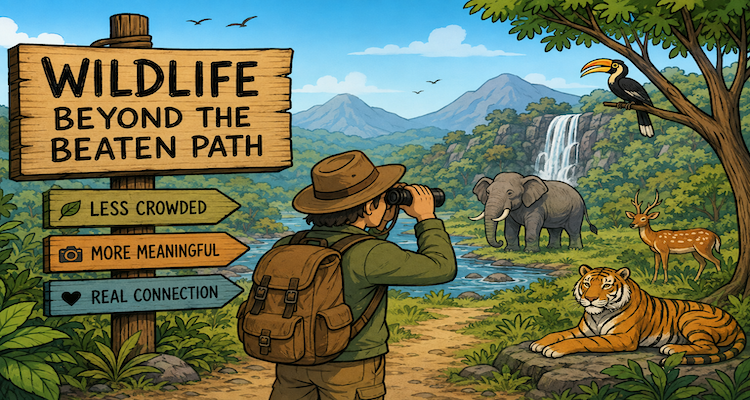
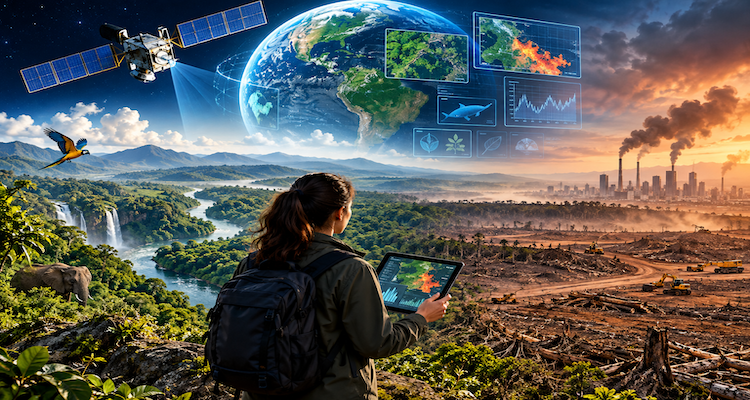
The most memorable wildlife encounters do not always happen at the most famous safari gates or on the busiest routes through a national park. Sometimes they begin farther from the crowds along a quieter forest edge, in a community-managed landscape, on a wetland overlooked by conventional itineraries, or on a migration route where the animals are simply passing through.
But “off the beaten path” should not mean going deeper into places where wildlife needs to be left undisturbed. The more important shift is from chasing rare sightings to understanding the landscapes that make those sightings possible.
That distinction matters because conservation increasingly depends not only on protecting individual parks, but also on keeping habitats connected. The International Union for Conservation of Nature (IUCN) describes ecological connectivity as essential for biodiversity, migration, pollination, seed dispersal and climate resilience.
For travelers, that creates a different way to think about wildlife tourism: the best journey may not be the one that gets closest to an animal. It may be the one that leaves the landscape stronger than it found it.
Key Takeaways
- Wildlife does not recognize the boundaries of national parks, making connected habitats essential for many species.
- Lesser-known wildlife destinations can offer meaningful experiences without concentrating visitors in the most crowded sites.
- Remote does not automatically mean responsible; poorly managed tourism can disturb habitats and animals.
- Choosing local guides and conservation-oriented operators can connect tourism with local livelihoods and stewardship.
- Roads, railways, fences and other infrastructure can disrupt wildlife movement even outside protected areas.
- Responsible wildlife travel is ultimately about observing nature without making the encounter more important than the ecosystem.
The Wildlife Map Is Larger Than the Park
A national park can be a protected refuge, but it is rarely an isolated island.
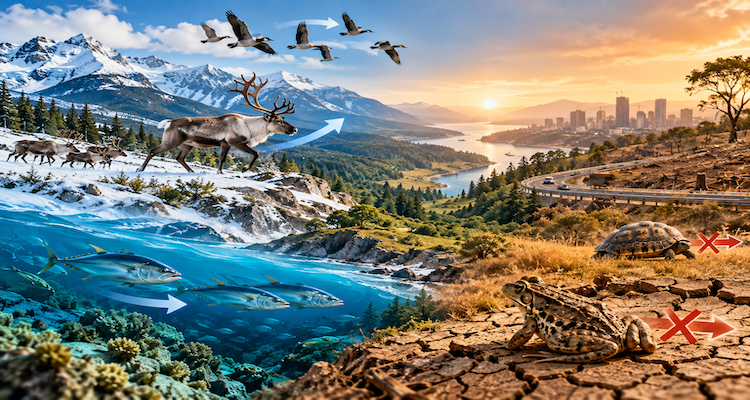
Animals may leave protected areas to find food, water, breeding grounds or seasonal shelter. Migratory species can travel across enormous landscapes, while resident animals may depend on several connected habitats during different stages of their lives.
This is why conservation science has increasingly focused on ecological corridors and landscape connectivity. IUCN guidance describes ecological corridors as geographically defined areas managed over the long term to maintain or restore ecological connectivity. Together with protected areas and other conservation areas, they can form broader ecological networks.
The issue has become even more significant as roads, railways, canals, fences and other infrastructure expand. The Convention on the Conservation of Migratory Species of Wild Animals warns that infrastructure can fragment habitats, obstruct movement, increase collisions and contribute to genetic isolation.
For wildlife travelers, this changes the meaning of “going somewhere wild.” A landscape that looks empty on a map may actually be a crucial passage between two habitats.
Why Lesser-Known Places Can Matter
Popular wildlife destinations have an obvious advantage: they are easier to reach, better known and often equipped with established tourism infrastructure.
But concentrated visitation can also create management challenges. IUCN’s guidelines on tourism and visitor management in protected areas emphasize that tourism can support conservation while also generating environmental, social and economic impacts that need to be actively managed.
This does not mean travelers should automatically avoid famous reserves. Well-managed visitor systems can be an important part of conservation.
The more useful question is whether tourism is being managed according to the ecological realities of the place.
A smaller wetland, forest corridor or community-managed landscape may not provide the dramatic certainty of seeing a particular animal. Yet it can reveal something that a tightly scheduled wildlife checklist cannot: ecosystems are living systems rather than collections of attractions.
That makes slower, less predictable wildlife travel valuable in its own right.
The Best Wildlife Encounter May Be the One You Do Not Force
Wildlife tourism has a natural tension at its center.
Visitors travel hoping to see animals. Animals do not travel hoping to be seen.
That sounds obvious, but it has important consequences.
When a sighting becomes the primary measure of a successful trip, pressure can develop to approach animals too closely, follow them repeatedly, crowd around a sighting or encourage behavior that would not otherwise occur.
Responsible wildlife tourism therefore begins with a different expectation: wildlife sightings are opportunities, not entitlements.
A good guide should be able to explain animal behavior, habitat and seasonal conditions rather than simply drive toward the nearest sighting. A responsible operator should also understand when the correct action is to keep distance, move away or accept that an animal will remain unseen.
That can produce a less predictable trip but a more meaningful one.
Follow the Landscape, Not Just the Animal
One of the most useful ways to explore wildlife beyond conventional routes is to understand the habitat first.
A wetland may attract migratory birds because of its food resources. A grassland may be important because it connects seasonal ranges. A forest edge may serve as a transition zone between different habitats.
The 2025 Global Land Outlook thematic report on ecological connectivity, produced by the UN Convention to Combat Desertification and the Convention on Migratory Species, describes connectivity as much broader than animal movement alone. It includes ecological processes involving water, nutrients, genetic material, pollination and other functions that support both ecosystems and human societies.
That perspective can transform a wildlife trip.
Instead of asking only, “What animals can I see here?”, a traveler can ask:
- What habitat am I visiting?
- Why is this landscape important?
- Which species depend on it seasonally?
- Is it connected to another protected or natural area?
- Who manages it?
- How does tourism affect the place?
Those questions turn sightseeing into environmental understanding.
Local Knowledge Can Change the Experience
Wildlife destinations are rarely disconnected from people.
Communities may live beside protected areas, manage landscapes, provide guiding services, operate accommodation, produce food, maintain traditional practices or participate in conservation programs.
IUCN notes that protected-area tourism can foster connections between visitors and conservation values, while the economic benefits of tourism can provide an argument for protecting healthy natural areas and authentic local cultures.
That does not mean every tourism business automatically benefits conservation. The relationship depends on how tourism is planned, who receives the economic benefits, how local communities participate and how environmental impacts are managed.
For travelers, a practical starting point is to favor locally rooted guides and businesses where there is clear evidence that tourism contributes to local livelihoods and responsible stewardship.
The objective is not to turn every community into a tourism product. It is to recognize that conservation often happens in landscapes where people and wildlife coexist.
Remote Does Not Always Mean Responsible
There is a temptation to assume that the farther a destination is from civilization, the better the wildlife experience will be.
That assumption can be misleading.
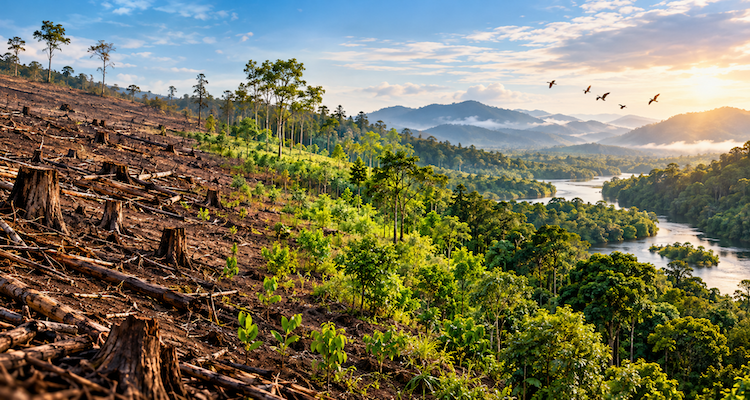
A remote location may have fragile habitats, limited waste-management infrastructure, sensitive breeding areas or animals with little tolerance for disturbance. Increasing access can therefore create new pressures precisely where ecosystems have previously experienced relatively little visitation.
The IUCN’s sustainable tourism guidance emphasizes planning and visitor management rather than simply increasing access to protected areas.
For travelers, this means “hidden gem” should not become another marketing category that encourages large numbers of people to converge on previously quiet places.
Sometimes the responsible choice is to visit an established destination with strong visitor controls rather than publicize a fragile location that has not been prepared for tourism.
Infrastructure Can Be Part of the Wildlife Story
The road that takes a traveler into a wildlife destination can also be part of the conservation problem.
Roads, railways, canals and fences can divide habitats and interrupt movement. IUCN’s technical work on linear infrastructure identifies practical approaches for reducing these impacts, including better planning, design, construction and monitoring.
This creates an overlooked connection between travel and conservation.
A traveler may experience a landscape as continuous because a vehicle can move through it easily. An animal may experience the same landscape very differently.
A highway can be a barrier. A fence can block migration. Artificial lighting can disturb nocturnal species. Heavy traffic can increase collision risks.
The infrastructure question therefore belongs in the wildlife conversation even when the trip itself appears entirely natural.
How to Travel Beyond the Beaten Path Responsibly
Travelers do not need to become conservation scientists to make better wildlife choices. A few practical principles can make a meaningful difference.
Choose management over novelty.
Look for destinations and operators that explain visitor rules, animal-distance policies, group sizes and environmental practices clearly.
Do not chase sightings at any cost.
A missed tiger, elephant, whale or bird is not a failed trip. Wildlife should not have to accommodate a visitor’s schedule.
Respect seasonal restrictions.
Breeding, nesting, migration and other sensitive periods can require additional protections or limited access.
Use qualified local guides.
A knowledgeable guide can interpret habitat and behavior while helping visitors understand what not to do.
Avoid publicizing fragile locations.
A beautiful photograph can unintentionally send hundreds of people toward a place that cannot handle increased visitation.
Consider the whole trip.
Accommodation, transport, waste, water use and local spending are all part of the tourism footprint.
Treat rules as conservation tools, not inconveniences.
Speed limits, designated trails, viewing distances and restricted areas exist because wildlife needs space.
The Future of Wildlife Travel May Be Less About Finding Animals
The conservation conversation is moving toward connected landscapes.
In 2025, IUCN members adopted a resolution calling for stronger recognition, governance, management and financing of ecological corridors and encouraging approaches that can support both biodiversity conservation and sustainable livelihoods.
The Convention on Migratory Species has likewise continued to place ecological connectivity at the center of international conservation work. Its current agenda includes safeguarding migration corridors, addressing infrastructure impacts and integrating conservation with sustainable livelihoods.
For wildlife tourism, that suggests a broader future.
The most valuable destinations may increasingly be understood not simply as isolated parks containing charismatic animals, but as parts of larger ecological networks.
That is a useful correction to the way wildlife travel is often marketed.
A landscape does not become more valuable because fewer people have photographed it. Its value comes from what it does for life.
Conclusion
Going beyond the beaten path should not mean going where no traveler has gone before. It should mean looking beyond the obvious attraction and understanding the system behind it.
The animal visible from a safari vehicle may depend on a forest beyond the park boundary. A migratory bird may depend on wetlands hundreds of miles away. A mountain species may need an uninterrupted corridor between seasonal habitats. A protected landscape may depend on the people living around it.
That is why responsible wildlife travel begins with a simple change in perspective.
Do not ask only where the animals are.
Ask what allows them to remain there.
When travelers make that shift, wildlife tourism becomes more than the pursuit of a memorable photograph. It becomes an opportunity to understand habitats, support responsible local economies, respect ecological limits and recognize that the most important wildlife experiences often begin far beyond the tourist trail.
This content is published for informational or entertainment purposes. Facts, opinions, or references may evolve over time, and readers are encouraged to verify details from reliable sources.