










Why That Digital Receipt May Reveal More About You Than You Think
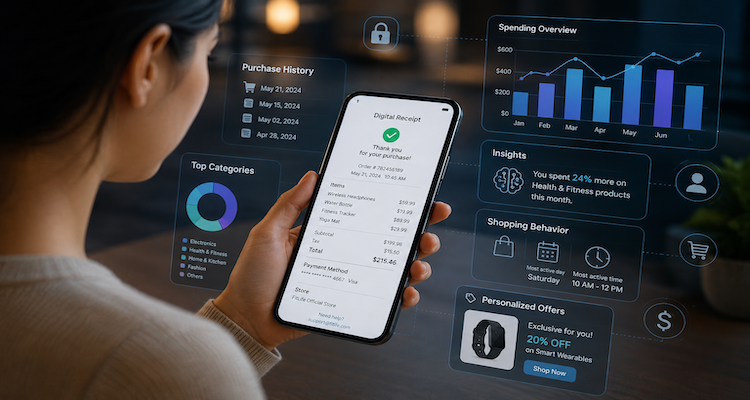
A printed receipt was once little more than proof of purchase. Today, the digital version often serves a very different purpose. Hidden behind the convenience of email confirmations, app-based receipts, and loyalty program records is a growing stream of consumer data that businesses can analyze, store, and connect across multiple platforms.
Most people view digital receipts as a practical upgrade. They are easier to organize, harder to lose, and more environmentally friendly than paper copies. Yet every digital receipt also creates a detailed record of what was bought, when it was purchased, where the transaction occurred, and sometimes even how the customer prefers to shop.
As retailers, payment providers, and digital platforms compete to better understand consumer behavior, digital receipts have quietly evolved from transaction records into valuable sources of personal insight. The shift reflects a broader transformation in the digital economy, where everyday activities increasingly generate data that can be used to improve services, personalize experiences, and influence future purchasing decisions.
The Evolution of the Receipt
For decades, receipts served a straightforward function: documenting a transaction. Once a purchase was completed, the paper receipt usually ended its journey in a wallet, filing cabinet, or trash bin.
Digital receipts changed that dynamic. Instead of disappearing after a transaction, purchase information now becomes part of an ongoing digital record. Retailers can link receipts to customer accounts, loyalty programs, mobile apps, and payment systems. This creates a more complete picture of customer behavior over time.
A single digital receipt may contain information about purchased products, transaction amounts, preferred payment methods, store locations, shopping frequency, and even the device used during the purchase process.
Individually, these details may seem insignificant. Combined over months or years, they can reveal surprisingly detailed patterns.
Why Businesses Value Receipt Data
Consumer data has become one of the most important assets in modern commerce. Companies invest heavily in understanding what customers buy, how often they shop, and what factors influence purchasing decisions.
Digital receipts offer a direct and reliable source of this information because they are generated from actual transactions rather than surveys or estimates.
Retailers can use receipt data to identify buying trends, manage inventory, improve marketing campaigns, and personalize product recommendations. If a customer regularly purchases fitness products, for example, future promotions may focus on related items.
Subscription services, grocery chains, online marketplaces, and restaurant apps increasingly rely on purchase histories to improve customer engagement and retention.
For businesses, digital receipts provide a window into real-world consumer behavior. For consumers, they create a detailed record that extends far beyond the original purchase.
The Rise of Behavioral Profiles
One of the less discussed aspects of digital receipt collection is its role in building behavioral profiles.
A shopping history can reveal more than product preferences. Over time, purchase patterns may indicate lifestyle changes, travel habits, dietary choices, household composition, hobbies, and major life events.
For example, a sudden increase in purchases related to baby products may suggest a growing family. Frequent purchases from travel-related businesses could indicate changing work patterns or personal interests. Seasonal shopping behaviors may reveal spending priorities and financial habits.
The significance lies not in any single transaction but in the accumulation of hundreds or thousands of transactions over time.
This broader context helps explain why receipt data has become increasingly valuable in an era where businesses seek deeper personalization and predictive insights.
Convenience and Personalization Come as a Package
Consumers often benefit from the use of digital receipt data. Personalized recommendations can save time. Automated warranty tracking can simplify product ownership. Easier returns and purchase histories can improve customer experiences.
Many shoppers appreciate these conveniences and willingly participate in loyalty programs or app ecosystems that offer rewards in exchange for data sharing.
However, convenience and data collection are often interconnected. The features consumers enjoy frequently depend on companies maintaining detailed records of past purchases and interactions.
The relationship is not necessarily problematic, but it highlights an important reality of digital services: convenience is often powered by information.
Understanding this trade-off allows consumers to make more informed decisions about the services they use and the data they choose to share.
The Hidden Shift Toward Transaction Intelligence
Perhaps the most important trend is not the receipt itself but what organizations can learn when receipt data is combined with other information sources.
Digital receipts may be linked with customer accounts, mobile applications, website activity, loyalty memberships, and customer support interactions. When these data points are analyzed together, they create a more complete picture of consumer behavior.
This growing capability is sometimes referred to as transaction intelligence the ability to understand preferences, predict future actions, and identify patterns based on purchasing activity.
For businesses, transaction intelligence can improve forecasting and customer engagement. For consumers, it raises important questions about transparency, privacy, and control over personal information.
The value of digital receipts increasingly comes from their role as part of a much larger data ecosystem.
Why Interest in Digital Receipt Privacy Is Growing
Public awareness of data privacy has expanded significantly over the past decade. People are becoming more conscious of how personal information is collected, stored, and used.
As discussions about digital privacy continue, consumers are paying closer attention to seemingly routine interactions that generate data. Digital receipts fall into this category because they often capture information automatically without requiring additional effort from the user.
Many individuals are beginning to ask questions that rarely arose during the era of paper receipts:
Who has access to this information?
How long is it stored?
Can it be shared with third parties?
What insights can be generated from years of purchase history?
These questions reflect a broader shift in consumer expectations. People increasingly want both convenience and transparency.
What This Trend Reveals About the Future
The growing importance of digital receipts reflects a larger transformation taking place across the digital economy.
Data is no longer generated only through online searches, social media activity, or website visits. Everyday transactions have become valuable information sources in their own right.
The future may bring even more integration between payment systems, digital wallets, loyalty programs, and personalized services. As these connections expand, transaction histories could play an even larger role in shaping customer experiences.
The key challenge will be balancing innovation with trust. Consumers are often willing to share information when they understand the benefits and feel confident that their data is handled responsibly.
Digital receipts illustrate how ordinary technologies can take on new significance as data becomes increasingly central to business strategy. What once served as simple proof of purchase is now part of a broader conversation about privacy, personalization, and the future of consumer relationships.
In many ways, the humble receipt has become a snapshot of modern digital life convenient, connected, and more revealing than it appears at first glance.
The information presented in this article is based on publicly available sources, reports, and factual material available at the time of publication. While efforts are made to ensure accuracy, details may change as new information emerges. The content is provided for general informational purposes only, and readers are advised to verify facts independently where necessary.