










Why the Future May Depend on Closing the Gap Between Smart Cities and Everyone Else
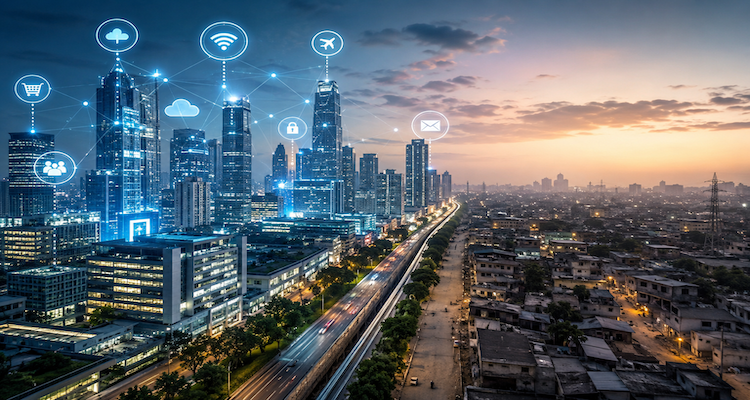
The promise of technology has often been framed as a force that brings people together. Faster internet, smarter infrastructure, digital services, and connected devices were expected to make opportunities more accessible regardless of location. Yet a different reality is beginning to emerge. While some cities are rapidly becoming technology-powered ecosystems, many communities are finding themselves increasingly disconnected from the benefits of that transformation.
The result is not simply a digital divide in the traditional sense. It is a growing gap between places that are being optimized for a technology-driven future and places that are struggling to keep pace. As governments, businesses, and investors concentrate resources in highly connected urban centers, the differences between these environments and the rest of society are becoming more visible and more consequential.
The Rise of the Tech-Optimized City
Around the world, major cities are integrating technology into everyday life at an unprecedented scale. Public transportation systems use real-time data to improve efficiency. Digital payment systems reduce friction in commerce. Smart traffic management helps reduce congestion. Sensors monitor energy consumption, air quality, and infrastructure performance.
In many cases, residents benefit from faster services, improved convenience, and greater access to information. Businesses also gain advantages from advanced connectivity, attracting investment and skilled workers.
Cities such as Singapore, Seoul, and Dubai have become global examples of how digital infrastructure can reshape urban life. Similar initiatives are appearing in numerous metropolitan areas across North America, Europe, and Asia.
However, the success of these technology-forward environments raises an important question: what happens to the places that cannot match this pace of development?
A New Form of Inequality
Discussions about inequality often focus on income, education, or access to healthcare. Increasingly, access to technological infrastructure may deserve a place in that conversation.
Communities without high-speed internet, advanced transportation networks, digital public services, or strong technology investment can face disadvantages that extend far beyond convenience. Businesses may be less likely to relocate there. Remote workers may have fewer opportunities. Students may encounter barriers to digital learning. Healthcare providers may struggle to deploy telemedicine solutions effectively.
The issue is not that every town needs autonomous buses or AI-powered infrastructure. Rather, the concern is that technological progress is becoming concentrated in specific geographic areas while other regions experience slower development.
Over time, this concentration can create reinforcing cycles. Technology attracts talent. Talent attracts investment. Investment attracts more innovation. Communities outside that cycle can find themselves falling further behind.
Why Businesses Are Paying Attention
For years, companies viewed technology primarily as an internal advantage. Today, location itself is becoming part of a competitive strategy.
Organizations increasingly seek regions with robust digital infrastructure, reliable connectivity, access to skilled workers, and innovation-friendly environments. These factors influence decisions about headquarters, research centers, logistics operations, and workforce expansion.
As a result, technology-rich cities often become magnets for economic activity. Meanwhile, regions lacking comparable infrastructure may face challenges attracting the same level of business interest.
This trend has implications not only for local economies but also for national competitiveness. Countries that allow significant technological disparities between regions may find it harder to distribute growth evenly across their populations.
The Hidden Impact on Daily Life
One of the most overlooked aspects of this divide is how it shapes everyday experiences.
In a highly connected city, a resident might schedule medical appointments online, access government services through mobile apps, work remotely using high-speed internet, and commute through digitally managed transportation systems.
Elsewhere, many of those same tasks may involve longer travel times, paperwork, slower connectivity, or limited service availability.
The difference may seem small when viewed individually. Collectively, however, these advantages can save significant time, reduce costs, and improve access to opportunities.
Technology is increasingly functioning as an invisible layer beneath daily life. Those who benefit from advanced digital systems often take them for granted. Those without access encounter obstacles that can affect education, employment, healthcare, and civic participation.
The Shift From Access to Optimization
Perhaps the most important insight is that society may be moving beyond a debate about access alone.
For years, discussions focused on whether people had internet connections, smartphones, or digital tools. While access remains important, the next phase centers on optimization.
Some cities are beginning to redesign entire systems around data, automation, and digital integration. Transportation, energy management, public services, and economic development strategies are increasingly interconnected through technology.
This creates a new distinction. The question is no longer simply whether technology is available. It is whether communities are structured to fully benefit from it.
That difference could become one of the defining economic and social factors of the coming decade.
Who Is Most Affected?
The divide affects more than rural communities or smaller cities.
Young professionals may face fewer career opportunities in regions with weaker digital ecosystems. Small businesses may struggle to compete without access to advanced tools and infrastructure. Students may encounter unequal educational opportunities. Older populations may find themselves excluded as services become increasingly digital.
Even residents of technology-rich cities can feel the effects. Rising housing costs, increased competition for jobs, and growing economic concentration often accompany successful technology hubs.
The issue is therefore not simply about technology winners and losers. It is about how societies distribute the benefits and challenges of technological progress.
Can the Gap Be Reduced?
There is no universal solution, but several approaches are gaining attention.
Investments in broadband infrastructure remain critical. Digital literacy programs can help communities adapt to changing technologies. Remote work opportunities may allow talent to thrive outside traditional technology hubs. Governments can also encourage innovation ecosystems in smaller cities and regional centers.
Equally important is recognizing that technological development should not be measured solely by the sophistication of urban infrastructure. Success may depend on how broadly the benefits of innovation are shared.
Technology achieves its greatest value when it expands opportunity rather than concentrating it.
What Happens Next?
The coming years are likely to reveal whether the current trajectory continues or begins to shift.
Artificial intelligence, automation, digital public services, and connected infrastructure are expected to play larger roles in economic development strategies. Cities that successfully integrate these technologies may gain substantial advantages.
Yet the broader challenge will be ensuring that technological progress does not become geographically exclusive.
The future may not be defined by how smart the smartest cities become. It may be defined by whether technological advancement can reach beyond a handful of innovation centers and improve life across a much wider landscape.
As governments, businesses, and communities plan for the next phase of digital transformation, one question stands out: can technology create a more connected society, or will it deepen the separation between places that are optimized for the future and those that are not?
The answer could shape economic opportunity, social mobility, and quality of life for millions of people in the years ahead.
The information presented in this article is based on publicly available sources, reports, and factual material available at the time of publication. While efforts are made to ensure accuracy, details may change as new information emerges. The content is provided for general informational purposes only, and readers are advised to verify facts independently where necessary.